Trail of Tears
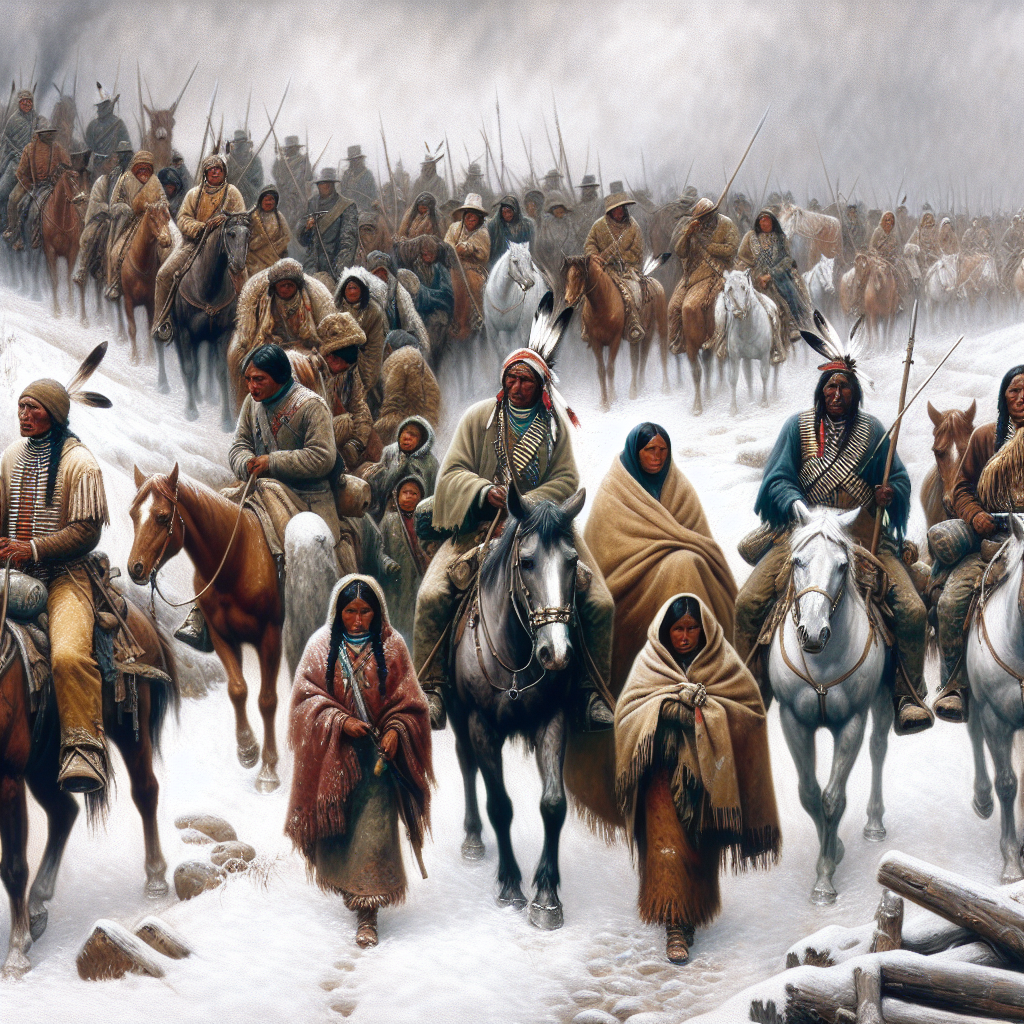
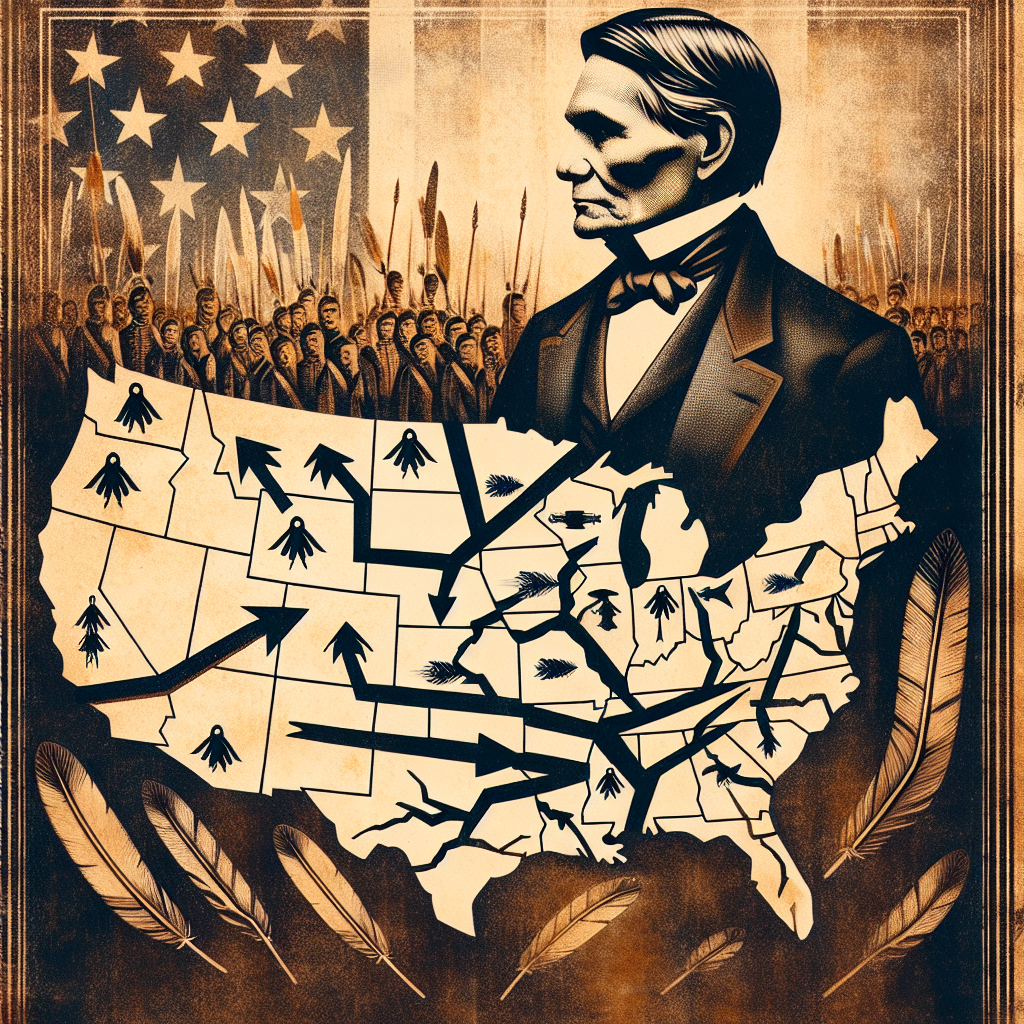
In the winter of 1838–39, United States Army soldiers drove approximately 16,000 Cherokee men, women, and children out of their ancestral lands in Georgia, Alabama, Tennessee, and North Carolina at gunpoint, marching them roughly 1,000 miles west to Indian Territory in present-day Oklahoma. Between 3,000 and 8,000 died of cold, disease, and exhaustion along the way. The Cherokee called it Nunna daul Tsuny — "the trail where they cried." History has shortened it to the Trail of Tears, a phrase that has come to encompass not just the Cherokee removal but the forced displacement of dozens of Native nations under Andrew Jackson's Indian Removal Act of 1830.
The legal architecture of removal was constructed deliberately to override existing treaties and Supreme Court rulings. In Worcester v. Georgia (1832), Chief Justice John Marshall ruled that Georgia had no authority over Cherokee territory, which was a sovereign nation under federal protection. Jackson reportedly responded that Marshall had made his decision and could now enforce it — a remark probably apocryphal but entirely consistent with his actions. Congress had already passed the Indian Removal Act two years earlier. The Supreme Court ruling was simply ignored, establishing by precedent that treaty rights were only as durable as federal willingness to honor them.
The five major nations removed — Cherokee, Choctaw, Creek, Chickasaw, and Seminole — were called the "Five Civilized Tribes" by Americans who meant the compliment as justification: these nations had adopted Christianity, written constitutions, English literacy, and plantation agriculture in deliberate attempts to demonstrate that coexistence was possible. It didn't matter. What Georgia wanted was their land, which happened to contain gold. Removal happened because white settlers and state governments wanted territory, not because of any failure of the removed nations to meet any stated condition of belonging.

| Authorized by | Indian Removal Act, May 28, 1830 |
| President | Andrew Jackson |
| Nations removed | Cherokee, Choctaw, Creek, Chickasaw, Seminole |
| Cherokee removal | 1838–1839 |
| Estimated Cherokee deaths | 3,000–8,000 of ~16,000 |
| Destination | Indian Territory (present-day Oklahoma) |
| Court ruling ignored | Worcester v. Georgia, 1832 |
| Date | Cherokee removal: 1838–1839 |
| Location | New Echota, Georgia |