California

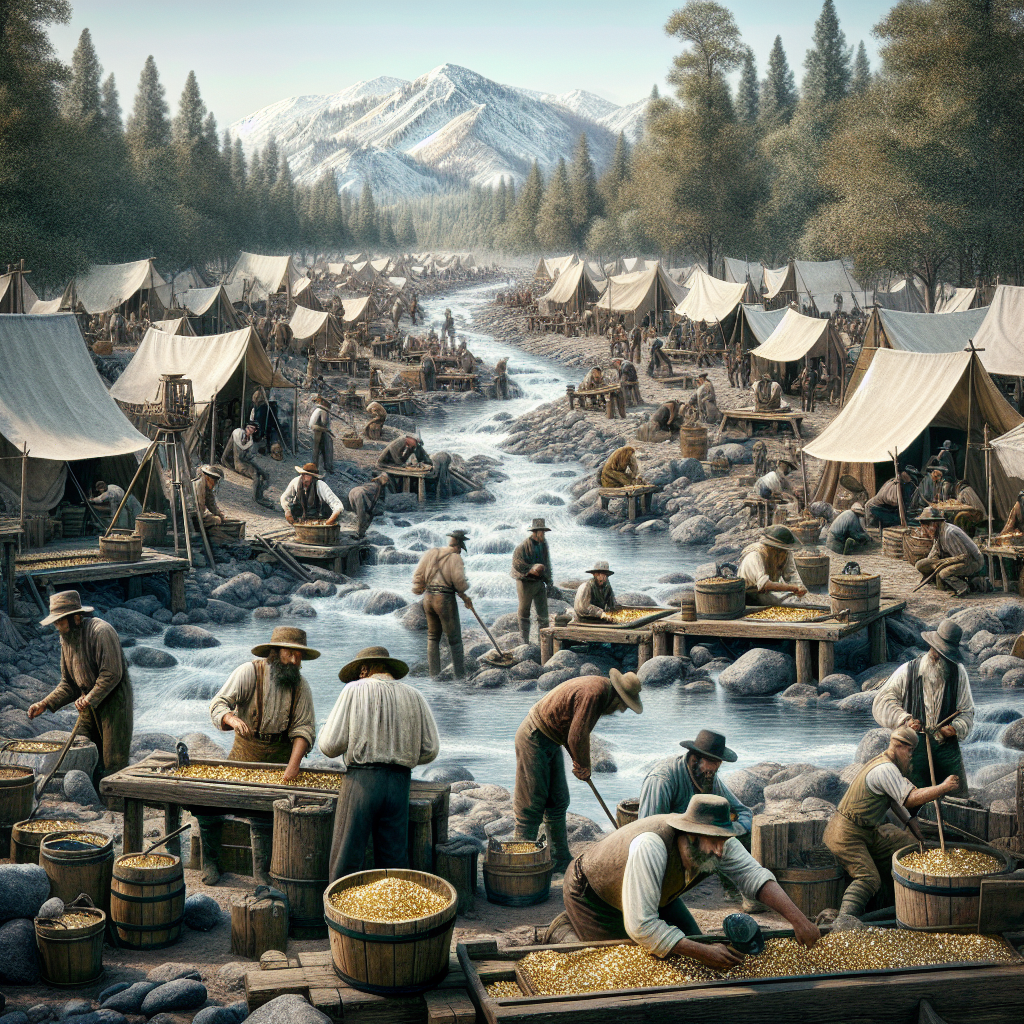
California was Mexican territory until 1848, when the Treaty of Guadalupe Hidalgo transferred it to the United States as a spoil of the Mexican-American War. Nine days before the treaty was signed, a carpenter named James Marshall found gold flakes at Sutter's Mill on the American River. The news spread slowly, then explosively: by 1849 more than 80,000 people had arrived from the eastern United States, Latin America, Europe, and China, transforming a territory of 14,000 non-Native settlers into a boomtown state that sought admission to the Union in 1850. The Gold Rush remade California in two years and began remaking the rest of America — in its demographics, its ambitions, and its conviction that reinvention was always possible somewhere to the west.
The 20th century turned California into something no state had been before: a destination culture, an economic engine, and a laboratory for the American future, for better and worse simultaneously. The aerospace and defense industries built during World War II created the foundation for Silicon Valley. Hollywood invented the global entertainment industry and the celebrity-industrial complex in the same studios. The Central Valley became the country's most productive agricultural region, farmed by successive waves of Mexican, Filipino, and other immigrant laborers in conditions the state's mythology of sunshine and possibility preferred not to examine. The United Farm Workers, led by César Chávez and Dolores Huerta beginning in the 1960s, organized a generation of labor activism in the lettuce and grape fields that the state's boosters had largely ignored.
California has consistently arrived at the American future before the rest of the country — sometimes in directions the country followed, sometimes in directions it rejected. The counterculture of the 1960s originated in San Francisco and Berkeley. The tax revolt that launched Ronald Reagan's political career and ultimately transformed American conservatism began in California with Proposition 13 in 1978. Silicon Valley's technology industry reshaped global communication, commerce, and social interaction beginning in the 1990s. By 2024 California's economy, measured independently, would be the fifth largest in the world — larger than the United Kingdom's. It is also the state with the highest poverty rate when cost of living is factored in, a contradiction that captures something essential about the American Dream's most dramatic theater.




| Statehood | September 9, 1850 (31st state) |
| Capital | Sacramento |
| Population | ~39 million (largest U.S. state by population) |
| Area | 163,696 sq miles (3rd largest) |
| Gold Rush | 1848–1855 |
| GDP | ~$3.9 trillion (5th largest economy if independent) |
| Major industries | Technology, agriculture, entertainment, aerospace |
| Years | 1850 |
| Location | Sacramento, California |