Immigration
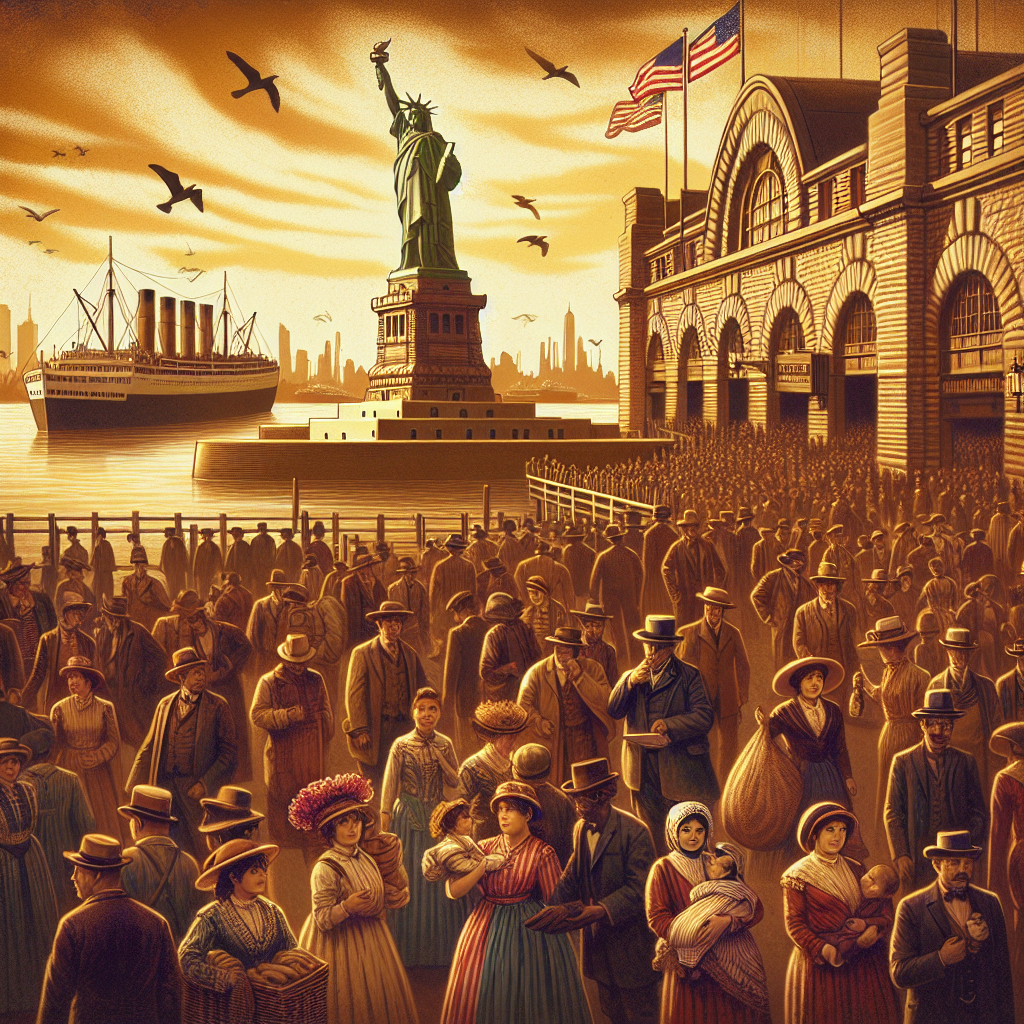
The United States has been shaped by immigration at every stage of its history — and has been ambivalent about that fact at every stage too. The contradiction runs through the whole American story: a nation built by immigrants that has, in each generation, produced powerful movements to restrict immigration, almost always targeting whichever group arrived most recently. The Irish were unwelcome in the 1840s, the Chinese excluded by law in 1882, Southern and Eastern Europeans restricted by quota in 1924, and each new wave of newcomers has confronted a version of the same nativist argument that the previous wave eventually overcame.
Between 1880 and 1924, more than 20 million immigrants arrived, primarily from Southern and Eastern Europe — Italians, Jews, Poles, Greeks, Slavs — transforming cities, industries, and the cultural fabric of the country. They built the railroads, staffed the factories, populated the tenements, and sent children to public schools that produced Americans indistinguishable from those whose families had been here since the Revolution. Ellis Island processed roughly 12 million of them. The Immigration Act of 1924 effectively shut the door, establishing national-origin quotas that favored Northern Europeans and excluded Asians entirely.
The Immigration and Nationality Act of 1965 — passed in the same civil rights era that transformed Black American legal status — replaced the quota system with preferences for family reunification and skilled workers, opening immigration to Asia, Latin America, and Africa. The demographic consequences were profound and largely unpredicted by those who passed the law. By the early 21st century, the United States was debating the status of roughly 11 million undocumented immigrants in political terms that echoed, with eerie fidelity, the nativist arguments of 1882 and 1924. The argument, like the immigration, has never stopped.








| Great Wave | 1880–1924: over 20 million immigrants, mostly Southern/Eastern European |
| Ellis Island | Processed approx. 12 million immigrants, 1892–1954 |
| Chinese Exclusion | Chinese Exclusion Act, 1882 — first race-based immigration ban |
| Quota System | Immigration Act of 1924 — national-origin quotas, Asian exclusion |
| Reform | Immigration and Nationality Act of 1965 — replaced quotas |
| Current Issue | approx. 11 million undocumented immigrants as of the early 2020s |
| Years | 1607 |
| Location | United States |