Nineteenth Amendment
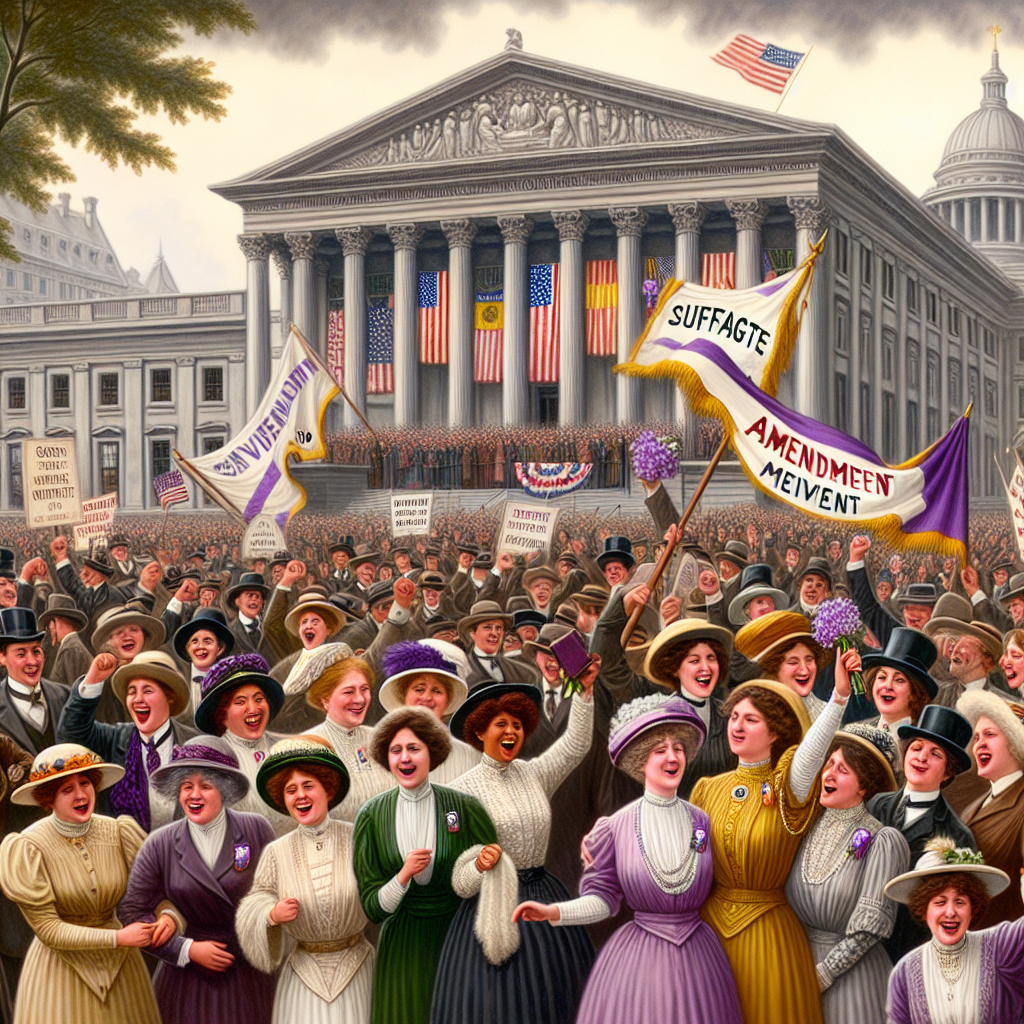
On August 18, 1920, Tennessee became the 36th and deciding state to ratify the Nineteenth Amendment to the U.S. Constitution, granting women the right to vote after a campaign that had lasted 72 years. The margin in the Tennessee House was a single vote — cast by 24-year-old Harry Burn, who changed his position after receiving a letter from his mother urging him to "be a good boy." With that vote, 26 million American women became eligible to participate in the November elections. The suffrage movement had outlasted most of the women who built it.
The campaign had begun formally at the Seneca Falls Convention in 1848, where Elizabeth Cady Stanton and others drafted a Declaration of Sentiments modeled on the Declaration of Independence and demanded, among other rights, the vote. For seven decades the movement was met with ridicule, legislative obstruction, and at times violent suppression. Susan B. Anthony was arrested and fined for attempting to vote in 1872. Suffragists picketed the White House during World War I, were arrested, and went on hunger strikes in prison. The spectacle of a democracy imprisoning women for demanding democracy proved difficult to sustain.
The amendment's passage did not deliver equal voting access to all women. Black women in Southern states faced the same poll taxes, literacy tests, and terror that disenfranchised Black men — the Nineteenth Amendment was a constitutional right without enforcement in much of the country until the Voting Rights Act of 1965. Native American women could not vote until the Indian Citizenship Act of 1924. The amendment was the movement's greatest victory and, in its incomplete application, a blueprint for the work that remained.
| Ratified | August 18, 1920 |
| Introduced | Congress first proposed a women's suffrage amendment in 1878 |
| Deciding Vote | Tennessee state legislature; 24-year-old Rep. Harry Burn cast the deciding vote |
| Key Figures | Elizabeth Cady Stanton, Susan B. Anthony, Carrie Chapman Catt, Alice Paul |
| Seneca Falls | Women's suffrage movement formally launched, 1848 |
| Impact | ~26 million women newly eligible to vote |
| Date | August 18, 1920 |
| Location | Washington, D.C. |