New York Draft Riots
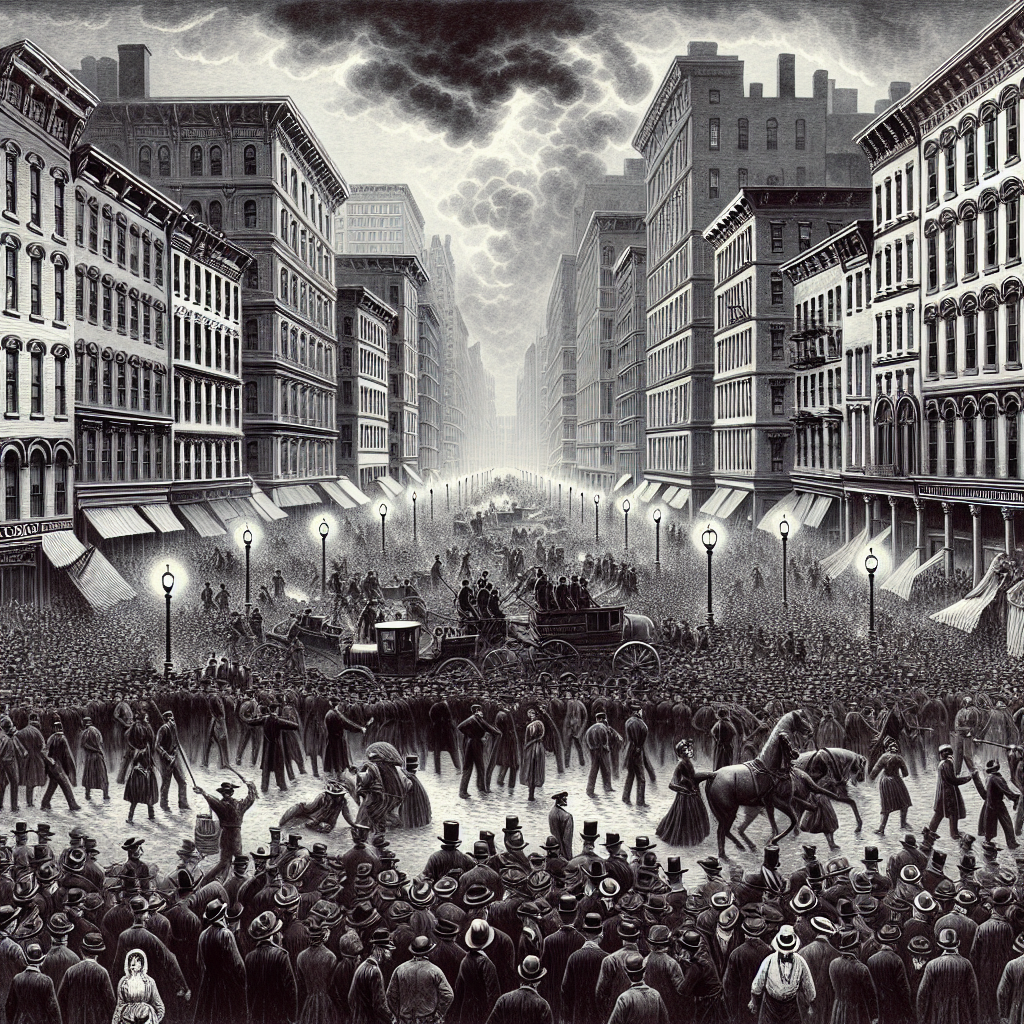
On the morning of July 13, 1863 — four days after news of the Union victory at Gettysburg began filtering back to New York — a crowd gathered outside a draft office on Third Avenue and set it on fire. What followed over the next four days was the deadliest civil insurrection in American history: at least 119 people killed, hundreds of buildings burned, and the streets of lower Manhattan turned into a battleground between working-class rioters and police, militia, and eventually troops pulled directly from the Gettysburg battlefield. The Civil War had come home.
The Enrollment Act of 1863 had created the Union's first military draft, and its inequity was its most incendiary feature. A man with $300 — roughly three months' wages for an unskilled laborer — could pay a commutation fee and avoid service entirely. A man without $300 could not. The riots were not simply anti-draft but anti-Black: Irish immigrant workers who feared economic competition from freed slaves and resented dying in a war they hadn't chosen targeted Black New Yorkers with murderous fury. Mobs lynched Black men from lampposts, burned the Colored Orphan Asylum on Fifth Avenue — the children escaped — and drove thousands of Black residents from their neighborhoods permanently.
New York's political establishment was complicit by paralysis and in some cases by encouragement. Governor Horatio Seymour, a Democrat hostile to conscription, addressed rioters as "my friends" in a speech days before the violence. The city's police superintendent was beaten nearly to death on the first day. Order was not restored until regiments from the Army of the Potomac arrived on July 16 and fired artillery into crowds. The $300 commutation fee was subsequently abolished; the draft continued; and New York's Black community spent years rebuilding neighborhoods from which it had been violently expelled.
| Dates | July 13–16, 1863 |
| Location | New York City, New York |
| Trigger | Enrollment Act of 1863; $300 draft commutation clause |
| Deaths | At least 119 confirmed |
| Key target | Colored Orphan Asylum burned; Black New Yorkers attacked |
| Order restored | Army of the Potomac regiments from Gettysburg |
| Governor | Horatio Seymour (Democrat, hostile to draft) |
| Date | July 13–16, 1863 |
| Location | New York City, New York |