Civil Rights Act of 1964
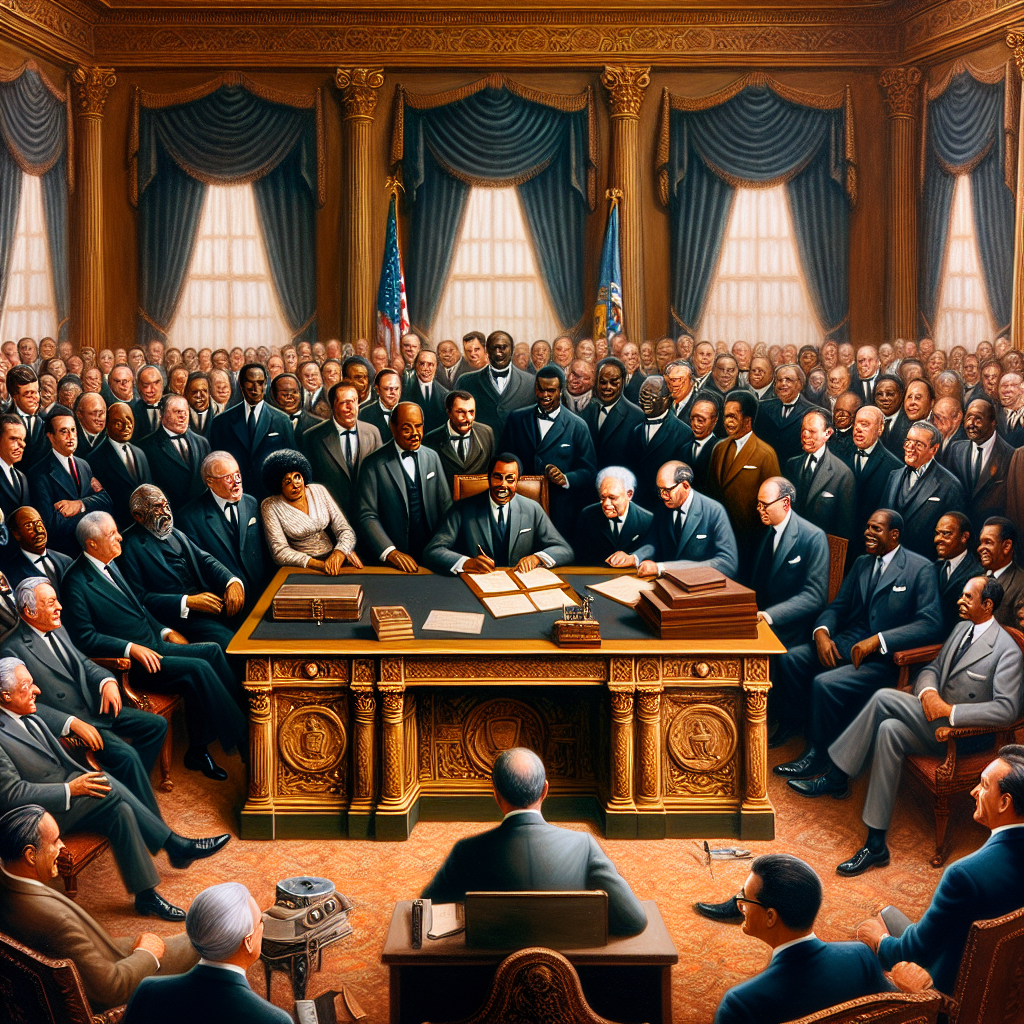
The Civil Rights Act of 1964 was signed by Lyndon Johnson on July 2, one year and 18 days after John Kennedy had proposed it in a nationally televised address following the violent suppression of civil rights marchers in Birmingham, Alabama. Kennedy did not live to see it pass; Johnson, a Texan and former Senate majority leader who had spent his career blocking civil rights legislation, drove it through with a combination of legislative mastery and moral urgency that surprised nearly everyone who thought they knew him. He understood what it cost. Signing the bill, he reportedly told an aide: "We have lost the South for a generation." He was off by several generations.
The act's scope was sweeping. Title II banned discrimination in public accommodations — hotels, restaurants, theaters, any establishment engaging in interstate commerce. Title VI prohibited discrimination in federally funded programs. Title VII banned employment discrimination on the basis of race, color, religion, sex, or national origin, and created the Equal Employment Opportunity Commission to enforce it. Sex was added to Title VII almost as a last-minute amendment, introduced by a Virginia congressman who thought the addition would make the bill ridiculous enough to defeat; instead it passed and became the legal foundation for women's workplace equality. The act did not include voting rights — that required a separate law the following year.
The Civil Rights Act's passage required breaking a Senate filibuster that lasted 60 days — the longest in Senate history — and produced one of the most consequential political realignments in American history. Barry Goldwater voted against it; his 1964 presidential campaign carried five Deep South states that had never voted Republican since Reconstruction, inaugurating the regional realignment that by the 1980s had made the formerly solid Democratic South reliably Republican. The party of Lincoln had freed the enslaved; the party of Johnson had enforced their civil rights; and within 20 years both parties had traded the coalitions they had built around those positions. American politics has not fully metabolized that exchange.



| Signed | July 2, 1964 |
| Signed by | President Lyndon B. Johnson |
| Senate filibuster | 60 days — longest in Senate history |
| Key provisions | Banned discrimination in public accommodations, employment, federal programs |
| Created | Equal Employment Opportunity Commission (EEOC) |
| Sex added to Title VII | By Rep. Howard Smith of Virginia (attempted poison pill) |
| Followed by | Voting Rights Act (1965) |
| Date | July 2, 1964 |
| Location | Washington, D.C. |