The Great Society
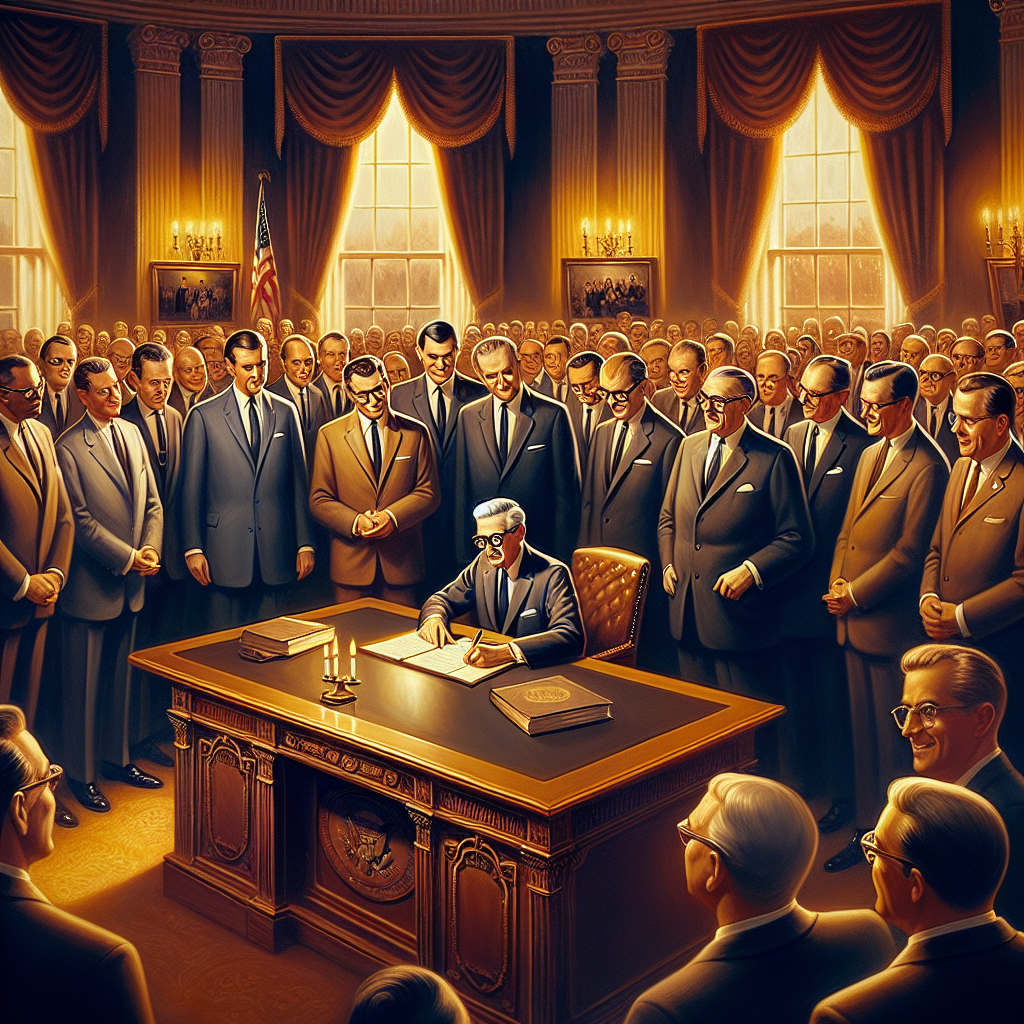
Lyndon Johnson stood before Congress in May 1964 and issued a challenge: the United States had the wealth and will to build a "Great Society" — one resting not on the abundance of possessions but on the quality of its citizens' lives. It was a bold promise from a president still shadowed by his predecessor's assassination, and over the next three years Johnson largely delivered, pushing through the most sweeping domestic legislation since the New Deal.
The Great Society produced Medicare and Medicaid, the Civil Rights Act of 1964, the Voting Rights Act of 1965, federal aid to education, the National Endowment for the Arts, public broadcasting, and immigration reform. The 89th Congress, worked over by Johnson's legendary arm-twisting, passed more major legislation in two years than most Congresses manage in a decade. Poverty rates fell sharply through the late 1960s, and millions gained access to health care for the first time.
Vietnam consumed the Great Society. As the war expanded, Johnson faced an impossible choice between guns and butter — and chose both, refusing to raise taxes or scale back domestic spending until inflation and deficit forced the decision for him. By 1968 the political coalition that had passed his programs had fractured along racial, generational, and class lines that have never fully healed.
Medicare and Medicaid now cover more than 150 million Americans. Head Start serves millions of children each year. The National Endowment for the Arts has funded thousands of cultural institutions. Whether the Great Society fulfilled Johnson's vision or distorted it remains one of American politics' sharpest ongoing arguments — which is itself evidence of how much it mattered.




| Announced | May 22, 1964 — University of Michigan, Ann Arbor |
| President | Lyndon B. Johnson |
| Key legislation | Civil Rights Act (1964), Voting Rights Act (1965), Medicare/Medicaid (1965) |
| Key Congress | 89th Congress, 1965–1967 |
| Architects | LBJ, Bill Moyers, Joseph Califano |
| Undone by | Vietnam War spending and political backlash, 1968 |
| Years | 1964–1969 |
| Location | Washington, D.C. |