Due Process
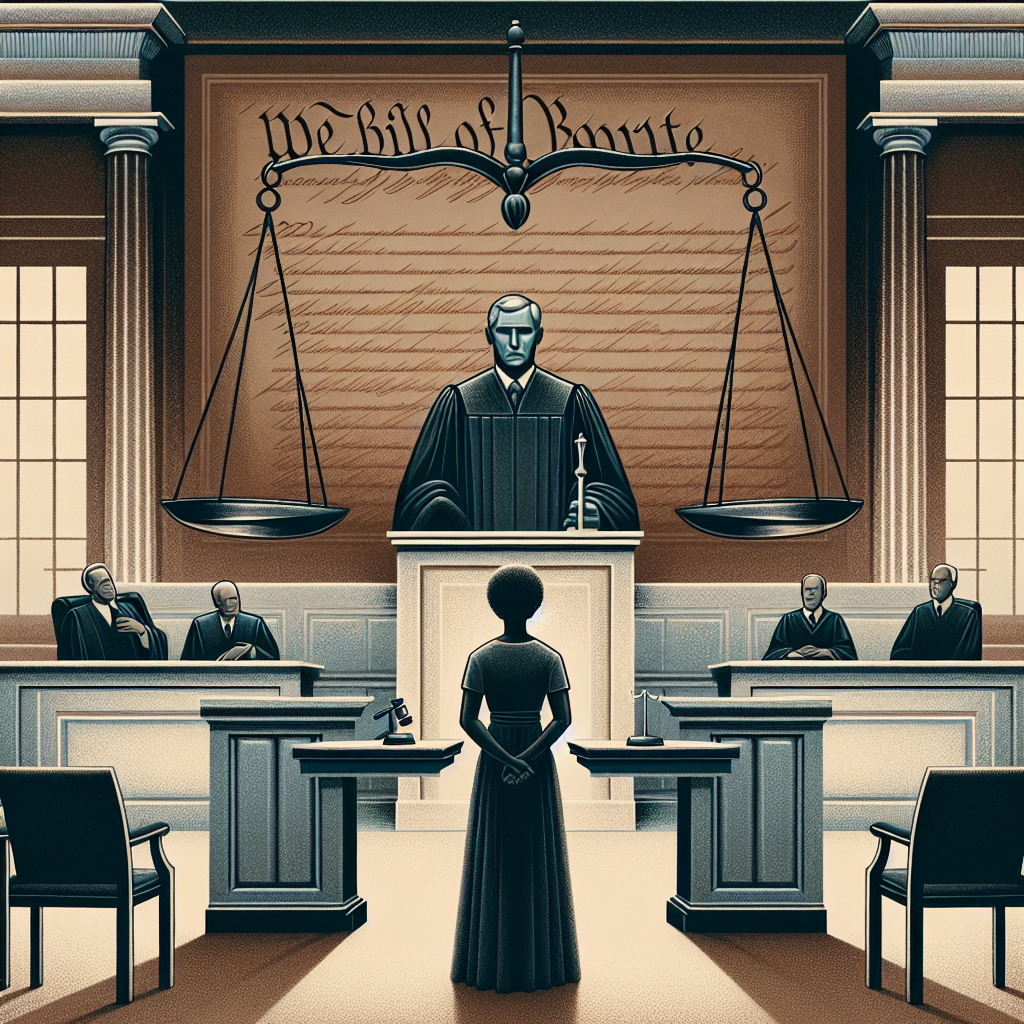
Due process is the principle that government must follow fair and established legal procedures before depriving any person of life, liberty, or property. It appears twice in the U.S. Constitution: in the Fifth Amendment, which restricts the federal government, and in the Fourteenth Amendment, ratified in 1868, which applies the same restriction to state governments. The concept traces to Magna Carta (1215), which established that no free man could be imprisoned, dispossessed, or harmed except by the lawful judgment of his peers or by the law of the land — a phrase that evolved over six centuries into the due process clause American courts interpret today.
Courts have developed two distinct forms of the doctrine. Procedural due process concerns the fairness of the methods government uses — the right to notice of charges, the right to a hearing, the right to present evidence, the right to an impartial decision-maker. Substantive due process goes further, holding that certain rights are so fundamental that government cannot infringe them at all, regardless of what procedures it follows. Substantive due process has been the more controversial doctrine because it requires courts to identify which rights are fundamental — a judgment that critics argue is inherently subjective and gives unelected judges too much power to override democratic decisions.
The most consequential applications of substantive due process in American history have come in cases involving personal autonomy and privacy. Griswold v. Connecticut (1965) used it to protect the right of married couples to use contraception. Roe v. Wade (1973) extended that privacy right to abortion. Obergefell v. Hodges (2015) relied in part on substantive due process to establish the right to same-sex marriage. Each of these decisions has been celebrated and condemned in almost equal measure, and the ongoing debate about the proper scope of substantive due process is one of the central fault lines of American constitutional law.



| Constitutional basis | Fifth Amendment (federal); Fourteenth Amendment (state) |
| Historical origin | Magna Carta, 1215 — "law of the land" clause |
| Two forms | Procedural (fair methods); Substantive (fundamental rights) |
| Key cases | Griswold v. Connecticut (1965); Roe v. Wade (1973); Obergefell v. Hodges (2015) |
| Controversy | Substantive due process criticized as judicial overreach |
| Companion concept | Equal Protection |
| Years | 1791 |
| Location | Washington, D.C. |