Obergefell v. Hodges
Jim Obergefell and John Arthur were married in Maryland in 2013, flying there from Ohio because Ohio did not recognize same-sex marriage. Arthur was dying of ALS. Obergefell wanted to be listed as the surviving spouse on Arthur's death certificate. Ohio refused. The case that resulted from that refusal reached the Supreme Court consolidated with cases from Michigan, Kentucky, and Tennessee, and on June 26, 2015, the Court ruled 5–4 that the Fourteenth Amendment requires states to license and recognize same-sex marriages. It was the most significant expansion of civil marriage rights in American history and one of the fastest civil rights shifts in the country's legal record.
Justice Anthony Kennedy wrote the majority opinion in what became his most celebrated decision — the fourth time he had written a major opinion expanding rights for gay Americans, following Romer v. Evans (1996), Lawrence v. Texas (2003), and United States v. Windsor (2013). Kennedy grounded the ruling in both the Due Process and Equal Protection clauses, arguing that marriage was a fundamental right and that excluding same-sex couples from it imposed stigma and denied them equal dignity. Chief Justice Roberts and Justices Scalia, Thomas, and Alito each wrote separate dissents; Scalia's was so contemptuous of the majority's reasoning that it read more like a polemic than a legal document.
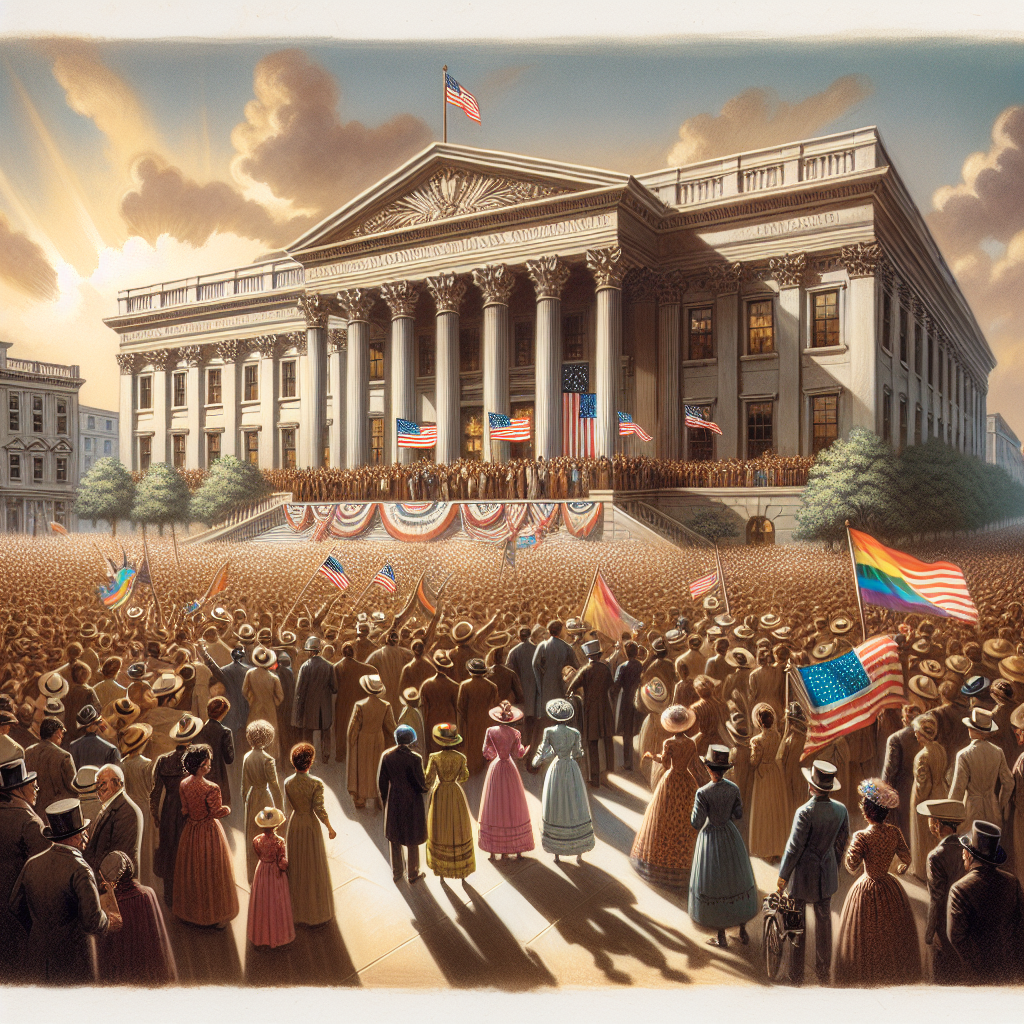
The decision was announced on the anniversary of Lawrence v. Texas, twelve years earlier, and crowds gathered outside the Supreme Court before the opinion was released. Within hours, county clerks across the country began issuing marriage licenses to same-sex couples. The legal transformation had taken roughly 20 years — from the first state court decisions in the early 1990s to a national constitutional right in 2015. Social acceptance had moved even faster: support for same-sex marriage had risen from below 30 percent in 1996 to above 60 percent by the time the Court acted.

| Decided | June 26, 2015 |
| Vote | 5–4 |
| Author | Justice Anthony Kennedy |
| Legal basis | Fourteenth Amendment — Due Process and Equal Protection |
| Petitioner | Jim Obergefell, seeking recognition as surviving spouse in Ohio |
| Preceded by | United States v. Windsor (2013); Lawrence v. Texas (2003) |
| Result | All 50 states required to license and recognize same-sex marriage |
| Date | June 26, 2015 |
| Location | Washington, D.C. |