Ruth Bader Ginsburg
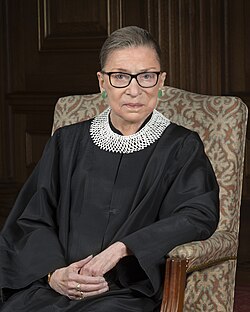
Before Ruth Bader Ginsburg became a justice, she was a strategist. As director of the ACLU's Women's Rights Project in the 1970s, she deliberately chose cases that would build gender equality doctrine step by step, often selecting male plaintiffs to demonstrate that sex discrimination harmed everyone — a technique she had studied in Thurgood Marshall's approach to dismantling segregation. She argued six landmark gender discrimination cases before the Supreme Court and won five of them, constructing the constitutional framework that made sex discrimination presumptively illegal under the Equal Protection Clause.
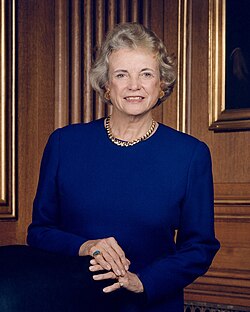
Bill Clinton appointed her to the Supreme Court in 1993 — the second woman to serve, after Sandra Day O'Connor. On the bench she became known for precise, unsparing dissents when she believed the majority had gone wrong. Her dissent in Ledbetter v. Goodyear (2007), a pay discrimination case, prompted Congress to pass the Lilly Ledbetter Fair Pay Act of 2009, the first bill Barack Obama signed into law. Her dissent in Shelby County v. Holder (2013), which struck down a key provision of the Voting Rights Act, began with a sentence that entered the political lexicon: throwing away an umbrella in a rainstorm because one is not getting wet.
Ginsburg became a cultural phenomenon in her final years — the Notorious RBG, a meme and a symbol — in a way that no previous justice had. She resisted pressure to retire during the Obama administration and died of pancreatic cancer on September 18, 2020, 46 days before the presidential election. Her death set off a confirmation battle that placed Amy Coney Barrett on the Court before election day, fulfilling the political calculation Ginsburg had declined to make for herself.
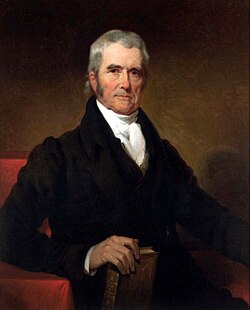
| Born | March 15, 1933 — Brooklyn, New York |
| Died | September 18, 2020 — Washington, D.C. |
| Role | Associate Justice, Supreme Court of the United States |
| Tenure | August 10, 1993 – September 18, 2020 |
| Appointed by | President Bill Clinton |
| Prior role | ACLU Women's Rights Project director; argued 6 cases before SCOTUS |
| Notable | Second woman to serve on the Supreme Court, after Sandra Day O'Connor |
| Years | 1933–2020 |
| Location | Brooklyn, New York |