Sandra Day O'Connor
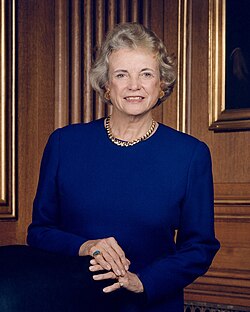
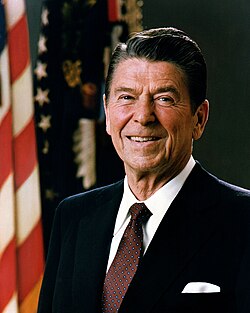
When Ronald Reagan nominated Sandra Day O'Connor to the Supreme Court in July 1981, he was fulfilling a campaign promise to appoint the first woman to the bench — and doing so with a nominee that gave Senate conservatives some pause. O'Connor was a former Arizona state senator and appellate judge with a pragmatic, centrist record that resisted easy categorization. She was confirmed 99–0. Over the next 25 years she became the most consequential swing vote on a closely divided Court, the justice whose position in case after case determined the outcome and whose jurisprudence defined the boundaries of what American constitutional law would and would not do.
O'Connor's approach was determinedly incremental. She distrusted broad constitutional rules and preferred narrow decisions that resolved the case at hand without sweeping more terrain than necessary — a method her critics called unpredictable and her admirers called judicious. In Planned Parenthood v. Casey (1992), she co-authored the plurality opinion that preserved the core holding of Roe v. Wade while replacing its trimester framework with the undue burden standard. In Bush v. Gore (2000), she was part of the majority that halted the Florida recount and handed the presidency to George W. Bush. She later expressed private regret about that decision.
O'Connor retired in 2006 to care for her husband, who had Alzheimer's disease. She was replaced by Samuel Alito, shifting the Court decisively rightward — a change that illustrated how thoroughly her presence at the center had shaped 25 years of outcomes. She was diagnosed with dementia in 2018 and died in December 2023 at 93. The Dobbs v. Jackson decision of 2022, which overturned Roe v. Wade and with it the undue burden standard she had crafted, came four years after her diagnosis and did not reach her.


| Born | March 26, 1930 — El Paso, Texas |
| Died | December 1, 2023 — Phoenix, Arizona |
| Role | Associate Justice, Supreme Court of the United States |
| Tenure | September 25, 1981 – January 31, 2006 |
| Appointed by | President Ronald Reagan |
| Notable | First woman to serve on the U.S. Supreme Court |
| Key ruling | Planned Parenthood v. Casey (1992) — undue burden standard |
| Also joined | Bush v. Gore majority (2000) |
| Years | 1930–2023 |
| Location | El Paso, Texas |