Andrew Johnson
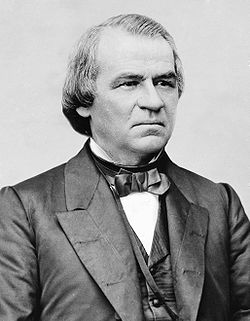
Andrew Johnson became president because he was on the same ticket as Abraham Lincoln — a Southern Democrat chosen to broaden the 1864 coalition — and because John Wilkes Booth's bullet made him so. He was spectacularly ill-suited to the moment. Where Lincoln had moved cautiously toward a Reconstruction that might have secured meaningful rights for freed people, Johnson moved swiftly to restore the Confederate states with minimal conditions and maximum grace toward the men who had led the rebellion. The result was a Reconstruction so feeble it barely deserved the name.
Johnson vetoed the Civil Rights Act of 1866, the Reconstruction Acts, and virtually every piece of legislation Congress passed to extend rights to Black Americans in the South. Congress overrode him repeatedly and eventually stripped him of control over military Reconstruction entirely. When he violated the Tenure of Office Act by attempting to remove Secretary of War Edwin Stanton, the House impeached him in February 1868 — the first presidential impeachment in American history. He escaped removal by a single Senate vote.
Johnson's presidency is a case study in how thoroughly one man can squander a historical moment. The lenient Reconstruction he enabled allowed former Confederate leaders to return to power, Black Codes to replace slavery with something functionally similar, and white supremacist violence to go largely unpunished. The civil rights gains that eventually emerged did so despite Johnson, not because of him, and required another century of struggle to partially achieve. Historians consistently rank him among the worst presidents in American history.
| Born | December 29, 1808 — Raleigh, North Carolina |
| Died | July 31, 1875 — Carter's Station, Tennessee |
| Term | April 15, 1865 – March 4, 1869 |
| Party | Democratic (National Union, 1864) |
| Preceded by | Abraham Lincoln |
| Succeeded by | Ulysses S. Grant |
| Impeached | February 24, 1868 — acquitted by one Senate vote |
| Years | 1808–1875 |
| Location | Washington, D.C. |