George Mason
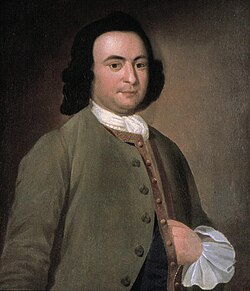
George Mason arrived at the Constitutional Convention in Philadelphia in May 1787 as one of the most respected legal minds in America, and left in September refusing to sign what he had helped create. His objections were principled and prophetic: the document had no bill of rights, it failed to abolish or restrict the slave trade, and it concentrated federal powers he believed dangerous to liberty. "I would sooner chop off this right hand," he reportedly said, "than put it to a Constitution as it now stands." He was one of only three delegates who refused to sign.
Mason's Virginia Declaration of Rights, written in May 1776, was the document that taught a generation of revolutionaries how to articulate liberty. It declared that all men were by nature free and independent, that government derived its power from the people, that freedom of the press was essential, and that the rights of the accused must be protected. Thomas Jefferson drew heavily on it for the Declaration of Independence. James Madison used it directly when drafting the Bill of Rights. Mason wrote the template; others received the credit.
The contradiction at the center of Mason's life was slavery. He owned more than 300 enslaved people at Gunston Hall, denounced slavery as a moral and political catastrophe before the Convention, and nonetheless built his life and fortune on it entirely. His opposition to the Constitution's three-fifths compromise and slave trade provisions was partly moral, partly the calculation of a Virginia planter who feared Northern commercial interests would use federal power to overwhelm Southern agricultural ones. His legacy is inseparable from that knot of principle and self-interest — which is to say, it is very American.
| Born | December 11, 1725 — Fairfax County, Virginia |
| Died | October 7, 1792 — Gunston Hall, Virginia |
| Key document | Virginia Declaration of Rights, May 1776 |
| Constitutional Convention | Attended; refused to sign, September 1787 |
| Influenced | Declaration of Independence; U.S. Bill of Rights |
| Enslaved people held | 300+ |
| Home | Gunston Hall, Mason Neck, Virginia |
| Years | 1725–1792 |
| Location | Gunston Hall, Virginia |