Declaration of Independence
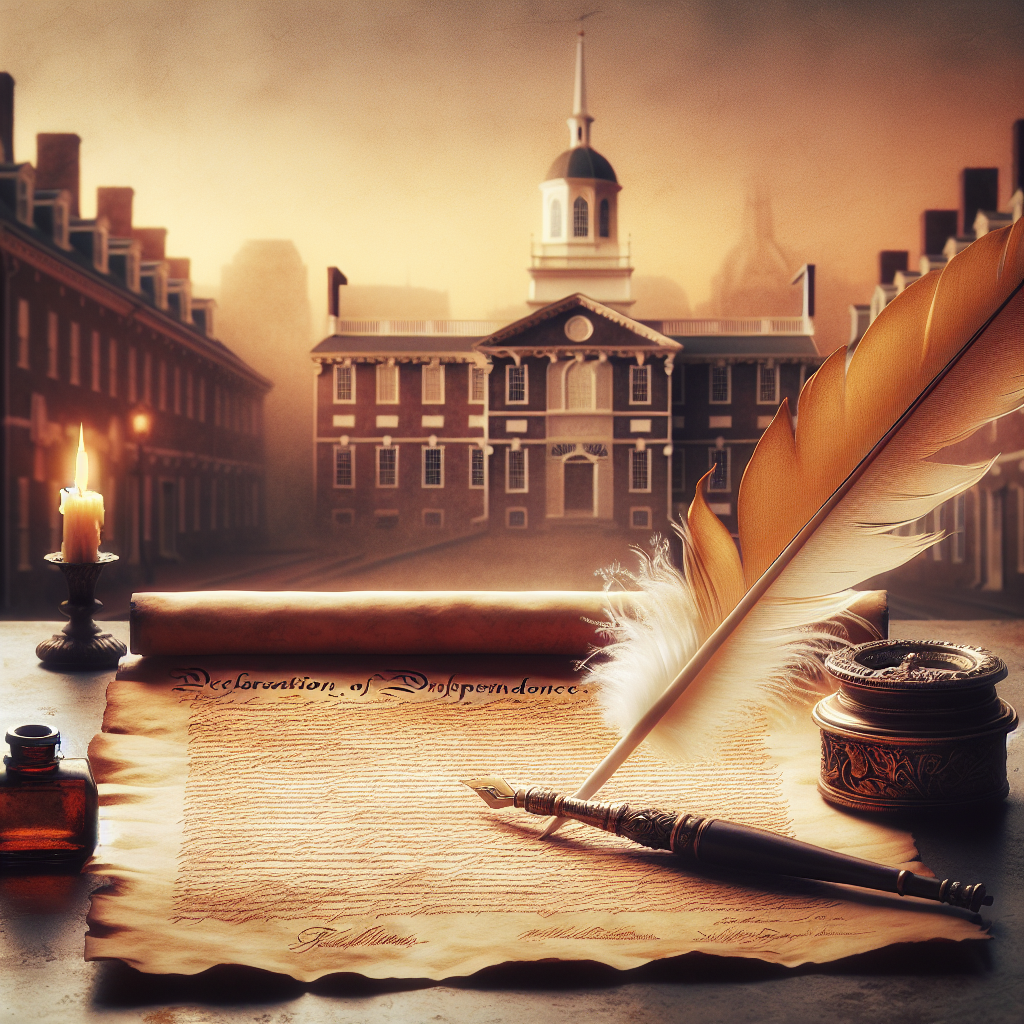
Thomas Jefferson wrote the first draft of the Declaration of Independence in roughly 17 days, working in a rented room above a Philadelphia bricklayer's shop during the summer of 1776. The Continental Congress edited it heavily — cutting nearly a quarter of Jefferson's text, including his condemnation of the slave trade — and adopted the final version on July 4. What emerged was not merely a notice of separation from Britain. It was a philosophical manifesto that would be cited in revolutions, liberation movements, and courtrooms for the next two and a half centuries.
The document's second paragraph contains the most consequential sentence in American history: the assertion that all men are created equal and possess unalienable rights to life, liberty, and the pursuit of happiness. The founders understood the distance between that claim and a slaveholding republic built on stolen land — and they made the claim anyway, inserting a contradiction into the nation's DNA that every subsequent generation has been forced to confront, often at enormous cost.
The original parchment, signed by 56 delegates over the summer of 1776, survived the British burning of Washington in 1814 when a State Department clerk rolled it up and carted it out of the capital. It now rests in the National Archives under argon gas and bulletproof glass, its ink badly faded. John Adams predicted July 2 — the day Congress voted for independence — would be celebrated forever. He was wrong by two days.

| Adopted | July 4, 1776 |
| Location | Independence Hall, Philadelphia, Pennsylvania |
| Primary author | Thomas Jefferson |
| Committee | Jefferson, John Adams, Benjamin Franklin, Roger Sherman, Robert Livingston |
| Signatories | 56 delegates |
| Now held at | National Archives, Washington, D.C. |
| Date | July 4, 1776 |
| Location | Philadelphia, Pennsylvania |