John Lewis
SNCC leader beaten at Selma who served 33 years in Congress
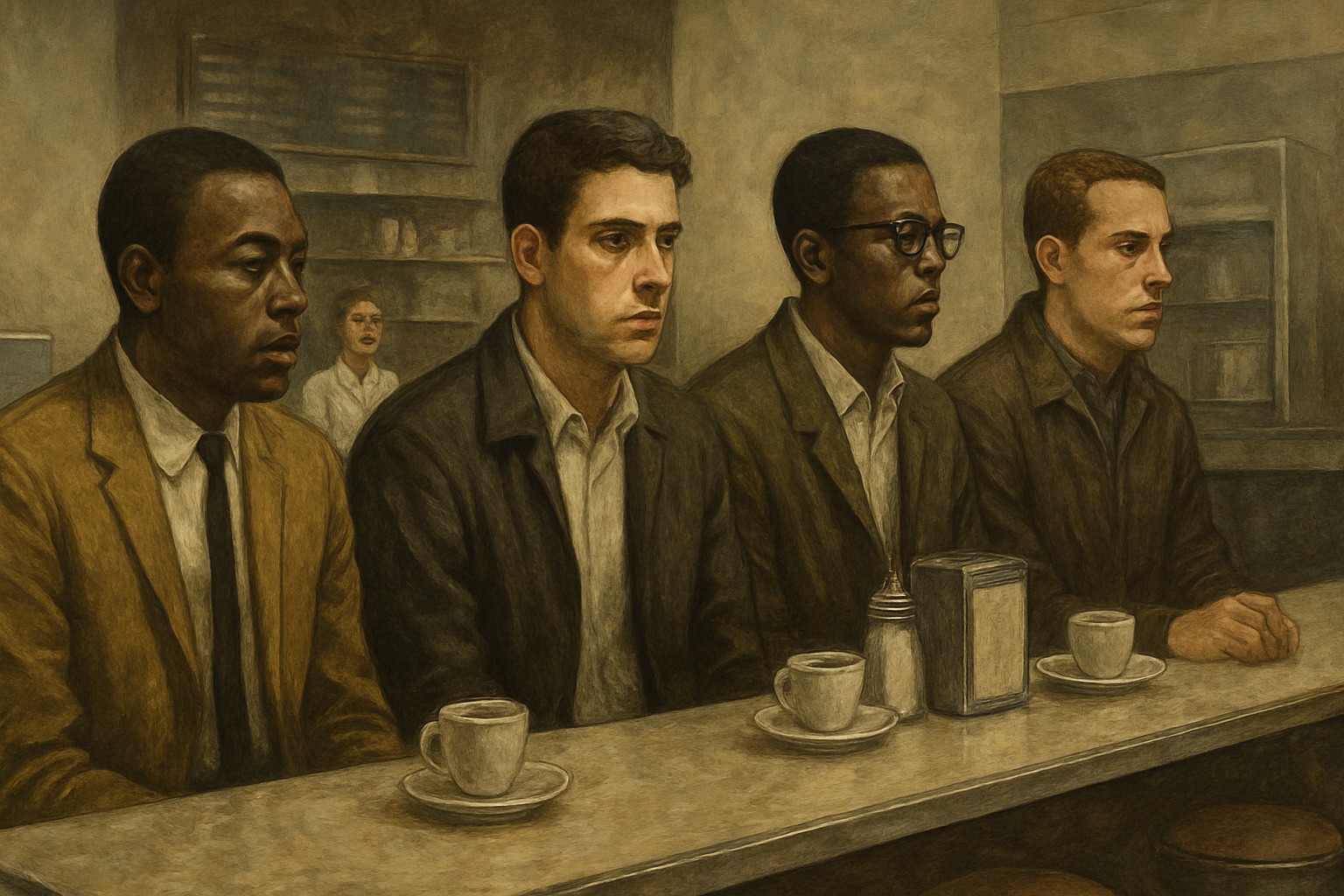
John Robert Lewis was a leader of the civil rights movement who went on to represent Atlanta in Congress for more than three decades. He was born on February 21, 1940, near Troy, Alabama, the son of sharecroppers, and grew up in a segregated rural South where his family could not vote. Inspired as a teenager by the Montgomery bus boycott and the radio sermons of Martin Luther King Jr., he went to Nashville to study at the American Baptist Theological Seminary and later Fisk University. There he trained in nonviolent protest under the minister James Lawson and helped lead the 1960 Nashville sit-ins that desegregated the city's downtown lunch counters.
In 1961 Lewis joined the Freedom Rides to challenge segregation on interstate buses and was beaten by mobs in Rock Hill, South Carolina, and Montgomery, Alabama. He became chairman of the Student Nonviolent Coordinating Committee (SNCC) in 1963 and that August, at 23, was the youngest speaker at the March on Washington. Other organizers persuaded him to soften parts of his speech that criticized the Kennedy administration. On March 7, 1965, he and Hosea Williams led about 600 marchers across the Edmund Pettus Bridge in Selma, Alabama, where state troopers attacked them. Lewis suffered a fractured skull. Television coverage of "Bloody Sunday" helped build support for the Voting Rights Act, signed on August 6, 1965.
Lewis left SNCC in 1966 as the group moved toward Black Power, and he spent the 1970s leading the Voter Education Project, which registered millions of Black voters across the South. After serving on the Atlanta City Council, he won election to the U.S. House of Representatives from Georgia's 5th District in 1986 and served from January 1987 until his death. In Congress he was known as a liberal Democrat and as a moral voice on civil rights, and he urged others to get into "good trouble" for just causes. In 2016 he led a sit-in on the House floor to demand votes on gun legislation. He received the Presidential Medal of Freedom in 2011.
Lewis also reached younger readers with March, a graphic-novel memoir trilogy written with Andrew Aydin and drawn by Nate Powell, whose final volume won the 2016 National Book Award for Young People's Literature. He was arrested more than 40 times during the civil rights years and several more times in later protests. Lewis announced in December 2019 that he had pancreatic cancer and died in Atlanta on July 17, 2020, at the age of 80. His casket was carried across the Edmund Pettus Bridge one last time, and he became the first Black lawmaker to lie in state in the Capitol Rotunda. A voting rights bill bearing his name was introduced in Congress but has not become law.
Related entries




Across the Brief network
People in this entry, on BriefPeople