War Powers Resolution
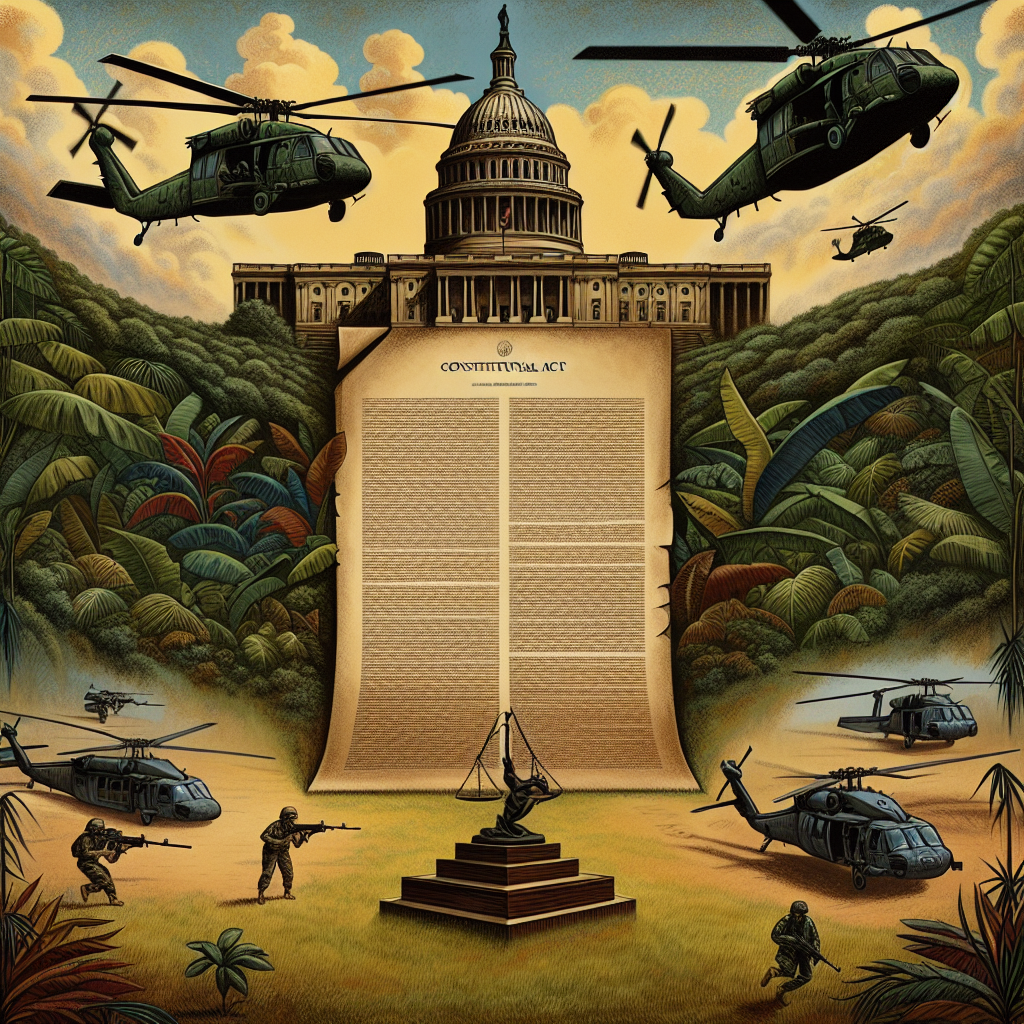
The War Powers Resolution arrived in October 1973, passed by a Congress exhausted by a decade of undeclared war and newly emboldened by Watergate. Its core requirement was direct: if the president commits U.S. forces to armed conflict, he must notify Congress within 48 hours and withdraw those forces within 60 days unless Congress has declared war or specifically authorized the action. Richard Nixon vetoed it as unconstitutional. The House and Senate overrode his veto on November 7, 1973 — one of the few veto overrides of his presidency, and one of the most consequential acts of the post-Vietnam Congress.
The Resolution was the culmination of a decade's constitutional reckoning with the Gulf of Tonkin Resolution of 1964, which had given President Johnson effectively unlimited authority to wage war in Vietnam on the basis of a naval incident that turned out to be partly fabricated and significantly misrepresented. More than 58,000 Americans had died in a war Congress never formally declared. The Constitution's explicit grant of war-making power to Congress had been functionally transferred to the executive through the accumulated logic of emergency, and Congress intended to take it back.
No president — Democrat or Republican — has ever acknowledged the Resolution's constitutionality in the 50 years since its passage. Every administration has notified Congress "consistent with" but not "pursuant to" the Resolution, a formulation designed to comply with its procedures without conceding its legitimacy. Presidents have repeatedly exceeded its 60-day clock, argued that specific conflicts don't trigger it, or dared Congress to enforce it. Congress has never cut off funding to compel a withdrawal. The Resolution remains on the books — invoked routinely, enforced never — a monument to a constitutional confrontation that was declared but not won.




| Enacted | November 7, 1973 (veto override) |
| Vetoed by | President Richard Nixon |
| Override vote | Senate 75–18; House 284–135 |
| Core provision | 48-hour notification + 60-day troop commitment limit |
| Constitutional basis | Congressional war powers, Article I, Section 8 |
| Trigger | Vietnam War; Gulf of Tonkin Resolution (1964) |
| Status | In force; never acknowledged as constitutional by any president |
| Date | Enacted November 7, 1973 |
| Location | Washington, D.C. |