National Security Act of 1947
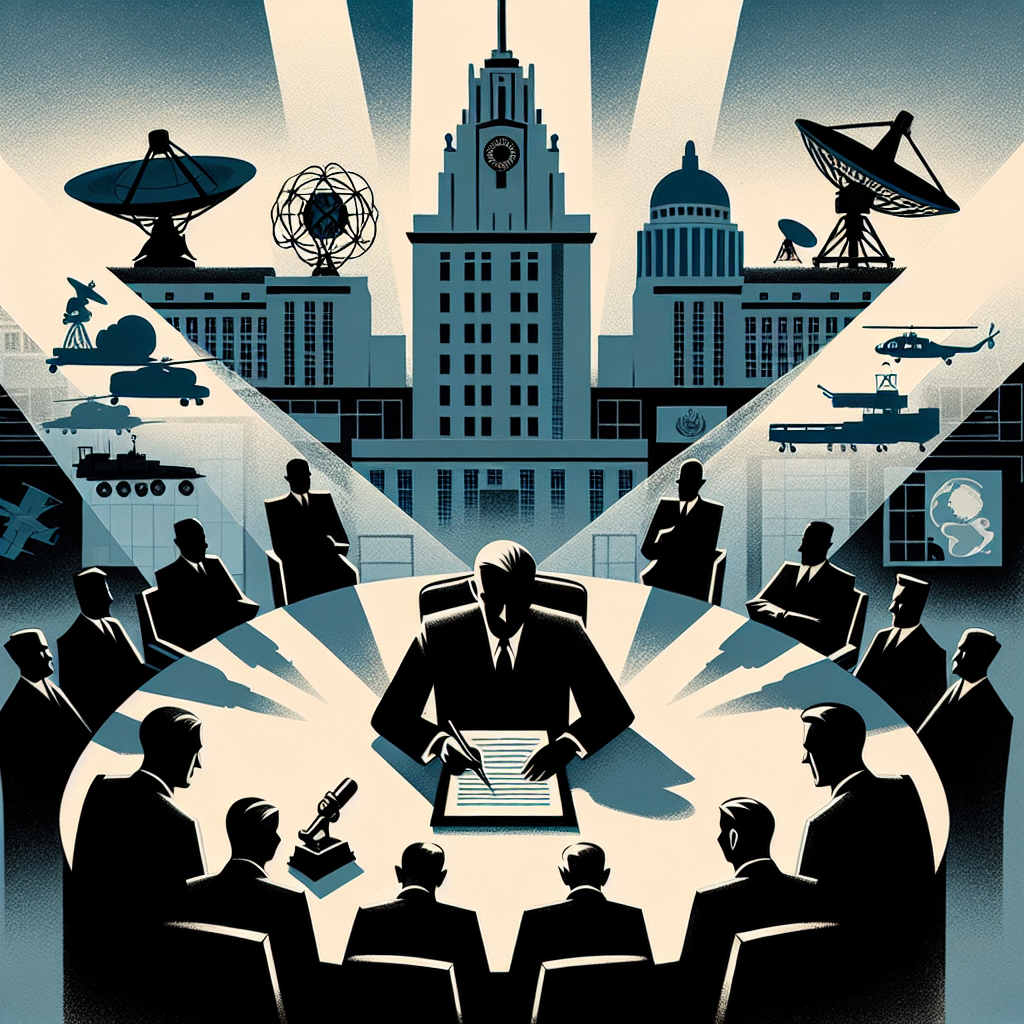
The National Security Act of 1947 was written by people who had just spent five years improvising American national security from scratch and intended never to do it again. Signed by Harry Truman on July 26, 1947, it created the Central Intelligence Agency, the National Security Council, the Joint Chiefs of Staff, and unified the War Department and the Navy Department into a new Department of Defense. In a single legislative stroke, it established the permanent institutional architecture for waging the Cold War — an architecture so durable that its basic outlines remain intact today, more than 75 years later.
The Act emerged from painful lessons. American intelligence before Pearl Harbor had been fragmented across competing agencies that failed to share what each knew. Wartime coordination between Army and Navy had required constant personal intervention from Roosevelt to prevent outright institutional warfare. The OSS — the wartime intelligence agency — had been dissolved in 1945, leaving a gap that the Soviet threat made urgently apparent. The CIA was built on the OSS's bones, with an additional mandate to coordinate all foreign intelligence under a single director. The National Security Council gave the president a formal structure for integrating diplomatic, military, and intelligence advice in peacetime.
The Act's consequences were not all anticipated. The CIA's intelligence analysis mandate was accompanied by an authorization for "other functions and duties" — three words that became the legal foundation for covert operations, regime changes, propaganda campaigns, and paramilitary activities that its authors may not have fully envisioned. The NSC staff, initially a small secretariat, grew under successive administrations into an independent policy-making apparatus whose relationship with the statutory departments of State and Defense has been contentious ever since. The defense unification the Act mandated was resisted so fiercely by the Navy that the first Secretary of Defense, James Forrestal, suffered a mental breakdown and died by suicide in 1949.
The National Security Act created a government within the government — agencies whose activities were classified, whose budgets were hidden in larger appropriations, and whose accountability to Congress was deliberately indirect. The oversight mechanisms that now exist — the Senate and House intelligence committees — were not established until the Church Committee reforms of 1975, after revelations of domestic surveillance, assassination plots, and foreign election interference that the Act's authors had not prevented. Truman, in his final years, said he had never intended for the CIA to become what it became. That may have been true. It was also irrelevant.
| Signed | July 26, 1947 |
| President | Harry S. Truman |
| Created | CIA, NSC, Department of Defense (unified), Joint Chiefs of Staff |
| Replaced | War Department, Navy Department (merged into DoD) |
| First SecDef | James Forrestal (died 1949) |
| "Other functions" | Legal foundation for CIA covert operations |
| Reformed by | Church Committee, 1975 (intelligence committees created) |
| Date | Signed July 26, 1947 |
| Location | Washington, D.C. |