Battle of Lexington and Concord
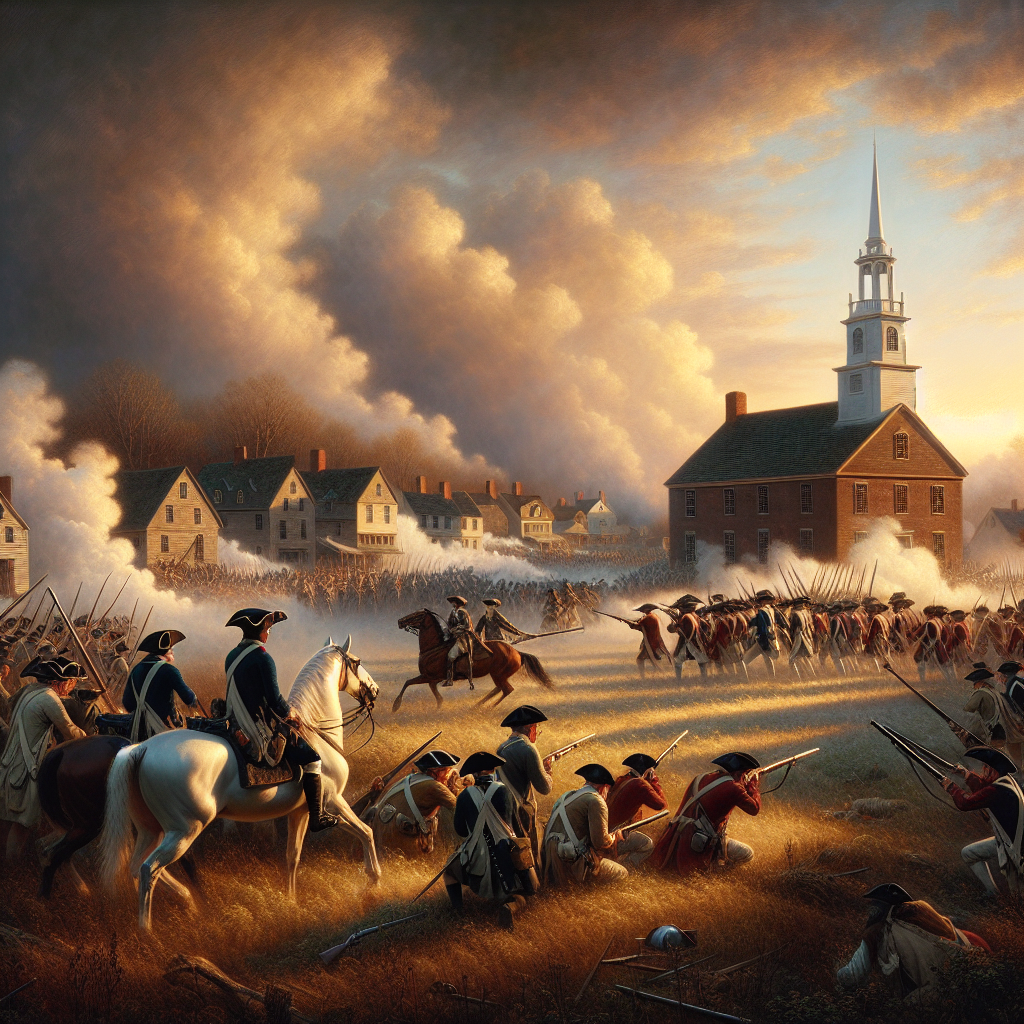
In the pre-dawn darkness of April 19, 1775, 700 British regulars marched out of Boston under orders to seize a colonial weapons cache in Concord and arrest Samuel Adams and John Hancock in Lexington. Paul Revere and William Dawes had ridden ahead to warn them. When the redcoats reached Lexington Green at sunrise, 77 militiamen stood in their way. Someone fired — no one has ever established who — and eight colonists fell dead. The American Revolution had begun.
By the time the British reached Concord and destroyed what little remained of the weapons cache, militia companies from across the region were converging on them. At the North Bridge in Concord, the colonists fired back for the first time — "the shot heard round the world," as Ralph Waldo Emerson later called it. The real devastation came on the march back to Boston: minute men fired from behind stone walls, trees, and farmhouses along 18 miles of road, killing 73 British soldiers and wounding 174 more.
The battles accomplished more than anyone on either side anticipated. They demonstrated that colonial militias could inflict serious casualties on professional British troops, destroyed the myth of inevitable British military superiority, and turned a political dispute into an armed conflict there was no walking back from. Within weeks, colonial delegations were gathering in Philadelphia for the Second Continental Congress. Within 14 months, they would declare independence.



| Date | April 19, 1775 |
| Location | Lexington and Concord, Massachusetts |
| British Forces | ~700 regulars (Col. Francis Smith) |
| Colonial Forces | ~4,000 militia (various commanders) |
| Casualties | British: 73 killed, 174 wounded; Colonial: 49 killed, 41 wounded |
| Significance | First military engagements of the American Revolutionary War |
| Date | April 19, 1775 |
| Location | Lexington and Concord, Massachusetts |