The Skyscraper
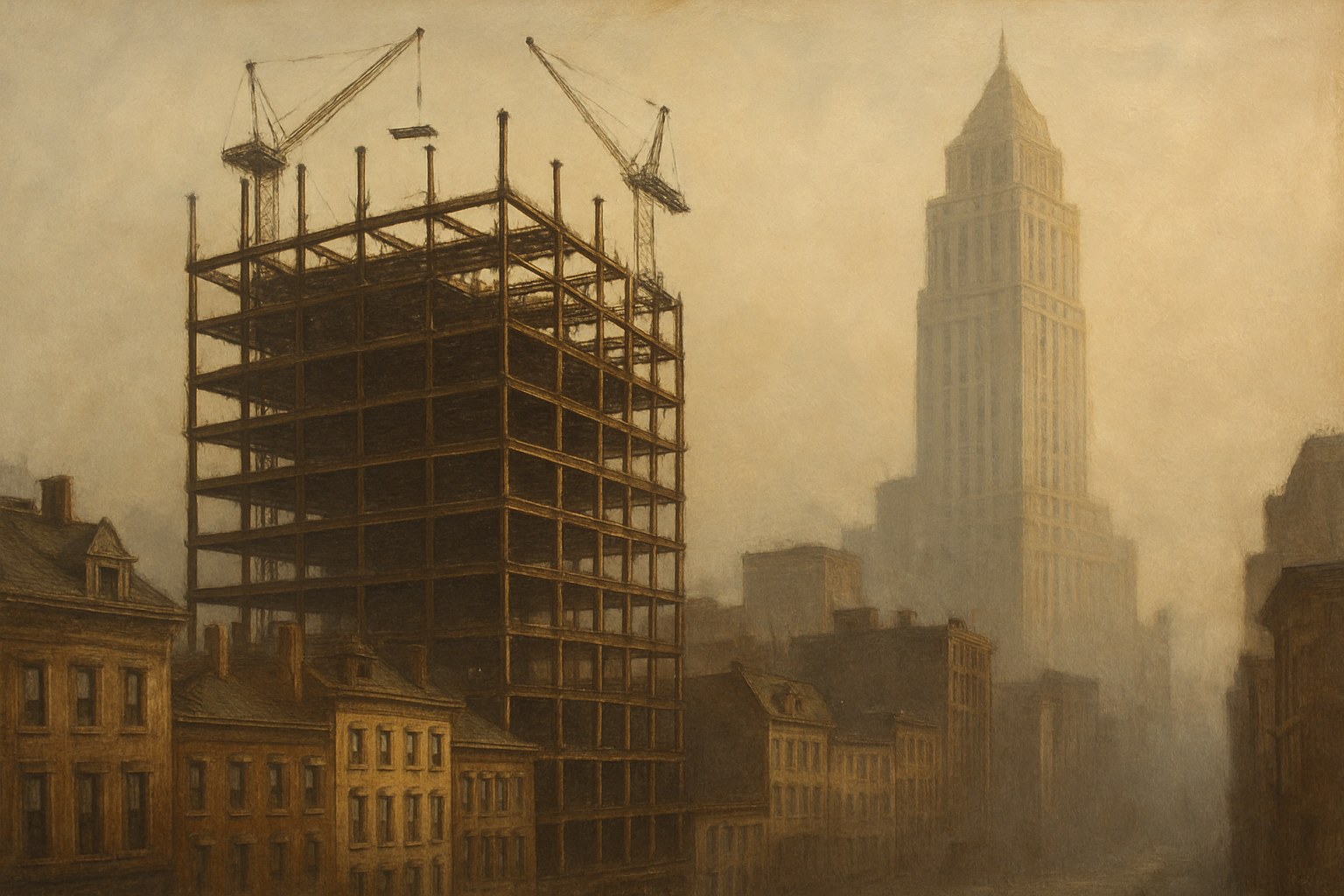
By the 1880s the business districts of American cities had run out of room. Land at the center of Chicago and New York commanded prices that made a four-story building an extravagant waste of expensive ground, and the masonry construction of the age set a hard limit on height. A wall tall enough to carry ten floors had to be so thick at its base that it swallowed the rentable space it was meant to create. The only direction left was up, and the only way up was to stop building with walls.
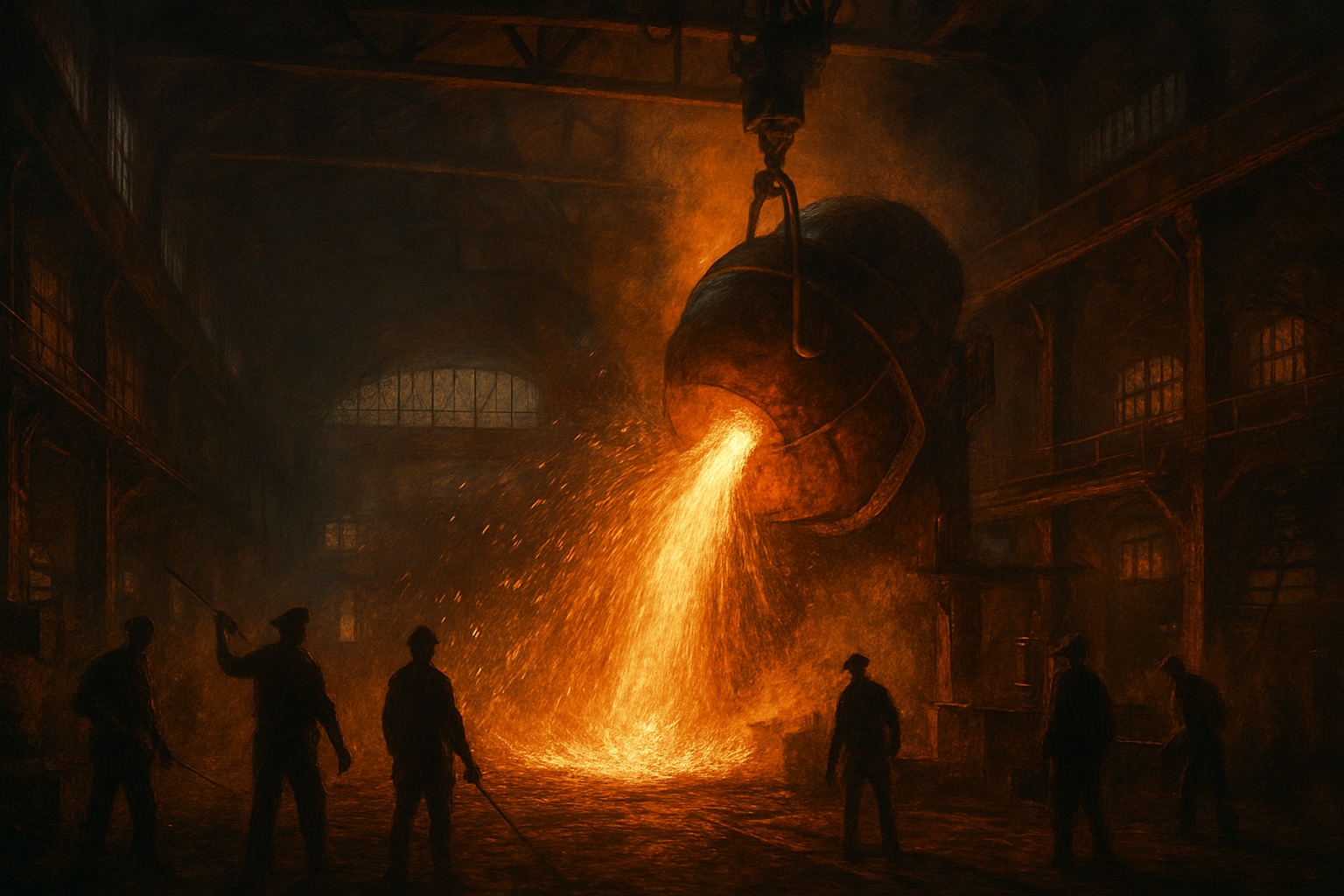
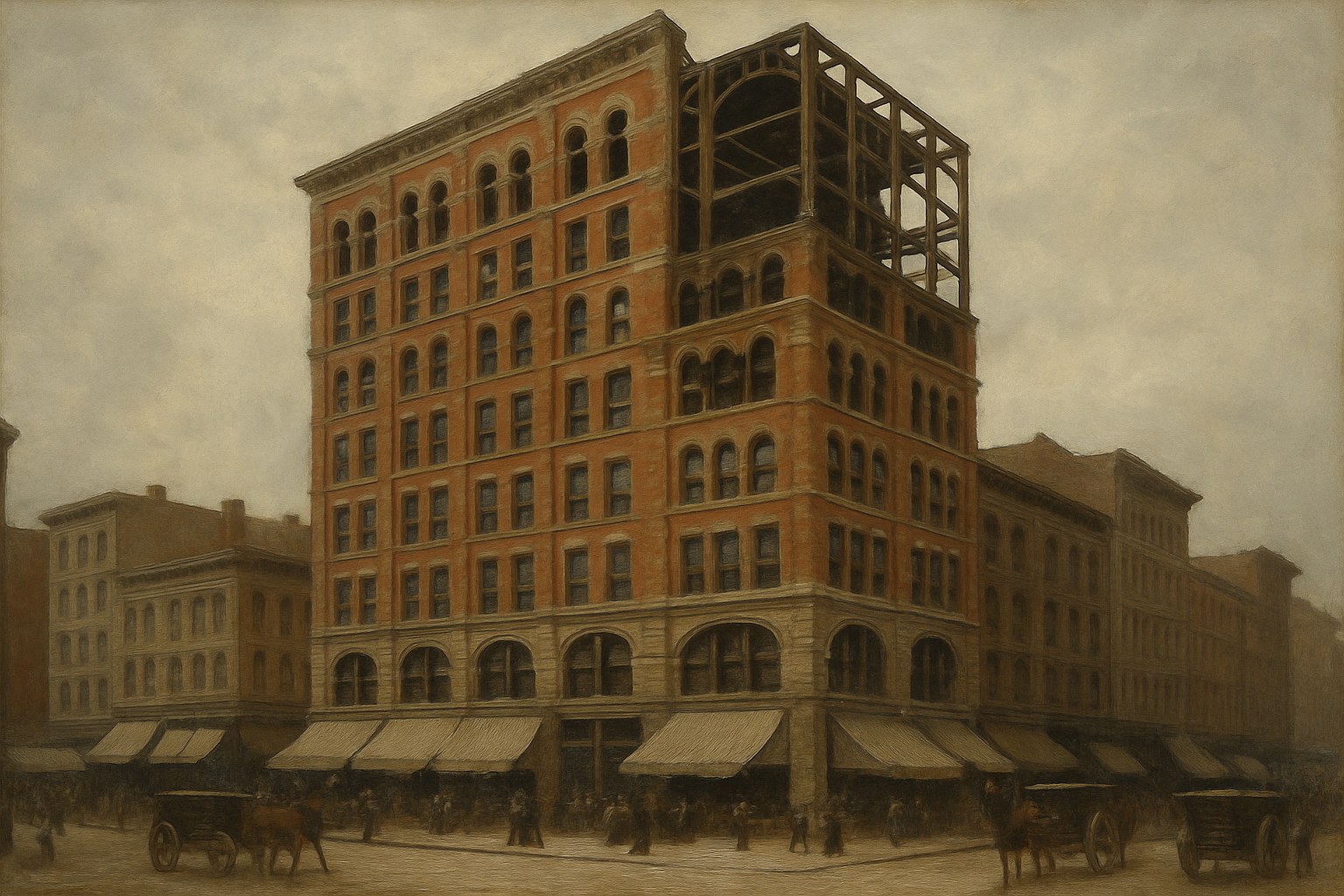
The answer was the steel skeleton. Instead of piling stone on stone, engineers riveted a cage of iron and then steel columns and beams, hung the exterior on it as a curtain, and let the frame carry the load. Walls became skin. Two other things made the tall building livable. Elisha Otis had demonstrated a safety brake that turned the elevator from a freight hoist into something a person would willingly ride, and the Bessemer and open-hearth mills built to supply the railroads had made structural steel cheap enough to use by the ton.
Chicago supplied the laboratory. The fire of 1871 had cleared the business district, and the rebuilding drew a generation of ambitious architects and engineers into a few square blocks of prime, ruined land. Out of that came the Chicago School — William Le Baron Jenney, Daniel Burnham and John Root, Dankmar Adler and Louis Sullivan — who worked out the frame, the wind bracing, and the floating raft foundation that a tall building needed on Chicago's soft clay. Sullivan also supplied the movement's slogan: form ever follows function.
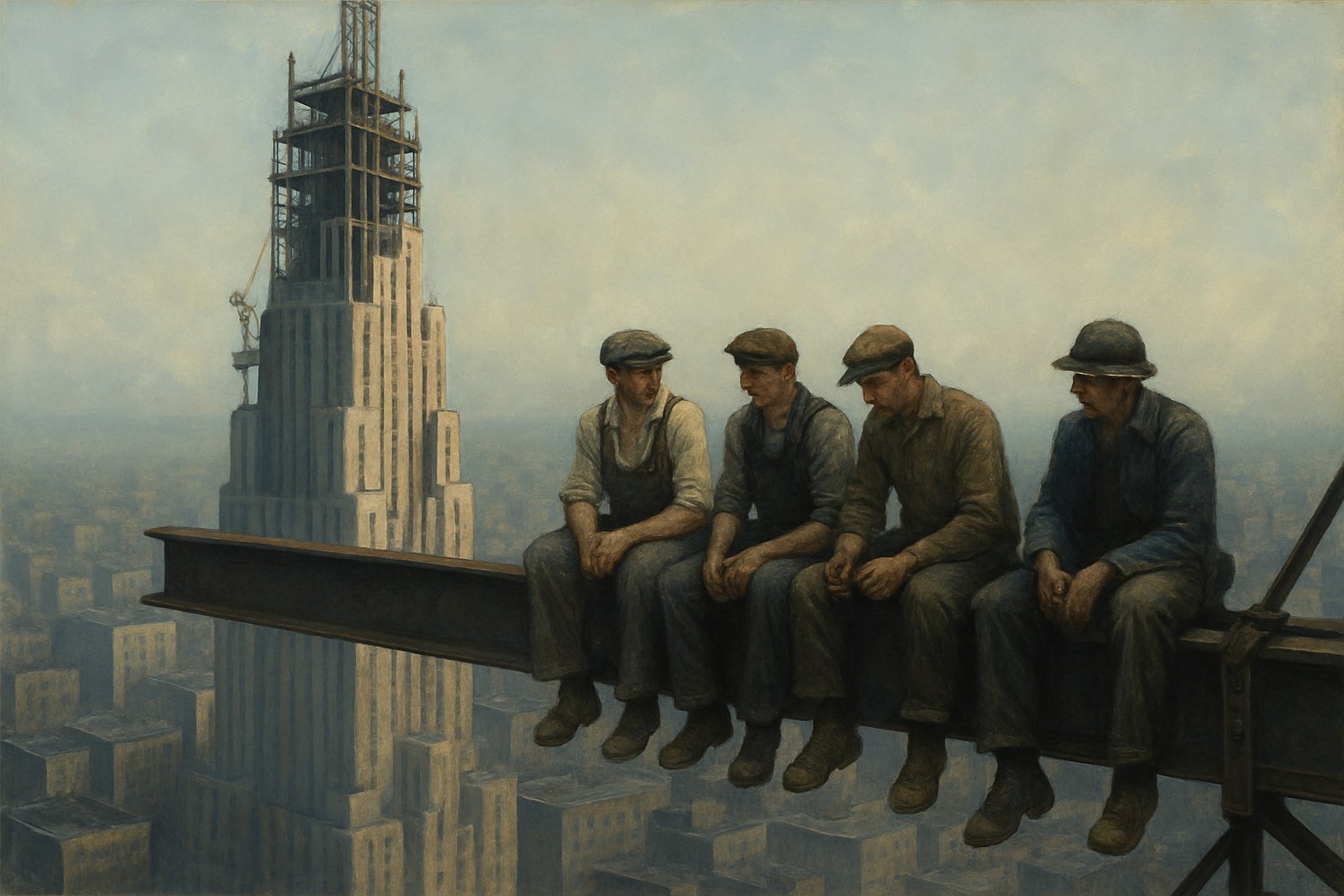
New York took the type and pushed it to extremes, and by the 1930s the skyline had become the country's most recognizable image of itself. The skyscraper belonged to America in a way few building types have ever belonged to one nation — a product of high land values, cheap steel, corporate advertising, and a frank willingness to let engineering set the shape of a city. Every dense downtown built anywhere since works from the solution Chicago arrived at in the 1880s, and the arguments about what a tall building should look like have never stopped.



| Emerged | 1880s, Chicago |
| Key innovation | The load-bearing steel frame, with walls as skin |
| Enabling tech | The Otis safety elevator and cheap Bessemer steel |
| Chicago School | Jenney, Burnham and Root, Adler and Sullivan |
| Slogan | "Form ever follows function" — Louis Sullivan |
| Spur | Land scarcity in dense downtown business districts |
| Date | From the 1880s |