Louis Sullivan
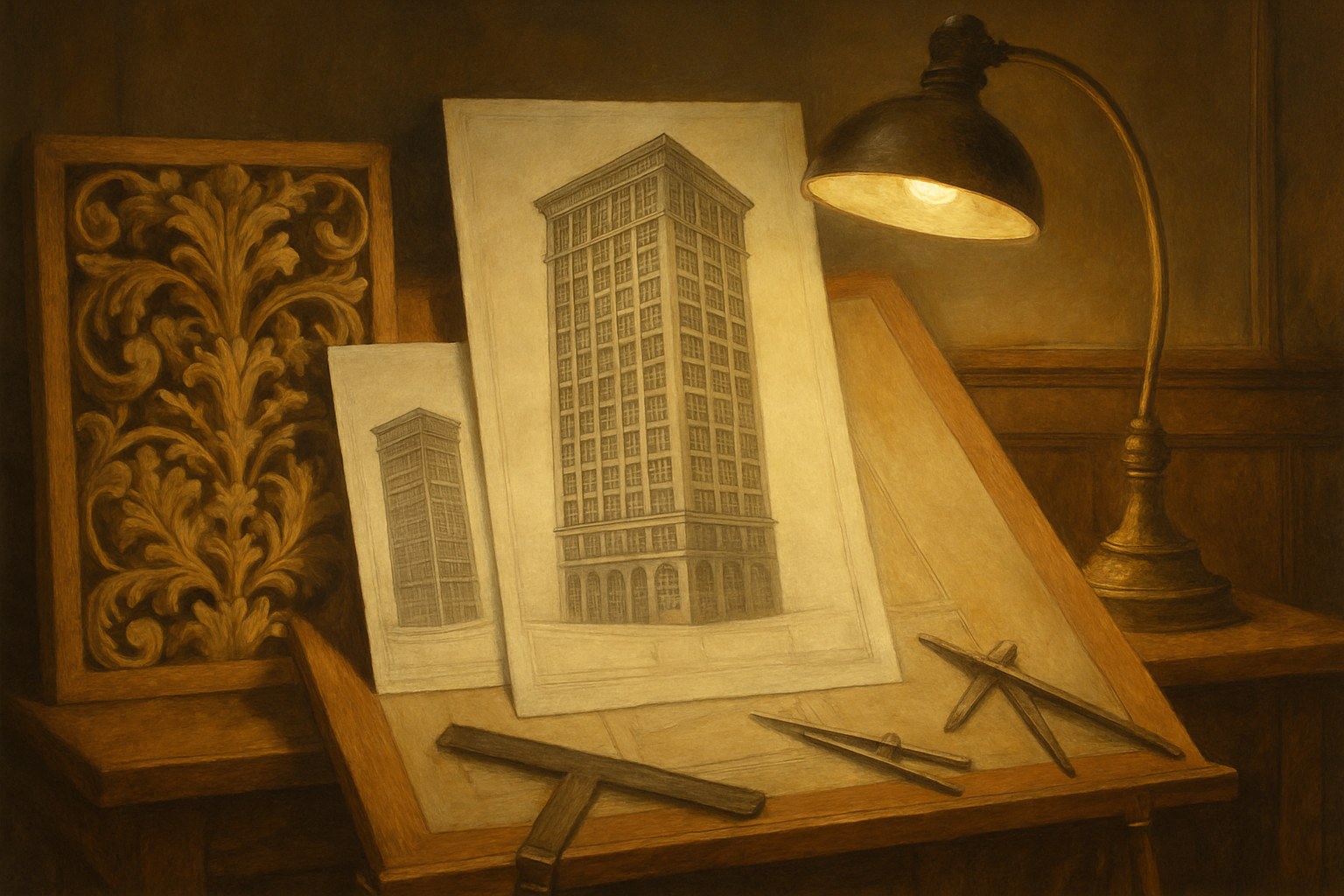
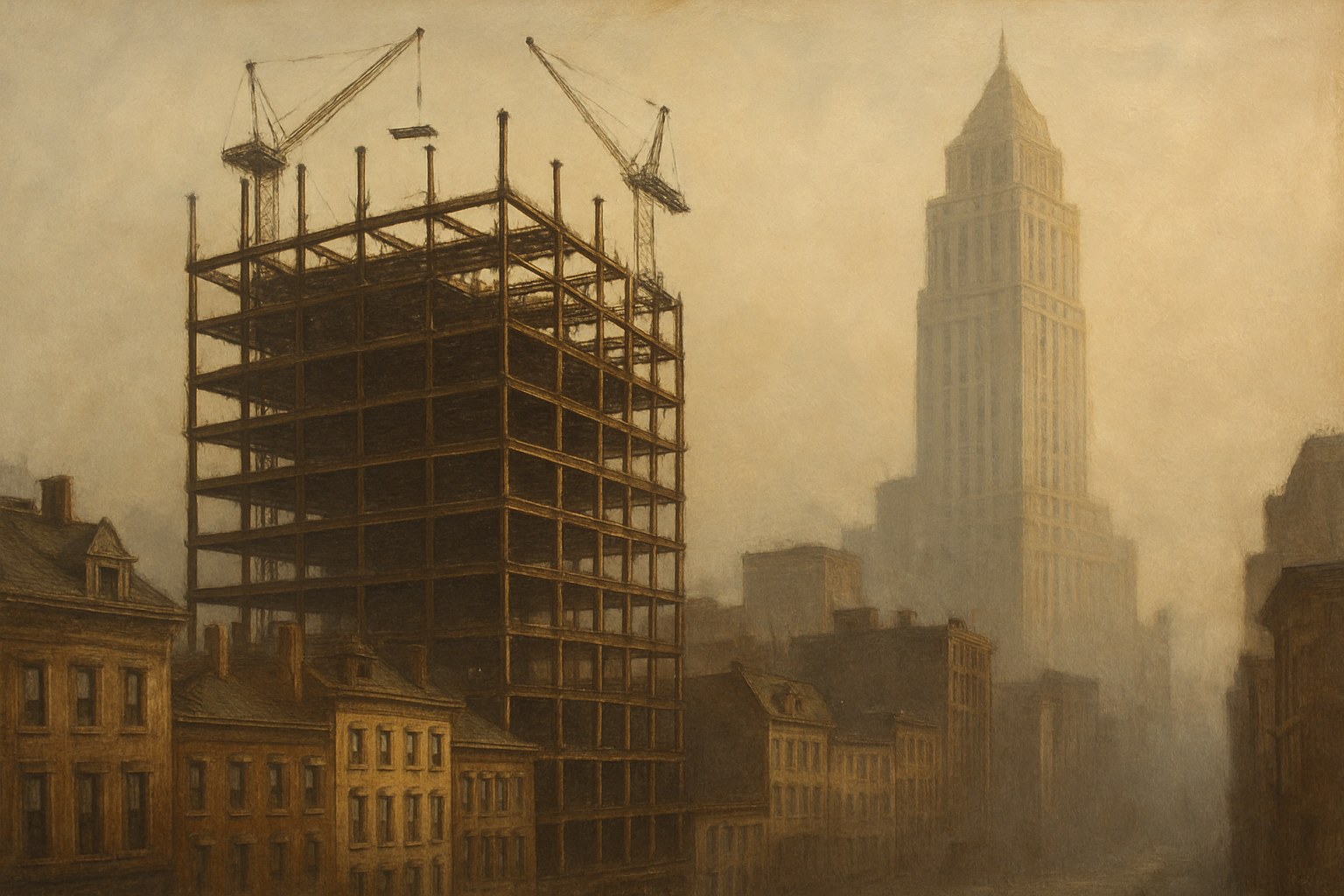
The tall office building was a new thing in the world in the 1880s and nobody knew what it should look like. Architects were dressing steel frames in whatever historical costume came to hand — Gothic, Renaissance, Romanesque — as though the height were an embarrassment to be draped over. Louis Sullivan thought the question deserved a better answer, and he spent his working life insisting that a building of ten or twenty stories was a genuinely new type that had to be given a form of its own.
Trained briefly at MIT and then at the Ecole des Beaux-Arts in Paris, Sullivan found his complement in Dankmar Adler, an engineer and acoustician, and from 1883 the firm of Adler and Sullivan produced the buildings that defined the Chicago School. The Auditorium Building packed a theater, a hotel, and offices into one enormous block. The Wainwright Building in St. Louis and the Guaranty Building in Buffalo took the skyscraper and stated it plainly — a heavy base, an unbroken vertical shaft of piers, a crowning cornice, the whole surface worked in terra cotta ornament of his own invention.
In an 1896 essay, The Tall Office Building Artistically Considered, he set out the reasoning and coined the line that outlived everything else he wrote: form ever follows function. He meant it less as a demand for stripped austerity than as an argument that a building's shape should grow out of its purpose the way a leaf grows from a stem, which is why his own work is covered in foliate ornament that later modernists found baffling. Frank Lloyd Wright drafted for him for six years and called him lieber meister, the beloved master, ever after.
The white plaster classicism of the 1893 Chicago world's fair turned American taste back toward Beaux-Arts revival, and Sullivan's kind of building went out of fashion almost overnight. Adler left the partnership in 1895, the large commissions stopped, and he spent his last two decades designing small ornamental banks for prairie towns, drinking heavily, and living on loans from friends. He died in a Chicago hotel room in 1924, nearly destitute. His reputation recovered afterward, partly through Wright's advocacy and partly through a modernism that adopted his slogan while discarding the ornament he thought inseparable from it.

| Lived | 1856-1924 |
| Partnership | Adler and Sullivan, from 1883 |
| Key works | Auditorium Building, Wainwright Building, Guaranty Building |
| Essay | "The Tall Office Building Artistically Considered" (1896) |
| Phrase | "Form ever follows function" |
| Draftsman | Frank Lloyd Wright, who called him lieber meister |
| Date | 1856-1924 |
| Location | Chicago, Illinois |