The Home Insurance Building
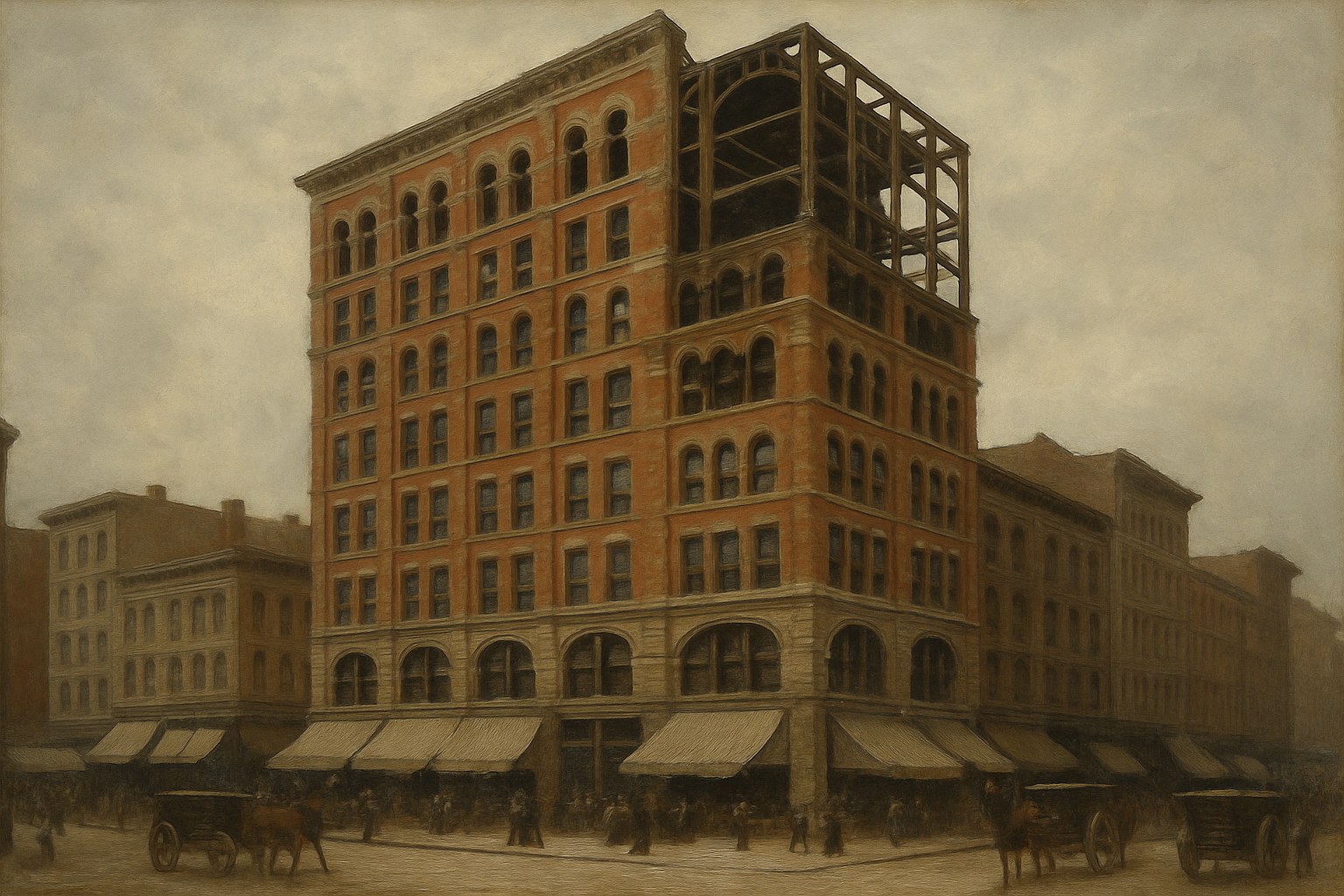
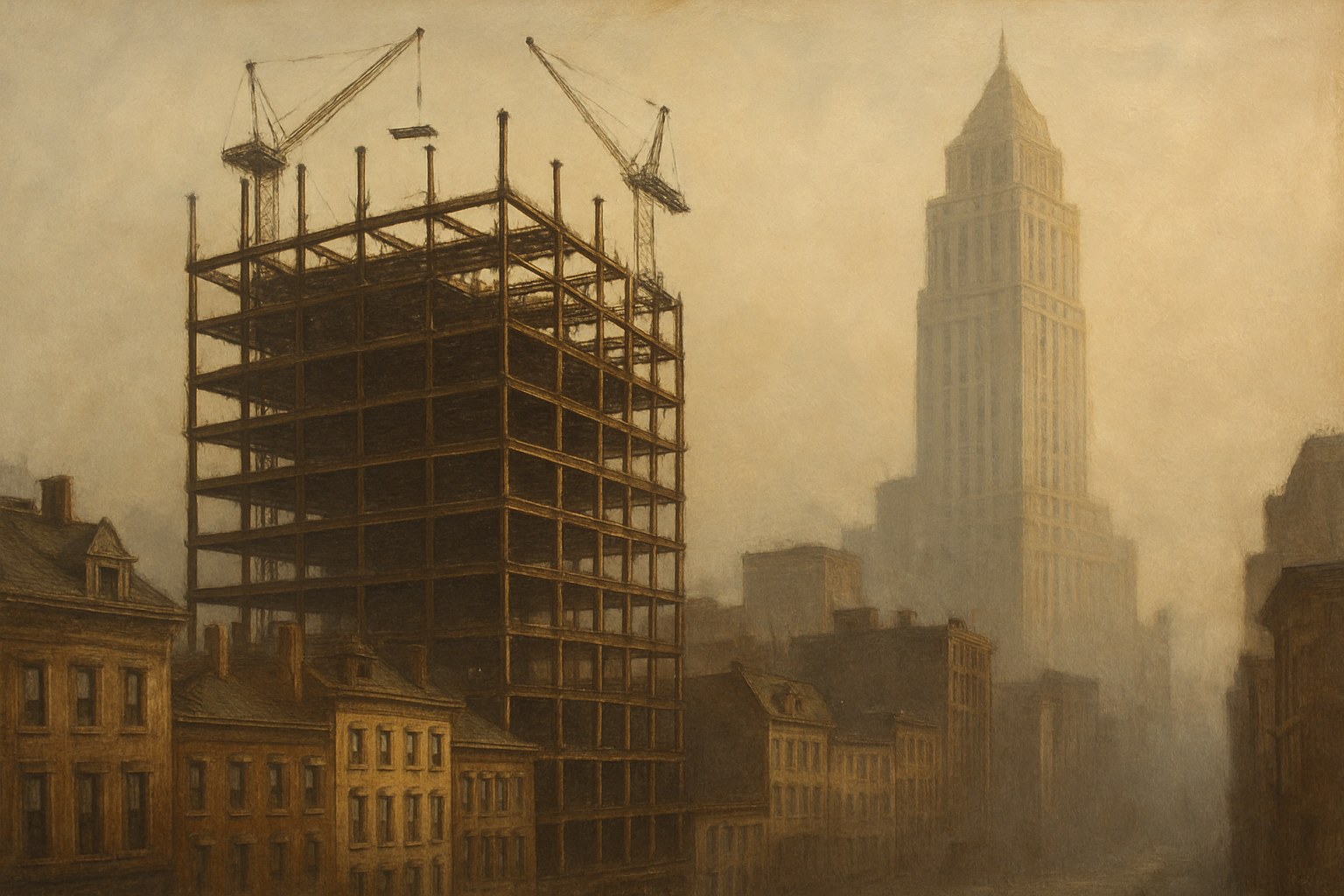
When the Home Insurance Building opened at LaSalle and Adams in Chicago in 1885, nobody on the sidewalk called it the first skyscraper. It was ten stories, which was tall but not unprecedented, and its brick and stone exterior looked much like its neighbors. What made it unusual was hidden. William Le Baron Jenney had carried the floors and the outer walls on a frame of iron columns and beams, with rolled steel beams above the sixth floor, so that the masonry hung on the structure instead of holding it up.
Jenney was an engineer before he was an architect, trained in Paris and seasoned building bridges and fortifications for the Union Army. His client wanted a fireproof building with as much daylight and rentable floor area as an expensive corner lot would allow, and the frame delivered both — thin exterior walls, wide windows, and a structure that weighed roughly a third of what a masonry building of the same size would have. City inspectors, unconvinced the thing would stand, are said to have halted the work partway up to watch it.
The claim that it was the first skyscraper is contested and always has been. A committee of Chicago architects endorsed it in 1931, as the building was coming down, but critics have pointed out that the frame was not fully self-supporting, that some masonry still carried load, and that earlier structures in New York and elsewhere had used iron framing in comparable ways. The honest verdict is that no single building invented the type. The Home Insurance Building was the clearest early case of the method that then became standard everywhere.
It stood only forty-six years. In 1931 it was demolished to make room for a taller tower, an ordinary fate for a Loop building on valuable ground, and the structure historians would argue over for the next century survived in photographs and a bronze plaque. Its short life is a fair emblem of the American attitude toward the built environment: the innovation mattered, the artifact did not, and the city that worked out the steel frame tore down the proof as soon as the arithmetic favored something bigger.


| Completed | 1885 |
| Architect | William Le Baron Jenney |
| Height | Ten stories, later raised to twelve |
| Structure | Iron frame, steel beams above the sixth floor |
| Claim | "First skyscraper" — disputed by historians |
| Demolished | 1931 |
| Date | Built 1885, demolished 1931 |
| Location | Chicago, Illinois |