The Electrification of America
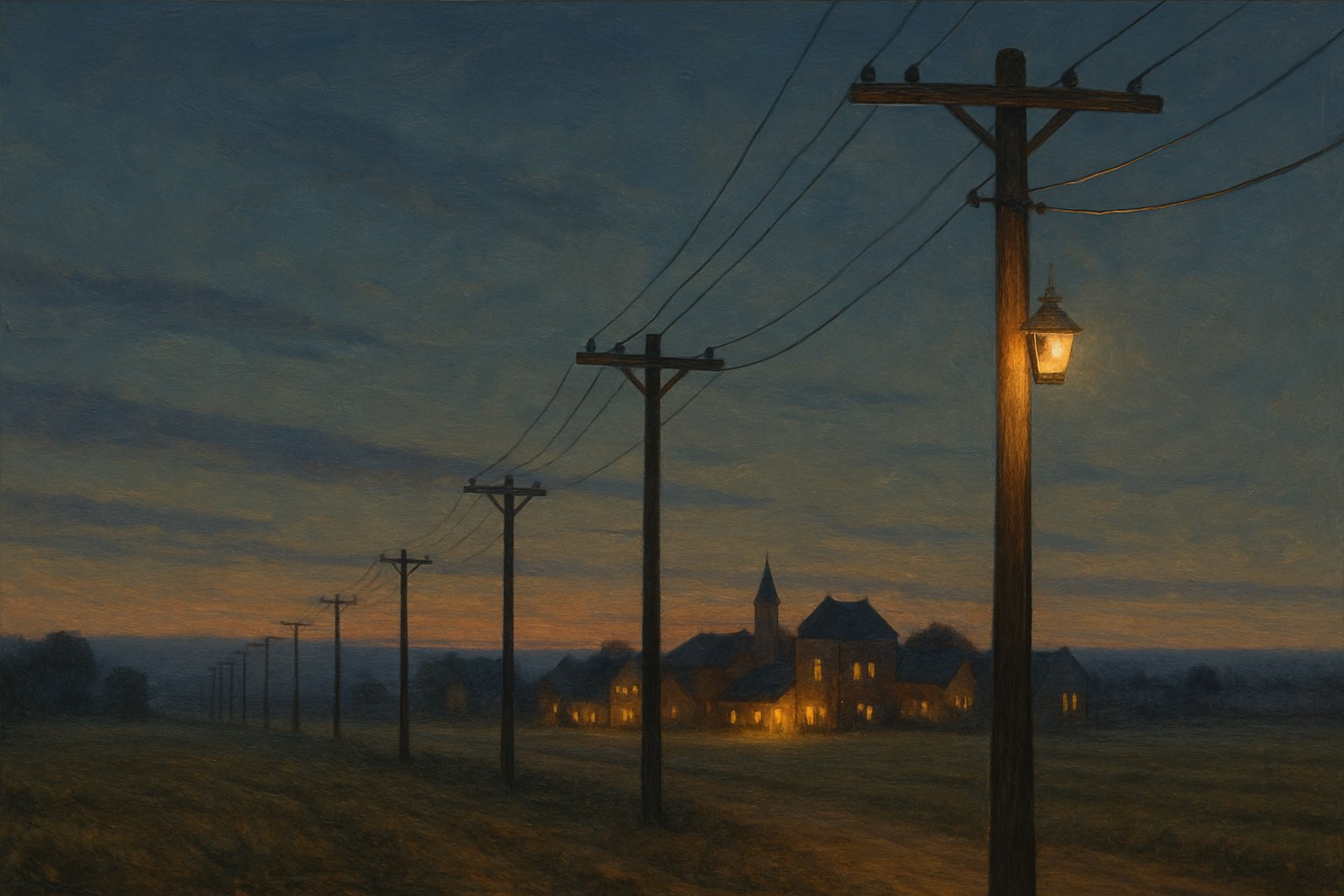
Before the wires went up, American light came from fire. Cities ran on coal gas piped through mains laid since the 1810s, and the lamplighter making his evening rounds was a fixture of urban life. Gaslight blackened ceilings, consumed the oxygen in a closed room, and burned down a predictable number of buildings every year. Farms and small towns did without even that, relying on kerosene lamps and candles. Nearly everything a household or a factory did after dark was shaped by the limits of an open flame.
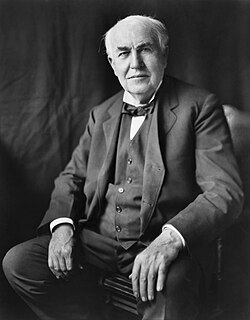
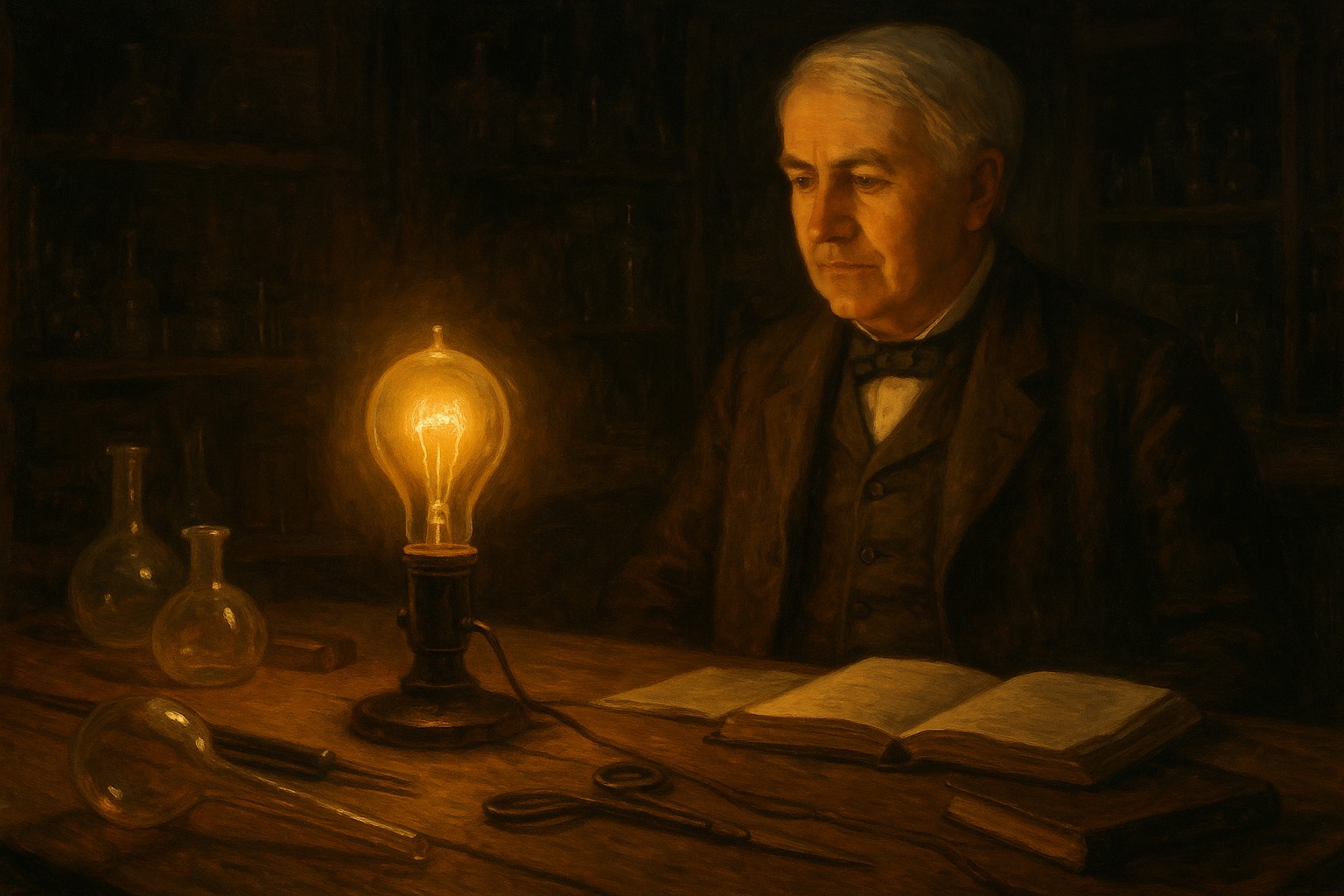
The change came in stages rather than all at once. Edison's Pearl Street Station began selling current in lower Manhattan in 1882, but as late as 1907 only about eight percent of American dwellings had electric service. The share reached roughly a third by 1920 and about two-thirds by 1930, and it was electric streetcars and industrial motors, not household lamps, that consumed most of the early output. Urban America was substantially wired by the eve of the Great Depression.
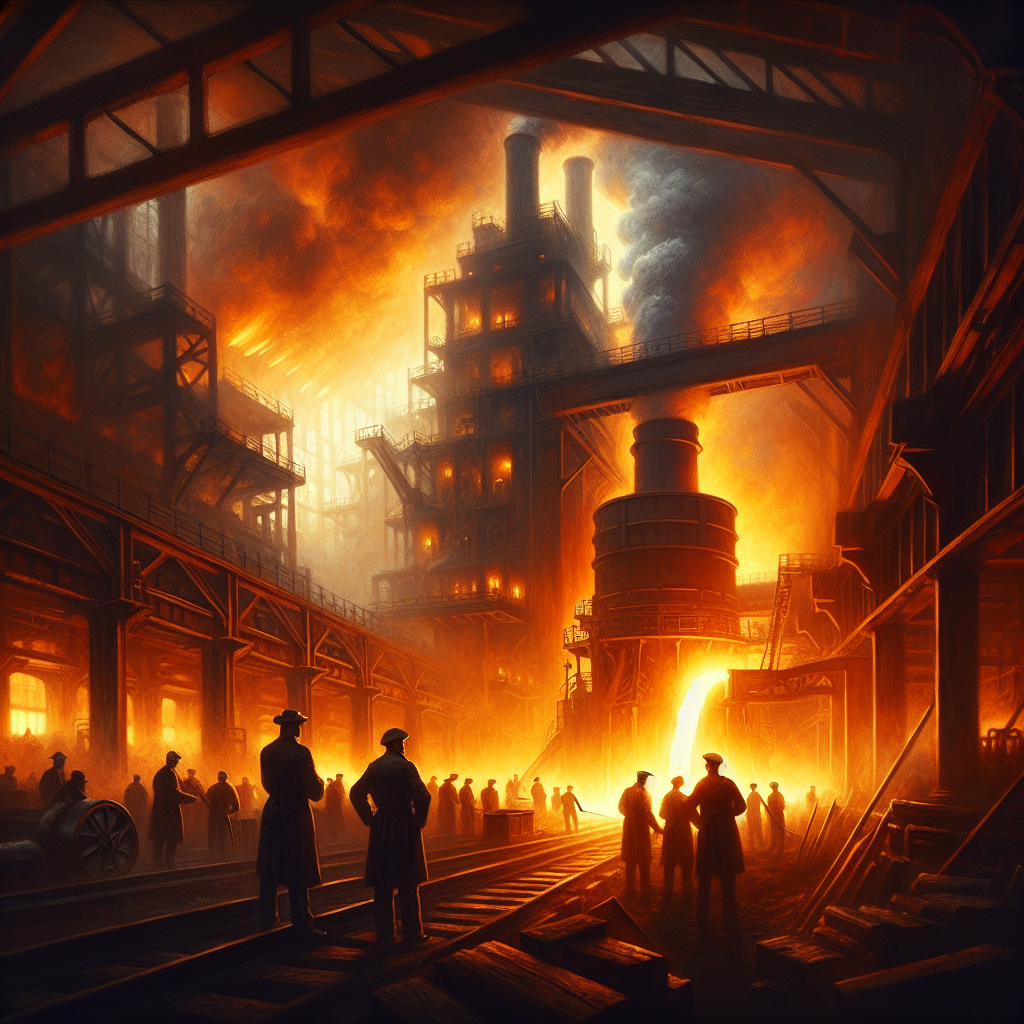
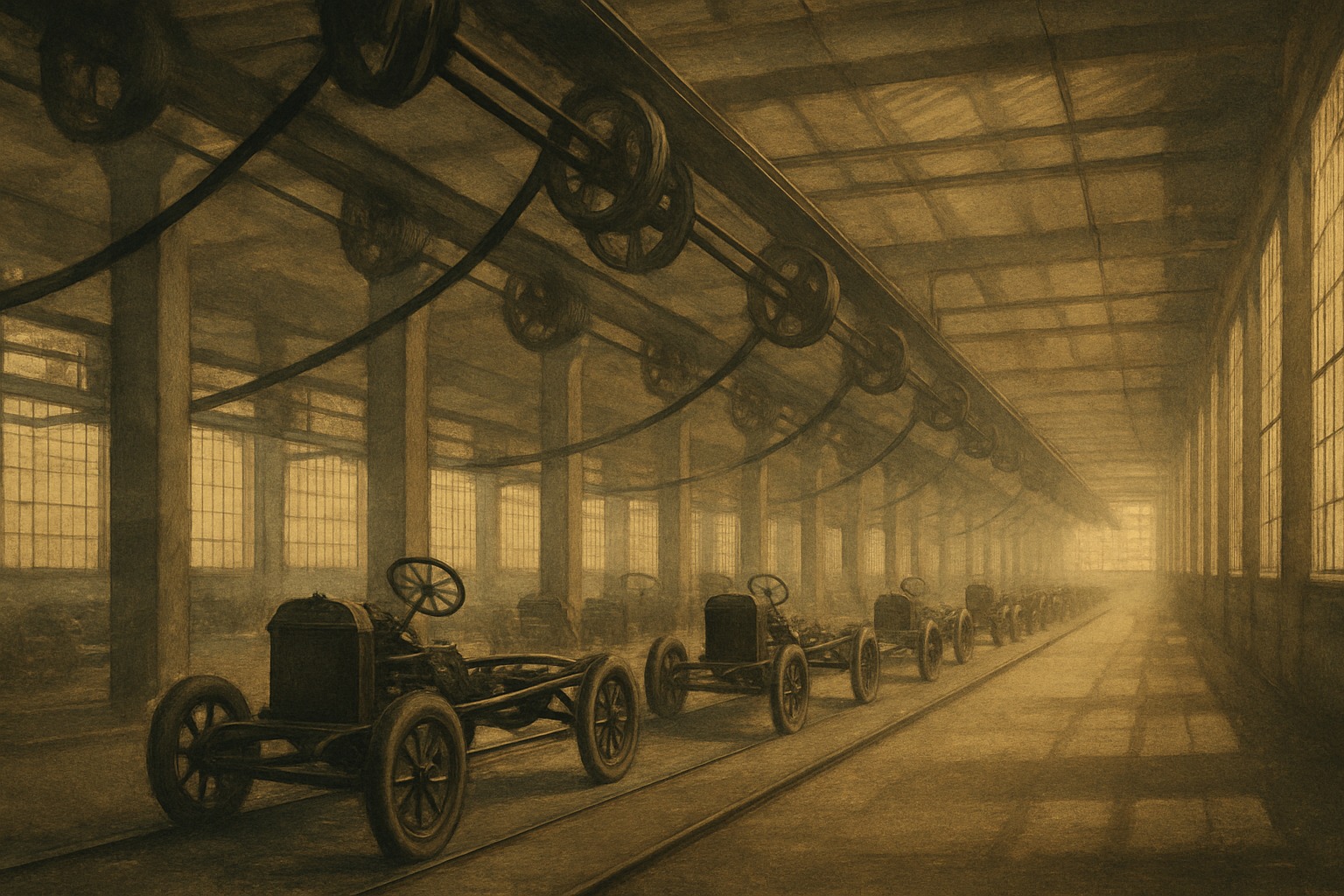
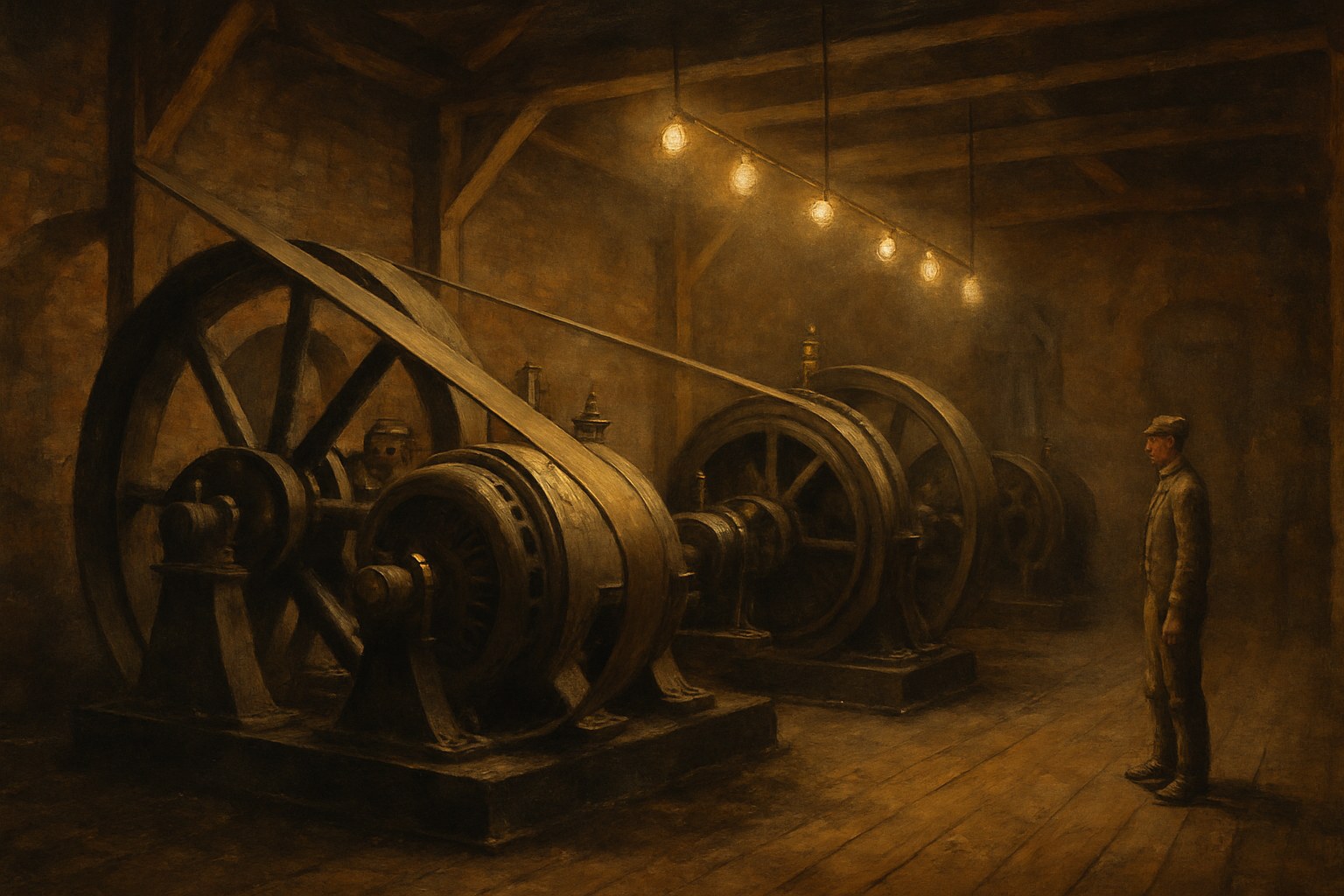
Inside the factory the effects ran deeper than lighting. Steam power had to be distributed mechanically, through a central engine turning a line shaft with leather belts dropping to each machine, which forced plants to be built tall and narrow and to arrange their equipment around the driveshaft rather than around the work. Giving every machine its own motor freed the floor plan, and manufacturers rebuilt as single-story plants laid out by the sequence of production. Economists have noted that the productivity gains lagged the technology by decades, arriving only in the 1920s when the buildings themselves were redesigned.
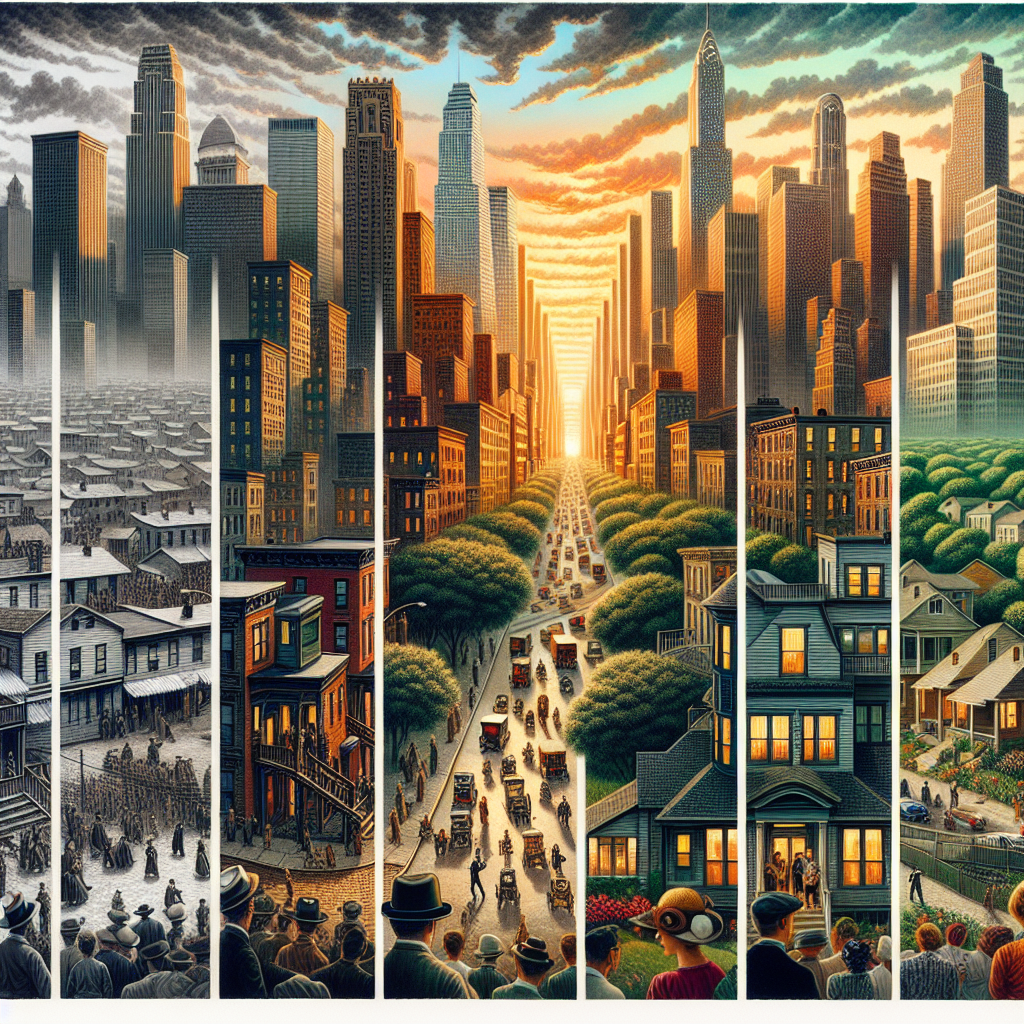
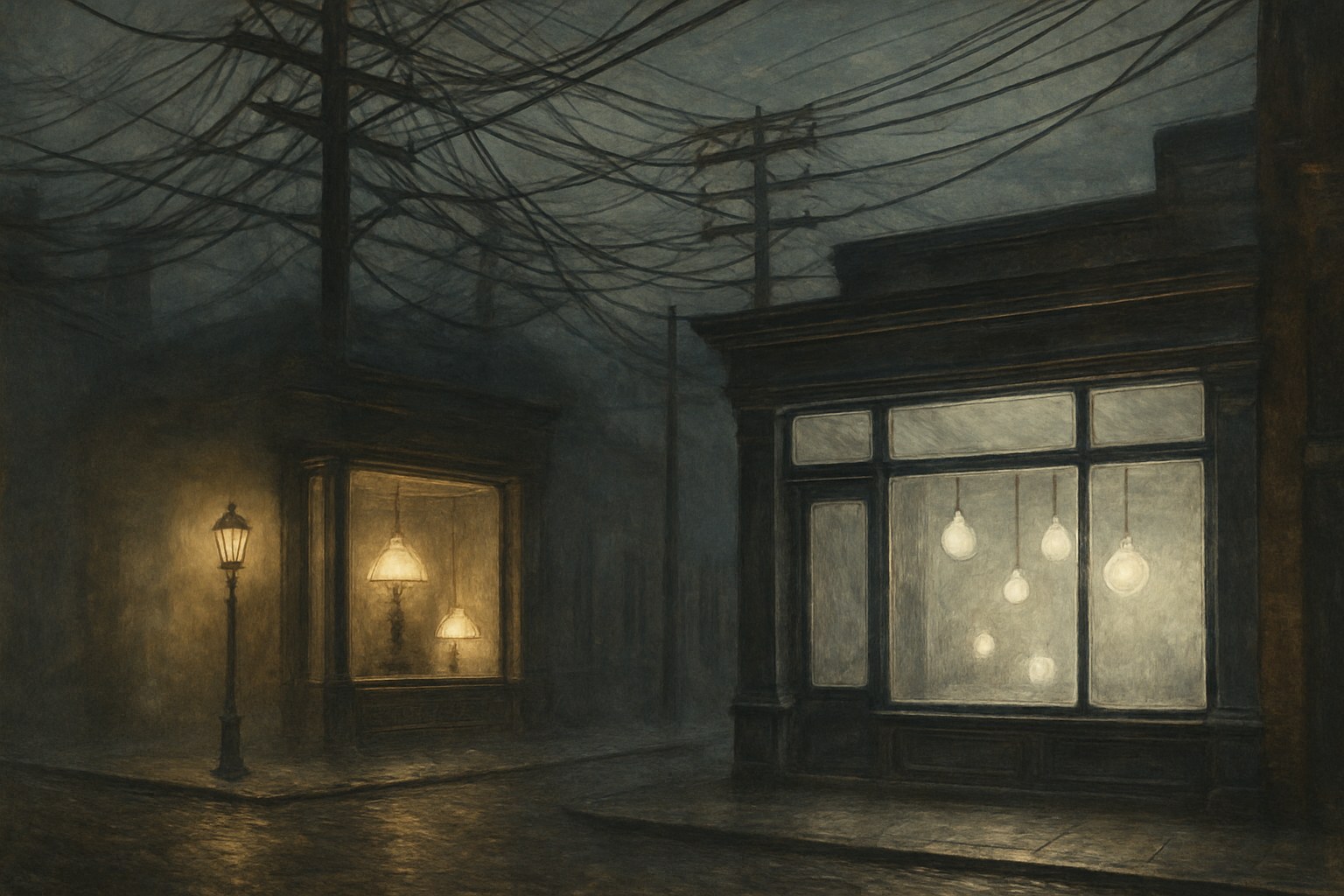
Cheap light detached the working day from the sun, filling factories with night shifts, department stores with evening trade, and city streets with an illuminated nightlife. In the home, the current arrived first as a lamp socket and then as a growing list of machines — iron, vacuum, washer, refrigerator — that displaced the icebox and the washboard, though historians have argued that rising standards of cleanliness absorbed much of the time saved. The gap between the two Americas was the striking part: cities had power by 1930, while only about one farm in ten did, and closing that fifty-year lag took a federal program and another generation.
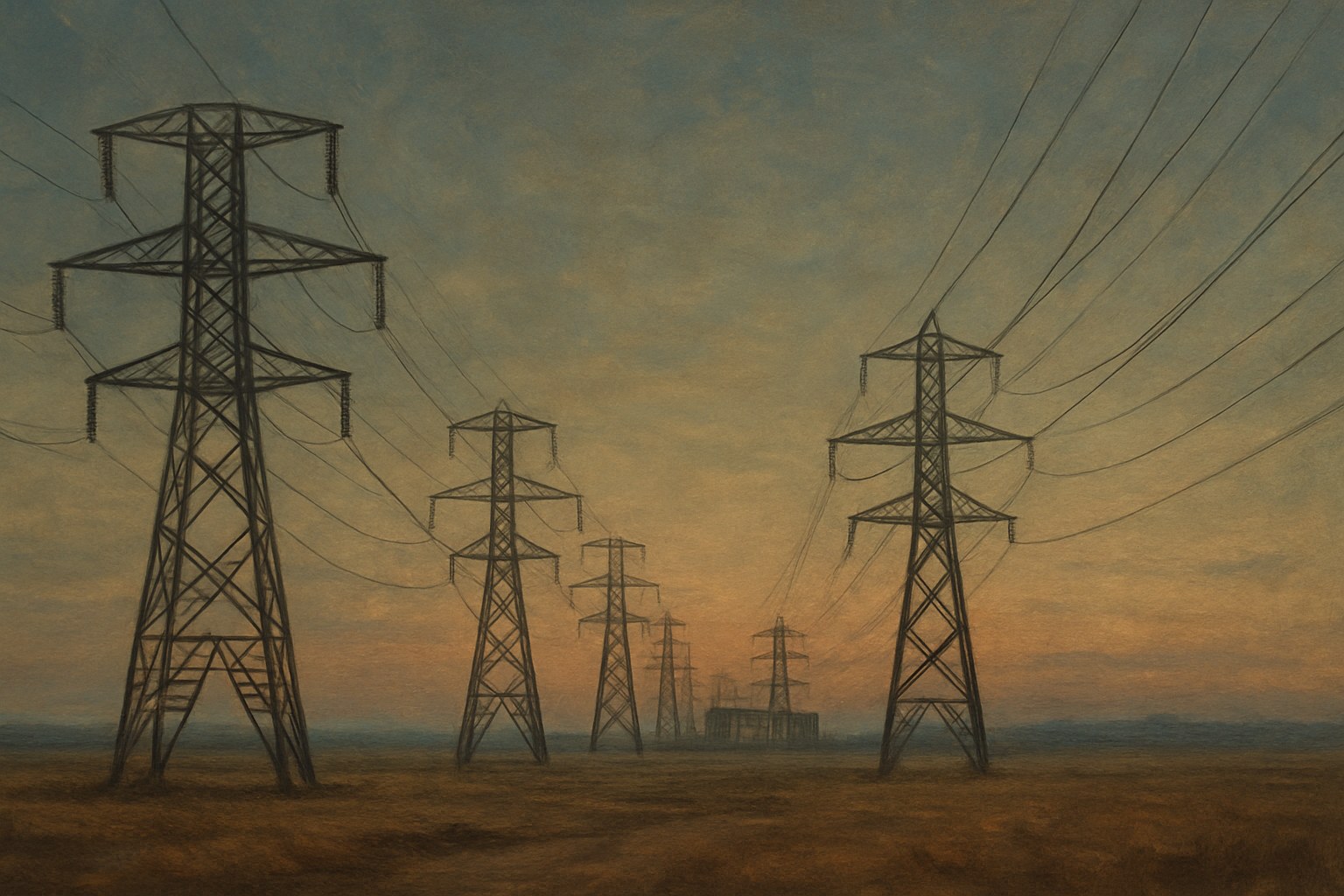
| Began | 1882, Pearl Street Station, New York |
| Homes wired | About 8% in 1907, 35% in 1920, 68% in 1930 |
| Displaced | Coal gas lighting, kerosene lamps, candles |
| Factory shift | From line shafts and belts to a motor per machine |
| Rural lag | About 10% of farms electrified as late as 1935 |
| Closed by | The Rural Electrification Administration and the war years |
| Date | 1880s-1950s |