Puerto Rico
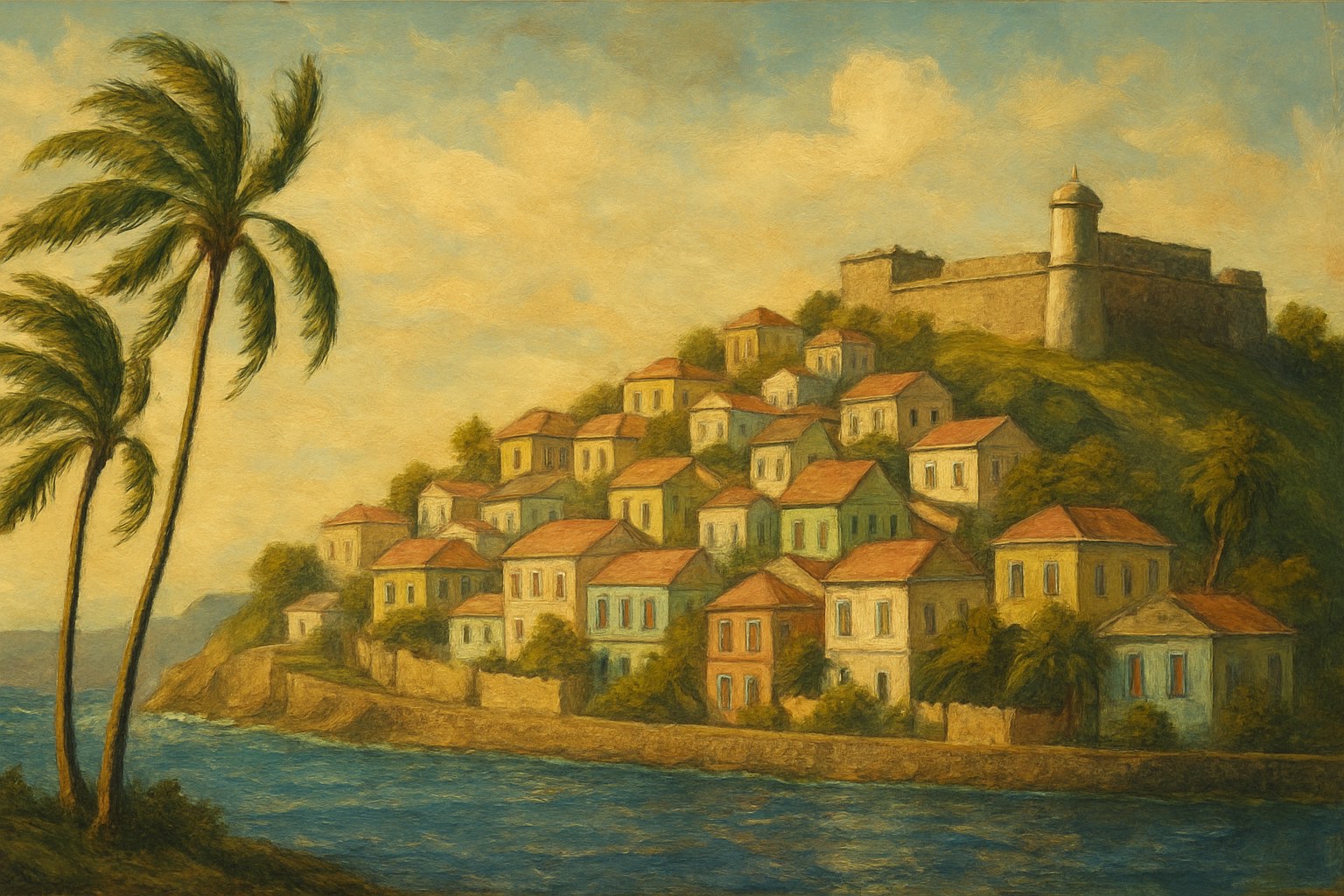
Puerto Rico had just won what it had spent a century asking Spain for. An autonomy charter granted in November 1897 gave the island its own legislature, and the first government under it took office in July 1898. That same month American troops landed at Guanica, and within three weeks the fighting was over. The Treaty of Paris in December ceded the island outright. A people who had briefly governed themselves under one empire found themselves under another that had not yet decided what they were.
Congress answered slowly and partially. The Foraker Act of 1900 created a civil government with a governor and executive council appointed in Washington, an elected lower house, and a resident commissioner in Congress who could speak but not vote. It made islanders citizens of Puerto Rico rather than of the United States. The Supreme Court, in the Insular Cases beginning in 1901, held that the island belonged to the United States without being part of it. The Jones Act of 1917 granted American citizenship and an elected senate, but no vote for president and no voting member of Congress — a settlement that remains in place.
The middle of the century brought a negotiated autonomy. Congress let Puerto Ricans elect their own governor in 1948, choosing Luis Munoz Marin, whose Popular Democratic Party pursued industrialization under Operation Bootstrap while hundreds of thousands migrated to the mainland. Under Public Law 600 the island wrote its own constitution, and in 1952 it became the Estado Libre Asociado, the Commonwealth of Puerto Rico. Nationalists who rejected the arrangement staged an uprising at Jayuya and an attack on Blair House in 1950 and opened fire in the House chamber in 1954.
The status question has been put to voters repeatedly without settling. Statehood supporters argue that only equal representation and equal federal benefits can end a second-class citizenship. Independence supporters argue that no amount of representation makes a distinct nation into a state. Commonwealth supporters argue the present arrangement preserves local autonomy and Puerto Rican identity. Plebiscites in 1967, 1993, and 1998 favored the status quo, while those of 2012, 2017, and 2020 produced statehood majorities amid boycotts and low turnout that opponents say invalidate them. A debt crisis brought a federal oversight board in 2016, and Hurricane Maria in 2017 knocked out power island-wide for months, killing roughly 2,975.
| Acquired | Treaty of Paris, December 1898 |
| Foraker Act | 1900 — civil government, appointed governor |
| Jones Act | 1917 — U.S. citizenship, no presidential vote |
| Commonwealth | 1952 — Estado Libre Asociado |
| In Congress | One resident commissioner, no floor vote |
| Hurricane Maria | September 2017 — about 2,975 deaths |
| Date | American since 1898 |
| Location | San Juan, Puerto Rico |