American Samoa
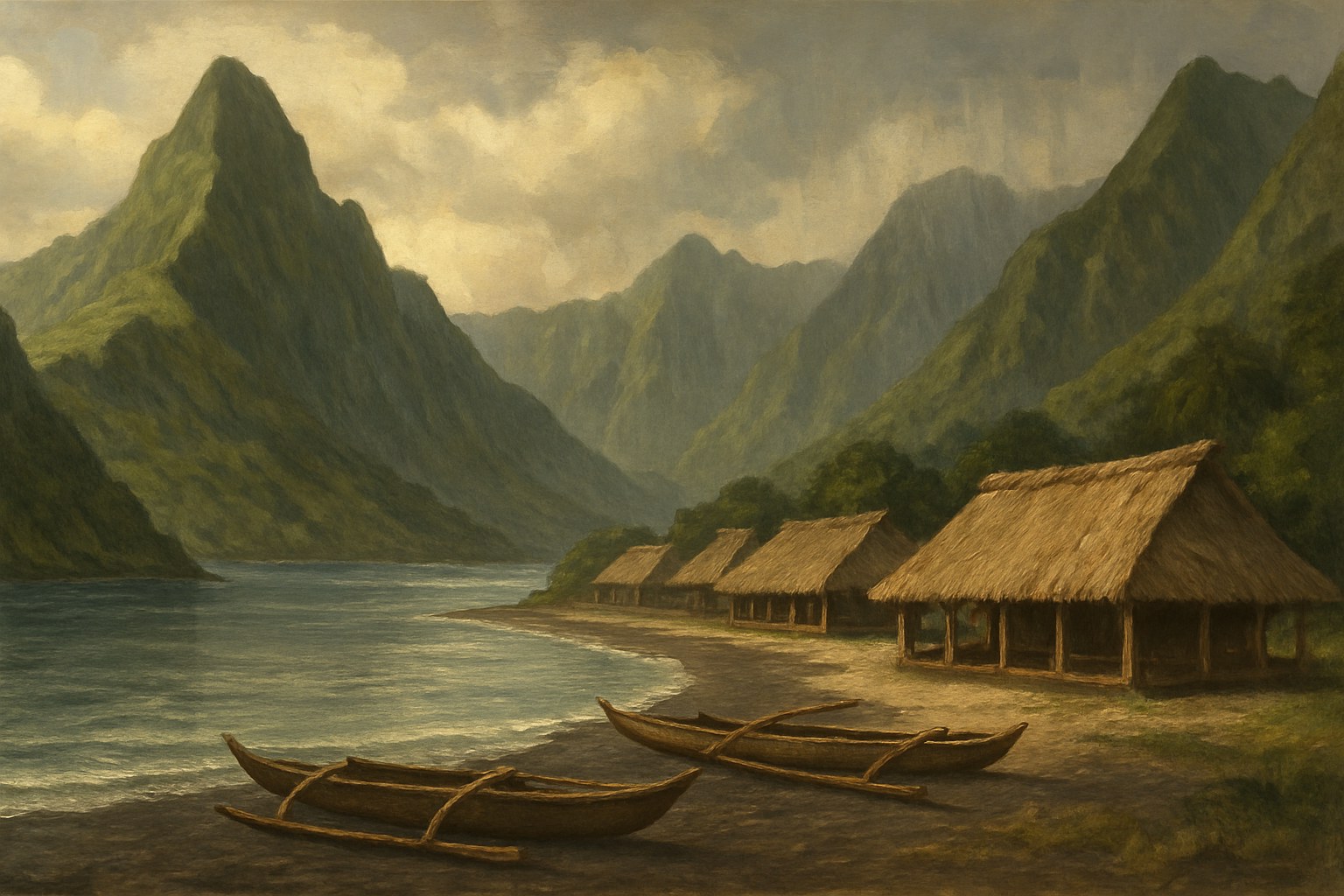
What the great powers wanted in Samoa was one harbor. Pago Pago, a drowned volcanic crater on the island of Tutuila, is the finest deepwater anchorage in the South Pacific, and by the 1880s American, German, and British warships were maneuvering around it and around rival Samoan claimants to the paramount title. In March 1889 a hurricane at Apia wrecked six of the seven warships in the harbor and drowned some two hundred sailors, which cooled the standoff more effectively than diplomacy had. Ten years later the three powers simply divided the archipelago between them.
The Tripartite Convention of December 1899 gave the western islands to Germany and the eastern islands to the United States, with Britain compensated elsewhere. The transfer was formalized not by conquest but by deed: the chiefs of Tutuila and Aunu'u ceded their islands in 1900, and the chiefs of the Manu'a group followed in 1904, though Congress did not accept the cessions until 1929. A naval officer governed from the station at Pago Pago until 1951, when the Interior Department took over. American Samoa remains an unorganized, unincorporated territory, running itself under a constitution it adopted in 1967 with an elected governor since 1977.
It is the only inhabited American territory whose people are not citizens by birth. American Samoans are United States nationals — their passports carry an endorsement saying so. They may live and work anywhere in the country and enlist in its armed forces, which they do at a higher rate than the residents of any state, but they cannot vote or hold most federal jobs unless they naturalize. Two federal appeals courts, in Tuaua v. United States in 2015 and Fitisemanu v. United States in 2021, declined to extend birthright citizenship, resting on the Insular Cases. The Supreme Court refused to hear either appeal.
The territory's own government opposed both lawsuits, and the reason lies in the land. Roughly nine-tenths of American Samoa is held communally by extended families under the authority of a matai, a titled head of family, and sale to anyone not of Samoan ancestry is restricted by law. Officials argued that full constitutional citizenship would invite equal-protection challenges that the matai system might not survive. American Samoa is therefore the clearest surviving case of the bargain the Insular Cases struck — something less than full constitutional membership, in exchange for which a distinct society keeps its own law of land and title.
| Divided | Tripartite Convention, December 1899 |
| Ceded by | Chiefs of Tutuila and Aunu'u (1900) and Manu'a (1904) |
| Governed by | The U.S. Navy until 1951, then Interior |
| Status | Unorganized, unincorporated territory |
| People are | U.S. nationals, not birthright citizens |
| Land | About 90 percent communal, held under matai title |
| Date | American since 1899-1900 |
| Location | Pago Pago, American Samoa |