Wright Brothers
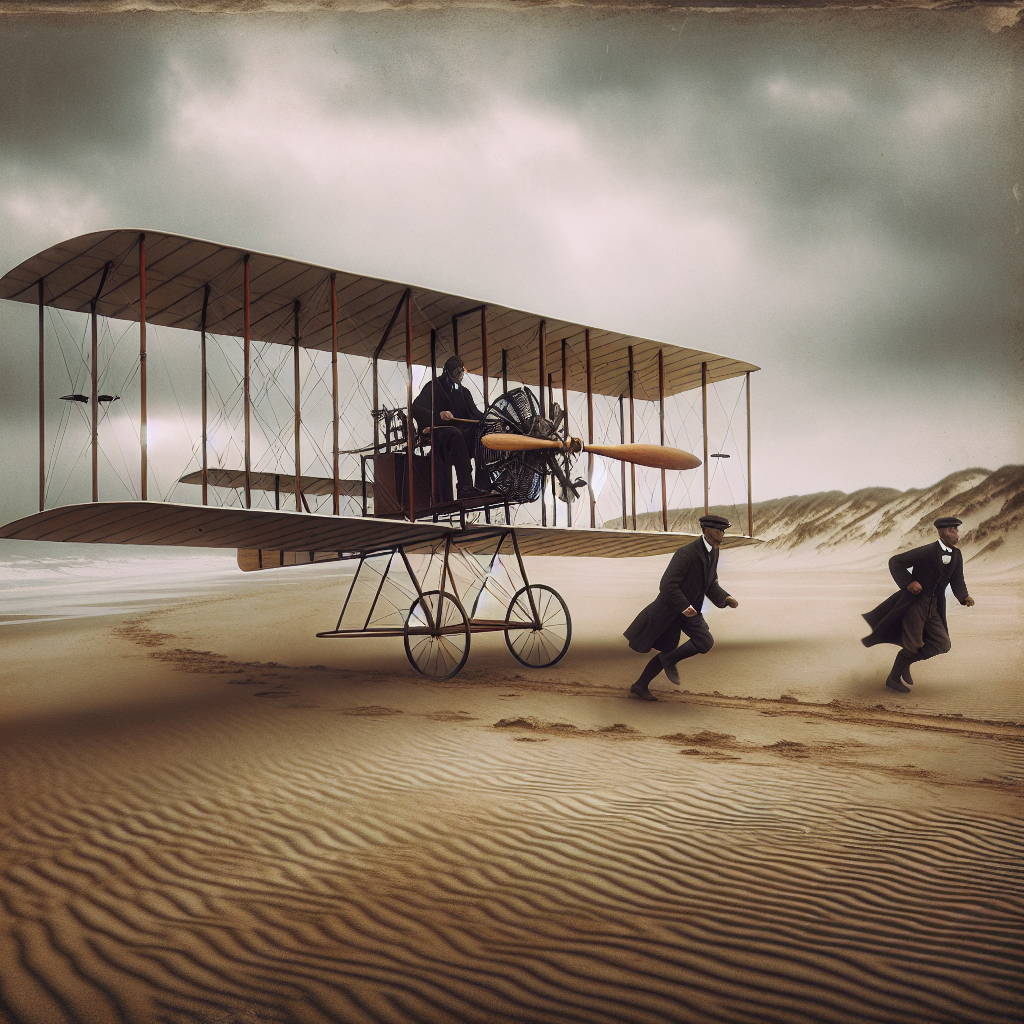
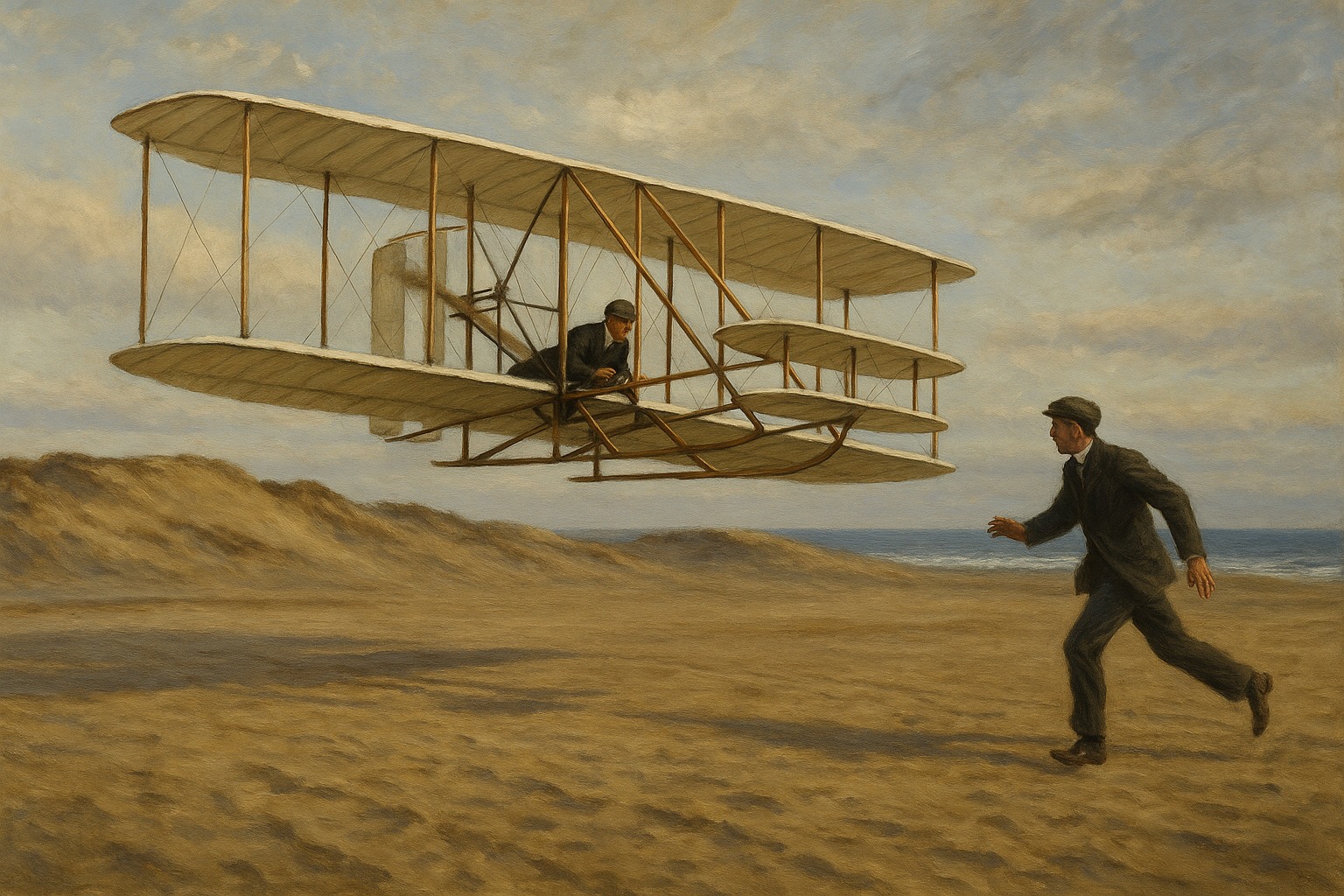
On the morning of December 17, 1903, on a windswept beach at Kitty Hawk, North Carolina, Orville Wright climbed into a fragile biplane called the Flyer and traveled 120 feet through the air under its own power in 12 seconds. It was the first controlled, sustained, powered heavier-than-air flight in history. Wilbur had lost the coin toss for the first attempt three days earlier. They made four flights that morning; the longest lasted 59 seconds and covered 852 feet. A handful of witnesses watched. None of them fully grasped what they had seen.
What made Wilbur and Orville exceptional was not their mechanical instinct alone — it was their method. Self-taught bicycle mechanics from Dayton, Ohio, they built their own wind tunnel to generate original aerodynamic data and conducted hundreds of glider tests before attempting powered flight. They solved the problem of lateral control — how to bank and steer a wing through three axes — that had defeated every predecessor. Their three-axis control system, patented in 1906, remains the fundamental principle of fixed-wing aircraft design more than a century later.
Recognition came slowly and then became a bitter fight. The Smithsonian Institution refused for decades to credit the Wrights as the first in flight, preferring Samuel Langley — whose failed Aerodrome the Smithsonian had funded. Orville, furious, loaned the original Flyer to the Science Museum in London rather than surrender it to the Smithsonian. He relented only in 1948, the year of his death. The Flyer now hangs in the National Air and Space Museum in Washington, the most visited museum in the world.


| Wilbur Wright | April 16, 1867 – May 30, 1912 — Dayton, Ohio |
| Orville Wright | August 19, 1871 – January 30, 1948 — Dayton, Ohio |
| First flight | December 17, 1903 — Kitty Hawk, North Carolina |
| First flight duration | 12 seconds; 120 feet |
| Longest flight (same day) | 59 seconds; 852 feet |
| Patent | U.S. Patent 821,393 — three-axis flight control, 1906 |
| Original Flyer | National Air and Space Museum, Washington, D.C. |
| Date | December 17, 1903 |
| Location | Kitty Hawk, North Carolina |