Wright Brothers' First Flight
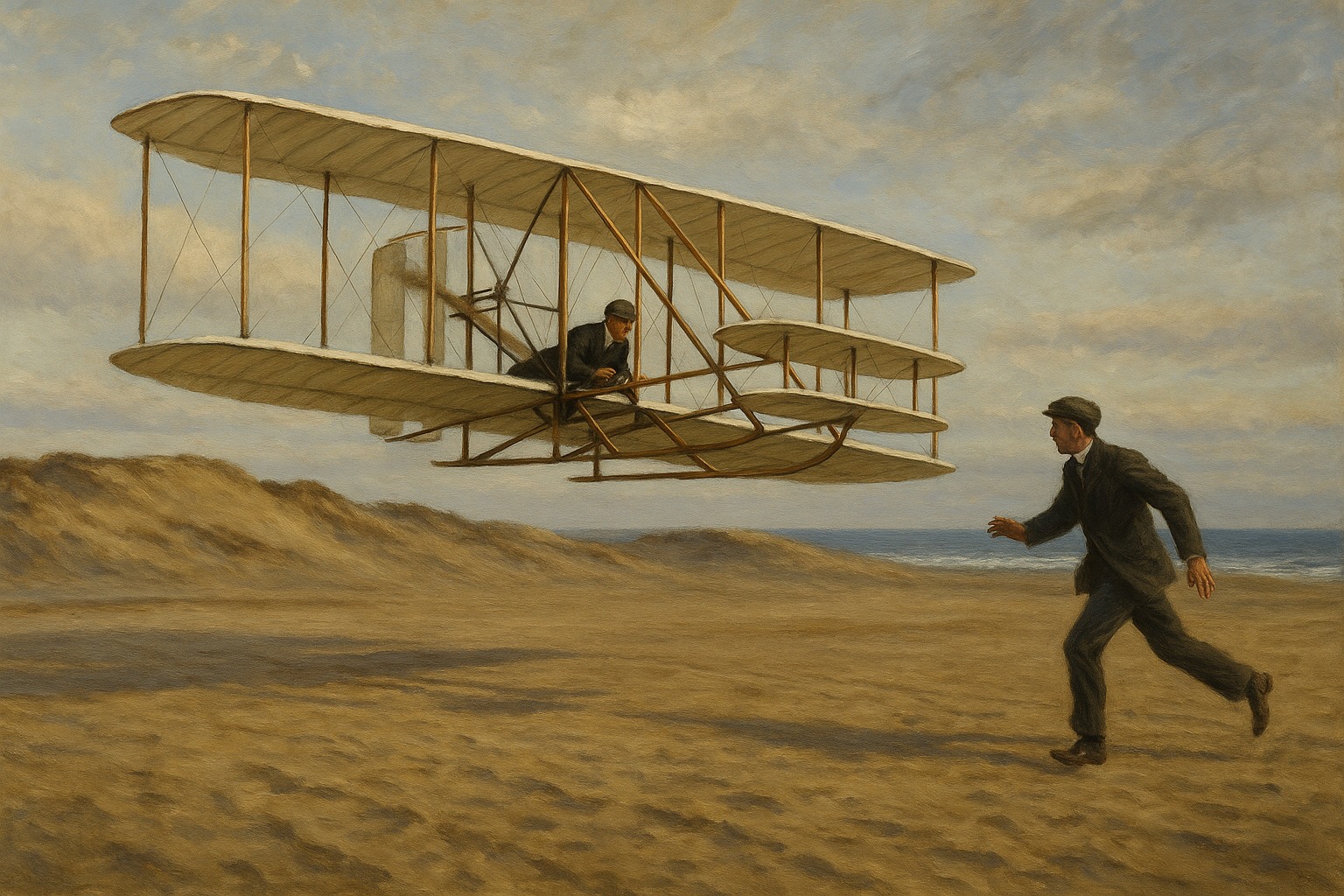
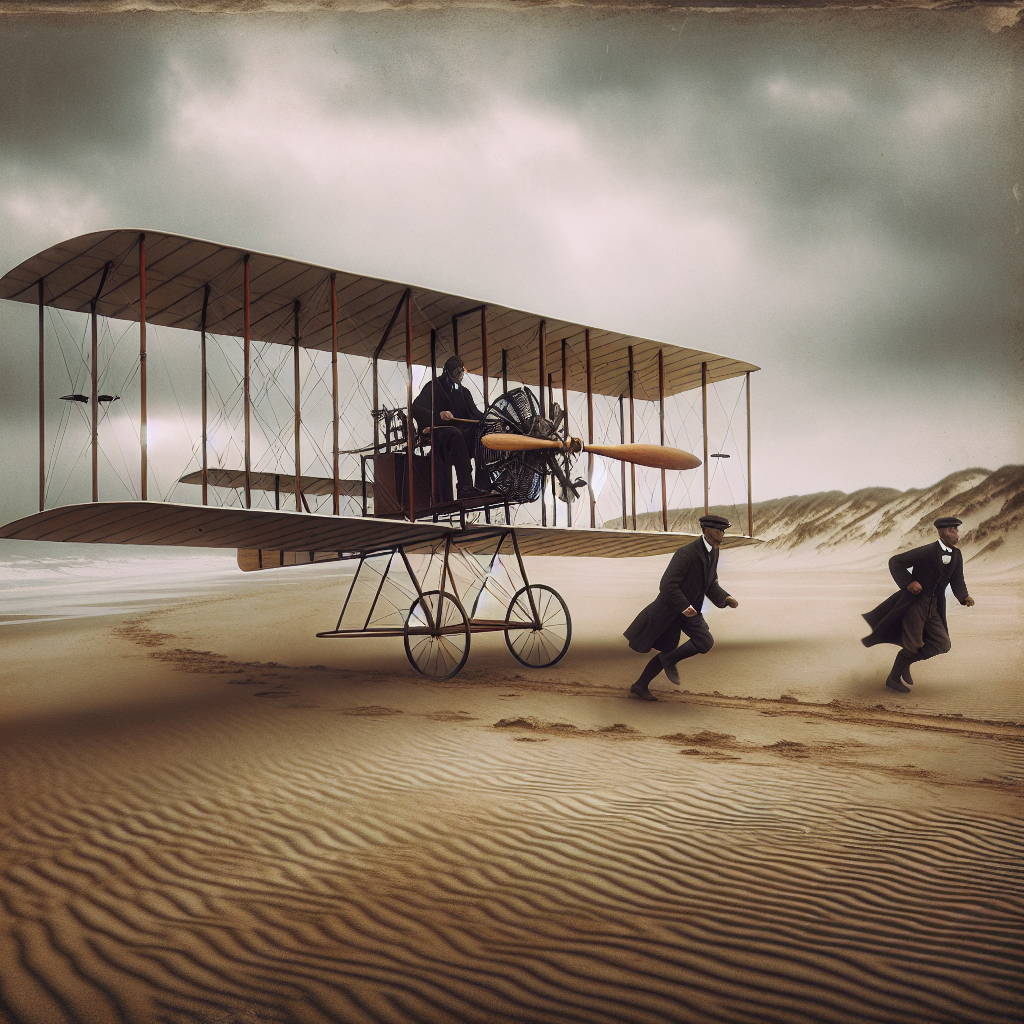
At 10:35 a.m. on December 17, 1903, Orville Wright lay prone on the lower wing of the Wright Flyer on a sandy slope at Kill Devil Hills, North Carolina, with his brother Wilbur running alongside, and held the controls of the first powered, heavier-than-air machine ever to lift a human pilot under its own power and land at an altitude equal to its takeoff. The flight lasted 12 seconds and covered 120 feet — less than the wingspan of a modern airliner. Three more flights followed that day; the fourth, with Wilbur at the controls, covered 852 feet in 59 seconds before a gust flipped the aircraft on landing and ended flying for the season.
Two brothers from Dayton, Ohio, who ran a bicycle shop and had never finished high school had beaten Smithsonian Secretary Samuel Pierpont Langley's federally funded program, the prominent French aeronautical engineers of the era, and every other contender to powered flight. They did it by recognizing that the central problem of flight was not propulsion or lift but control — and by building a wind tunnel in their bicycle shop in 1901 to systematically test airfoil shapes, generating the first reliable data on lift and drag in aviation history. Their wing-warping mechanism, the basis of modern aileron control, was patented in 1906.
The Wrights spent the next seven years in obscurity, then in lawsuits. The Western press largely ignored Kitty Hawk; the Wrights themselves did much of their early flying in private to protect their patent position, and demonstrated publicly only in 1908 when their commercial negotiations forced it. Wilbur died of typhoid in 1912; Orville lived until 1948 and saw jet aircraft become routine. The original Flyer was suppressed in the United States during the brothers' fight with the Smithsonian over priority and spent most of the 1930s in the Science Museum in London before finally being installed in the National Air and Space Museum in 1948.


| Date | December 17, 1903 |
| Location | Kill Devil Hills, North Carolina |
| Pilot (first flight) | Orville Wright |
| Duration | 12 seconds, ~120 feet |
| Longest flight that day | 59 seconds, 852 feet (Wilbur) |
| Aircraft | Wright Flyer (12 hp gasoline engine) |
| Wing-warping patent | 1906 (basis for modern aileron control) |
| Date | December 17, 1903 |
| Location | Kill Devil Hills, North Carolina |