The Moon Landing
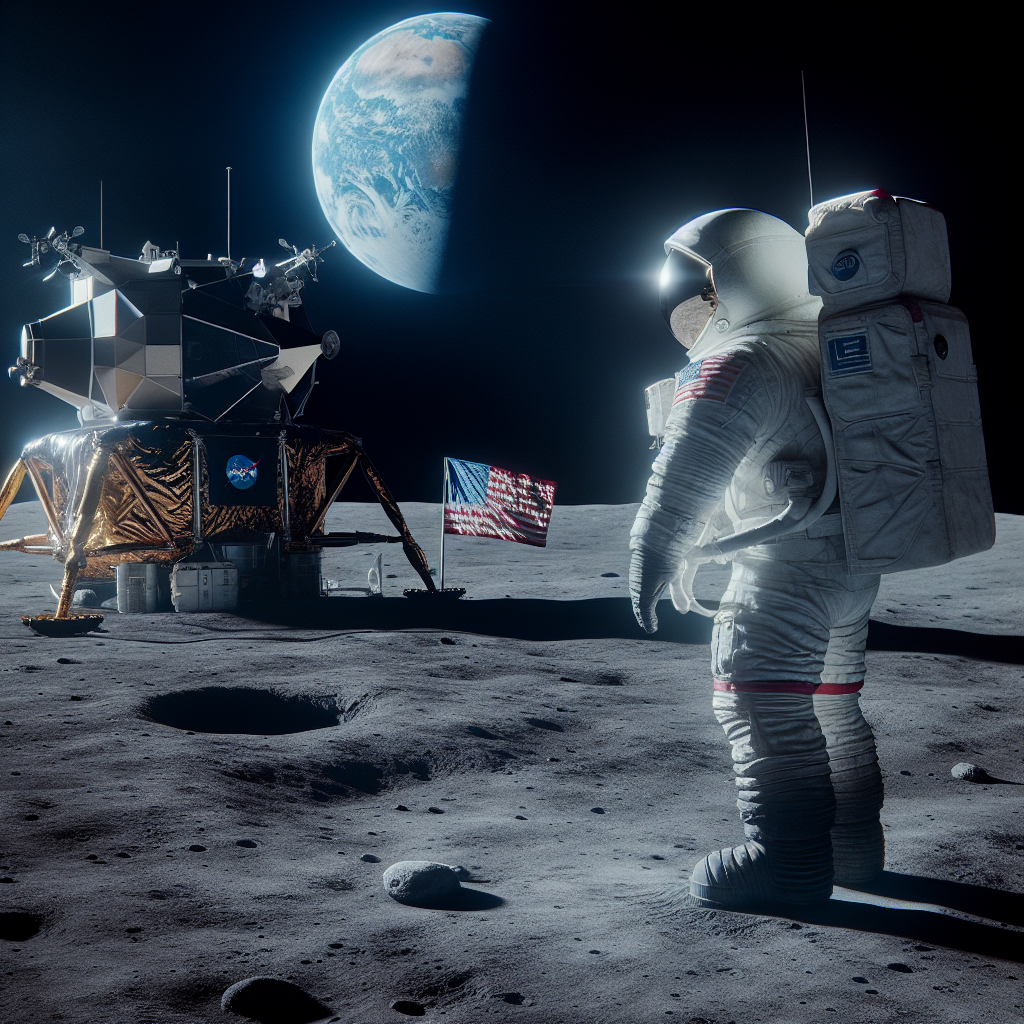
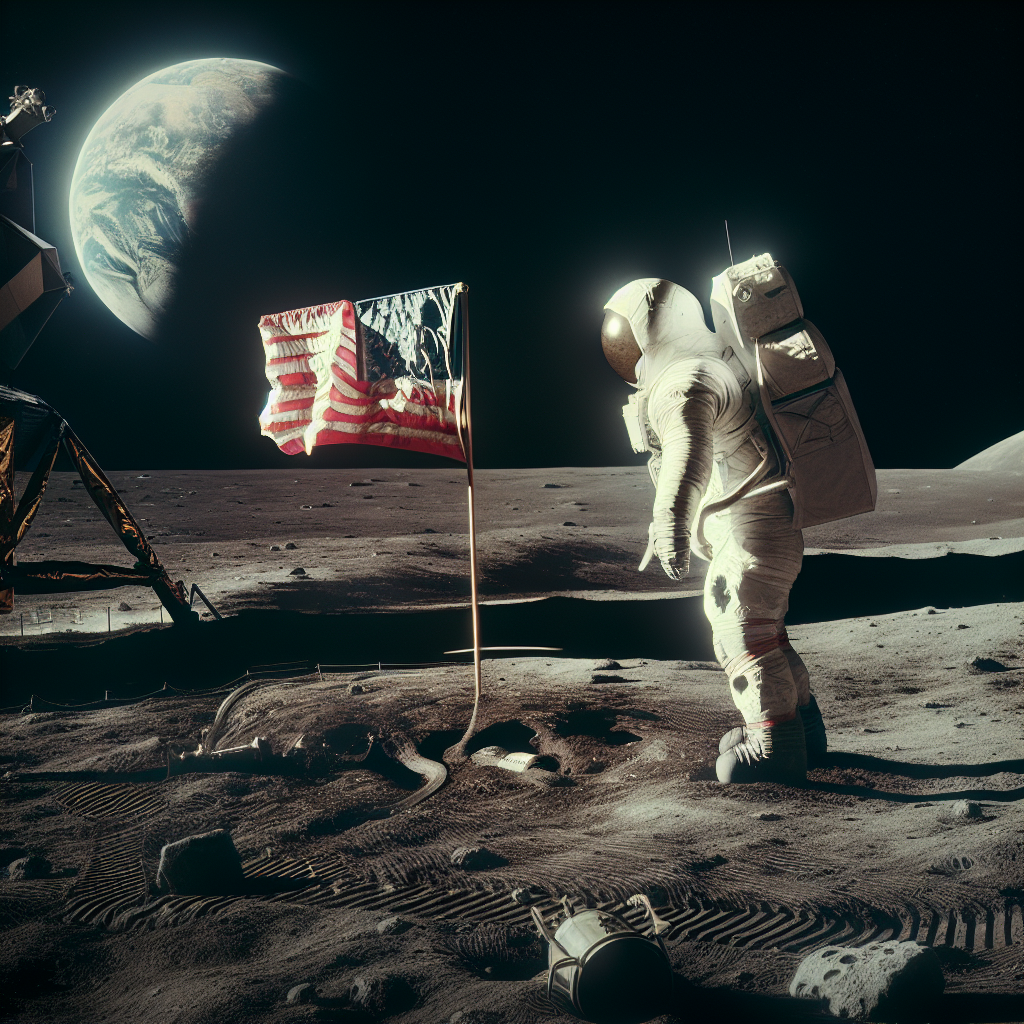
On July 20, 1969, Neil Armstrong and Buzz Aldrin guided the lunar module Eagle to a landing in the Moon's Sea of Tranquility, with only seconds of fuel to spare. Some six hours later Armstrong climbed down the ladder and set a boot on the surface, telling a listening world, "That's one small step for man, one giant leap for mankind." The two men spent about 21 hours on the Moon, gathered 47.5 pounds of rock and soil, and planted an American flag stiffened with a wire crossbar because there is no wind to hold it out. Michael Collins orbited overhead alone in the command module Columbia, the one crew member never photographed on the mission.
The landing was the working end of a national commitment President John F. Kennedy had made in 1961, when he challenged the country to put a man on the Moon and return him safely before the decade was out. The pledge was a direct answer to the Soviet Union, whose 1957 launch of the Sputnik satellite and subsequent firsts in space had badly shaken American confidence in its own scientific leadership. The space race was as much a Cold War contest for prestige as a scientific endeavor.
Reaching the Moon demanded one of the largest peacetime mobilizations the country had ever attempted. At its peak the Apollo program employed roughly 400,000 people, most of them contractors at firms such as Grumman, North American Aviation, Boeing, and IBM. The Saturn V rocket that lifted the mission off the pad in Florida remains the most powerful machine ever flown. The program's total cost ran to about $25 billion in period dollars — well over $200 billion in today's money.
An estimated 600 million people — about a fifth of humanity at the time — watched the landing live, an audience without precedent. The achievement effectively ended the space race in America's favor, and the program continued through Apollo 17 in 1972 before being cancelled with Saturn V rockets still on hand; no human has returned to the Moon since. The lunar samples have been studied in laboratories around the world, and while a stubborn minority still insists the landings were faked, the rocks are genuine — and the footprints, absent some chance meteorite strike, will remain in the Sea of Tranquility for millions of years.



| Date | July 20, 1969 |
| Mission | Apollo 11 |
| Crew | Neil Armstrong, Buzz Aldrin (surface); Michael Collins (orbit) |
| Landing Site | Sea of Tranquility, the Moon |
| Time on Surface | 21 hours, 36 minutes |
| Rocks Returned | 47.5 lbs (21.5 kg) |
| Program Cost | Approx. $25 billion (1960s dollars) |
| Date | July 20, 1969 |
| Location | Sea of Tranquility, the Moon |