Anne Hutchinson
Anne Hutchinson followed the minister John Cotton from Lincolnshire to Boston in 1634 with her husband and many of their children. She was a skilled midwife and an able student of scripture, and she began inviting women to her house to discuss the week's sermons. Soon men came too, sometimes sixty or more at a time, among them Governor Henry Vane. The meetings turned into commentary, and the commentary into criticism of the colony's ministers.
Her charge was theological but cut to the heart of the colony's order. Most ministers, she said, preached a covenant of works, treating good behavior and visible godliness as signs of salvation. Only Cotton and her brother-in-law John Wheelwright preached the true covenant of grace, in which salvation came from God alone and could be known by an inner witness of the Spirit. Her opponents called the position Antinomian, against the law, and saw in it a threat to every authority in Massachusetts.
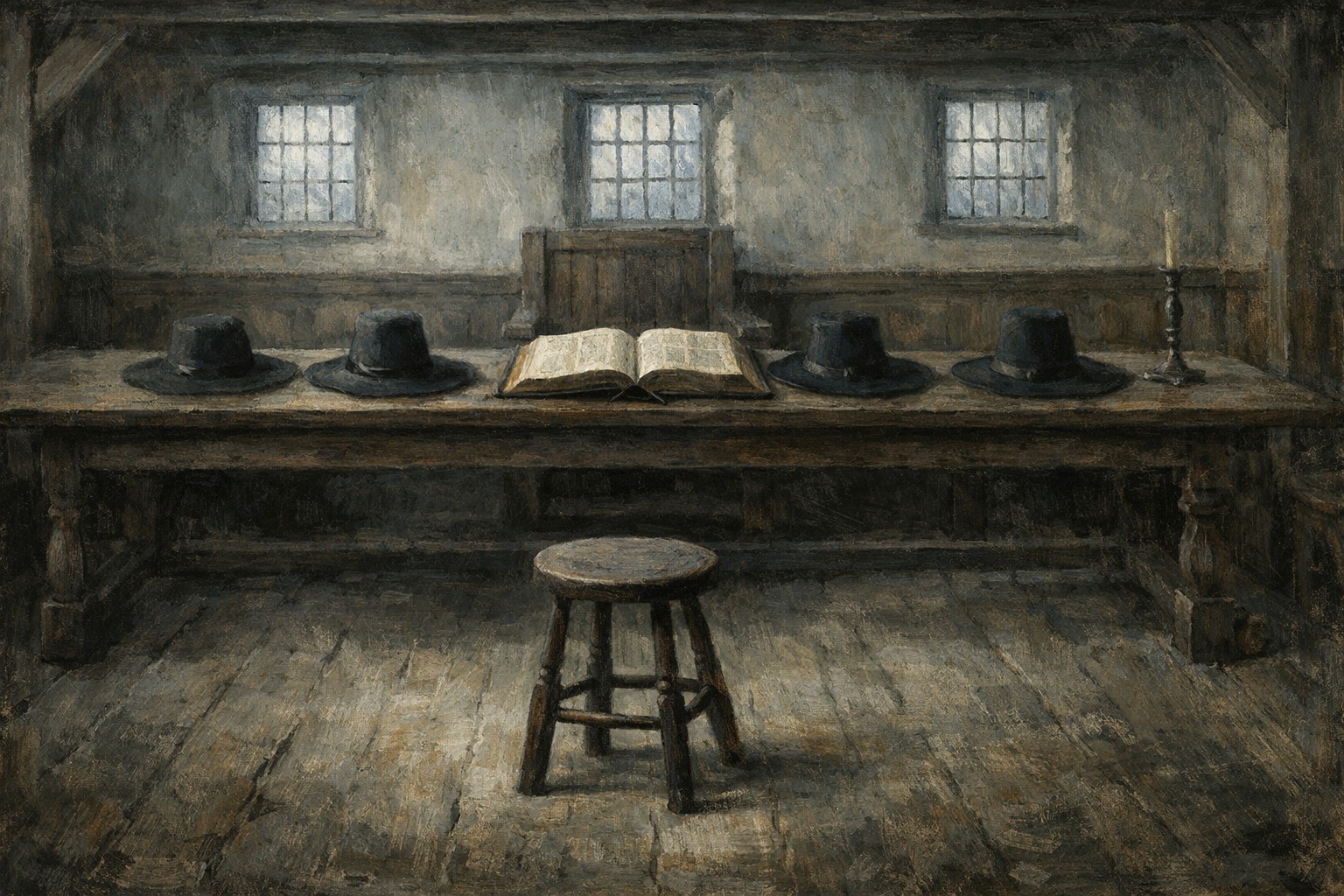
In November 1637 she was tried before the General Court, with Governor John Winthrop presiding. For two days she parried her questioners and quoted scripture back at them, and she was nearly winning. Then she declared that God had revealed to her directly that he would destroy the colony for persecuting her. Immediate revelation was heresy, and the court banished her as a woman not fit for our society. The Boston church excommunicated her in March 1638.
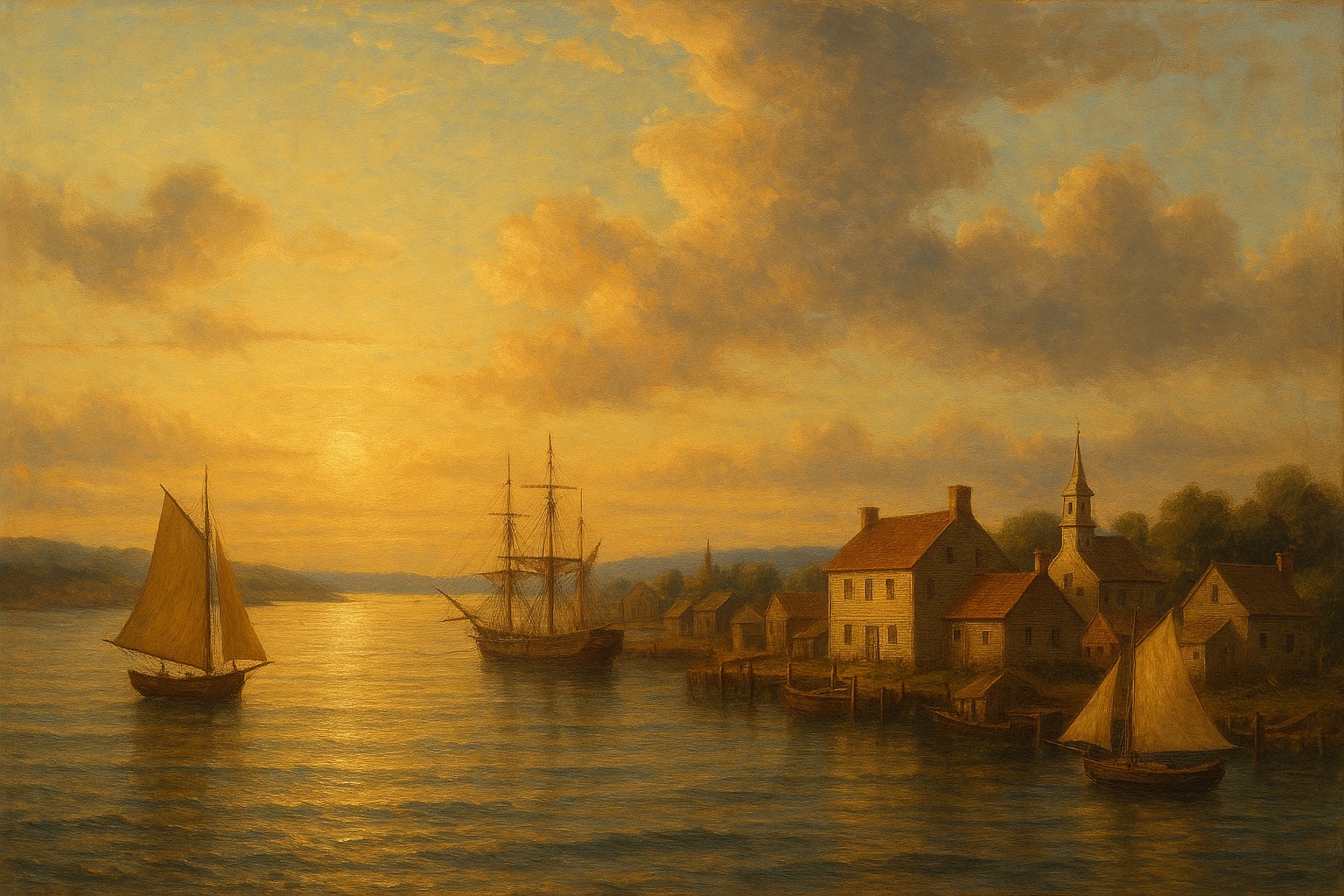
She went with her family and followers to Aquidneck Island in Narragansett Bay, where with help from Roger Williams they founded Portsmouth, Rhode Island. After her husband died she moved to New Netherland, settling near what is now the Bronx. In 1643 she and most of her household were killed in an attack by Siwanoy warriors during a war between the Dutch and the region's Native peoples. Winthrop called it God's judgment. Later generations saw her as an early champion of religious liberty and of women's voices in public life.
| Arrived | Boston, 1634 |
| Controversy | The Antinomian Controversy, 1636–1638 |
| Tried | Before the General Court, November 1637 |
| Presiding | Governor John Winthrop |
| Exile | Aquidneck Island, Rhode Island, 1638 |
| Died | New Netherland, 1643 |
| Date | 1591–1643 |
| Location | Boston, Massachusetts Bay Colony |