Eleanor Roosevelt
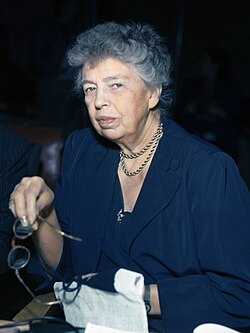
Eleanor Roosevelt was the most consequential First Lady in American history by so large a margin that the comparison is almost unfair to everyone else who has held the position. She was also one of the most influential Americans of the 20th century in her own right — a distinction she carved out of a life that began in misery (orphaned by 10, raised by a cold grandmother, married at 20 to a charming cousin who would betray her repeatedly) and that she rebuilt, piece by piece, into something her husband could not have managed without and could not entirely control. She was the first First Lady to hold press conferences, write a daily newspaper column, travel without Secret Service, and speak regularly on the radio as an independent voice rather than an extension of a presidential administration.
Her political courage was specific and costly. In 1939, when the Daughters of the American Revolution refused to allow Marian Anderson, a Black contralto, to perform at Constitution Hall because of her race, Roosevelt resigned her DAR membership publicly and arranged for Anderson to sing instead at the Lincoln Memorial before 75,000 people — one of the most perfectly executed acts of political theater in American history. She pushed Franklin Roosevelt harder on civil rights than he was willing to go, harder on anti-lynching legislation, harder on the treatment of Japanese American internees, and harder on the inclusion of Black Americans in New Deal programs. He didn't always listen. She didn't stop pushing.
After Franklin's death in 1945 she reinvented herself a third time, serving as U.S. delegate to the United Nations and chairing the commission that drafted the Universal Declaration of Human Rights, adopted by the UN General Assembly on December 10, 1948. The Declaration — 30 articles establishing the rights every human being possesses by virtue of being human — is the most ambitious moral document produced in the 20th century, and Eleanor Roosevelt drove it through an international committee fractured by Cold War politics through a combination of diplomatic skill, moral clarity, and sheer stamina that left her colleagues exhausted. Harry Truman called her "the First Lady of the World." He was right, and she had earned it.
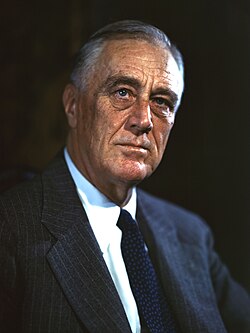
| Born | October 11, 1884 — New York City |
| Died | November 7, 1962 — New York City |
| Married | Franklin D. Roosevelt (1905) |
| First Lady | March 4, 1933 – April 12, 1945 |
| UN role | U.S. Delegate; Chair, UN Human Rights Commission (1946–51) |
| Key achievement | Universal Declaration of Human Rights (1948) |
| Daily column | "My Day" — syndicated 1935–1962 |
| Years | 1884–1962 |
| Location | New York, New York |