Eugene V. Debs
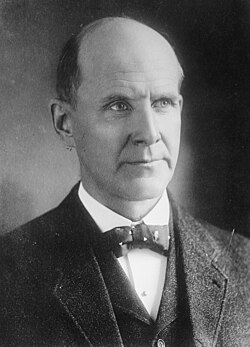
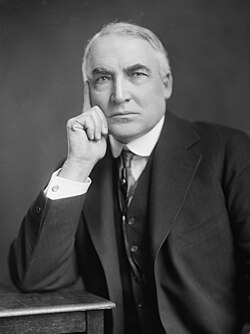
In 1920, Eugene Debs ran for president of the United States from a federal prison cell in Atlanta. He had been convicted under the Espionage Act of 1917 for delivering a speech in Canton, Ohio, in which he told a crowd of workers that the class that declared wars was never the class that fought them. He received nearly one million votes. President Warren Harding commuted his sentence the following year, and Debs left the penitentiary to find the guards assembled outside to see him off — cheering.
Debs had come to socialism through the labor movement. As president of the American Railway Union in 1894, he led the Pullman Strike, a nationwide railroad shutdown that paralyzed freight and passenger rail across 27 states until President Grover Cleveland ordered federal troops to break it. The strike failed; Debs was jailed for contempt. In prison he read Marx, Bellamy, and Kautsky, and emerged a committed socialist. He ran for president five times on the Socialist Party ticket, receiving nearly 6 percent of the popular vote in 1912 — a high-water mark no American socialist has since approached.
Debs was not a theorist but a speaker — one of the greatest orators the country produced. His delivery drew from the evangelical tradition of the Midwest, combining moral urgency with a genuine tenderness for the working poor that audiences recognized as something other than performance. "While there is a lower class, I am in it," he said at his sentencing. "While there is a criminal element, I am of it. While there is a soul in prison, I am not free." The words have outlasted every legislative achievement of his era.

| Born | November 5, 1855 — Terre Haute, Indiana |
| Died | October 20, 1926 — Elmhurst, Illinois |
| Party | Socialist Party of America (co-founder) |
| Presidential Runs | 1900, 1904, 1908, 1912, 1920 (from federal prison) |
| 1912 Vote Share | Approx. 6% of popular vote — record for U.S. socialism |
| Convicted Under | Espionage Act of 1917 |
| Key Event | Led Pullman Strike, 1894; jailed for contempt |
| Years | 1855–1926 |
| Location | Terre Haute, Indiana |