The New Deal
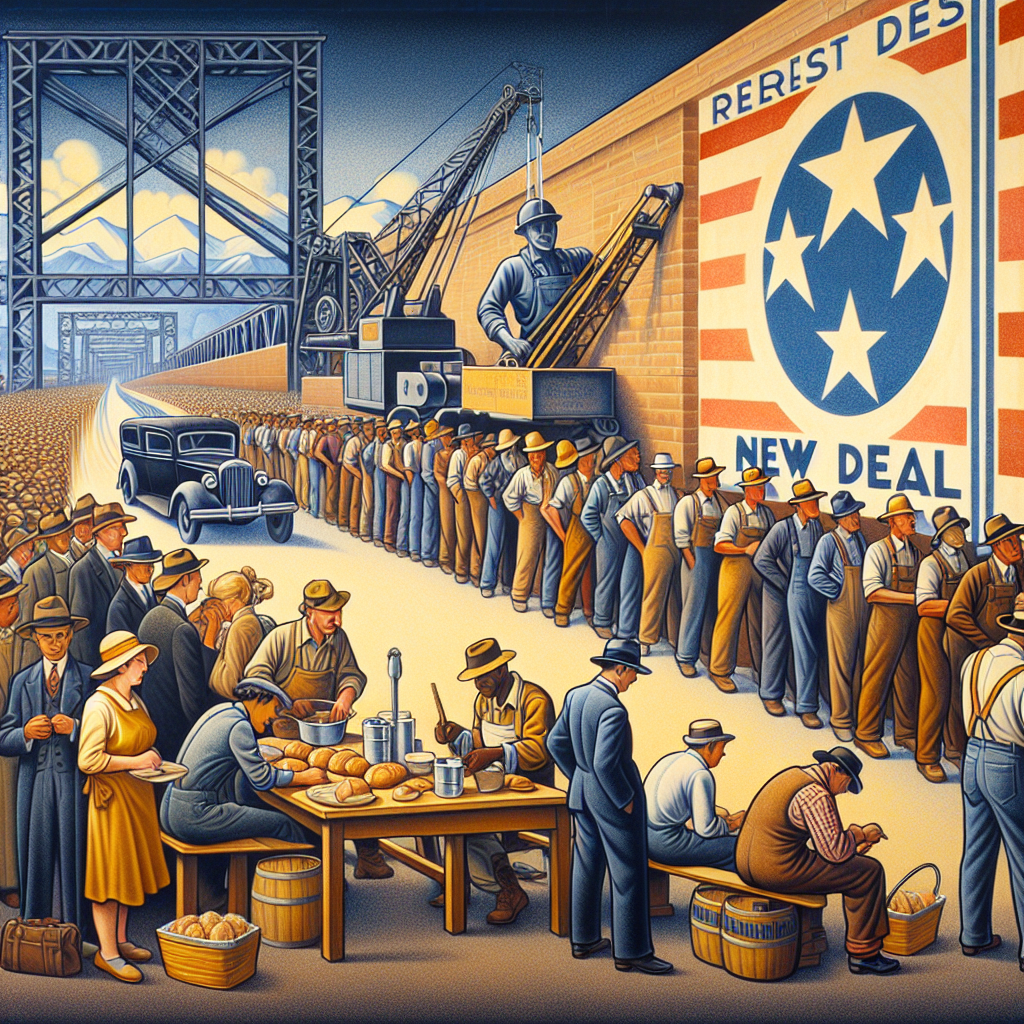
When Franklin D. Roosevelt took the oath of office on March 4, 1933, roughly one in four American workers was unemployed, thousands of banks had failed, and the Dow Jones Industrial Average had lost nearly 90 percent of its 1929 peak value. In his first 100 days, Roosevelt and a cooperative Congress passed 15 major pieces of legislation: the FDIC to insure bank deposits, the SEC to regulate securities markets, the Civilian Conservation Corps to employ young men in national parks and forests, the Agricultural Adjustment Act to stabilize farm prices. Nothing like it had ever moved through Washington before.
The New Deal fundamentally reordered the relationship between the federal government and ordinary Americans. Social Security, enacted in 1935, created a national retirement insurance system from scratch. The Wagner Act guaranteed workers the right to organize and bargain collectively. The Works Progress Administration employed 8.5 million people building roads, post offices, bridges, schools, and the public murals that still hang in dozens of federal buildings across the country. Whether the New Deal ended the Depression — or whether World War II defense spending did — economists still contest. What it unquestionably did was prevent total financial collapse and restore democratic confidence at a moment when fascism was demonstrating its appeal across Europe.
Roosevelt's critics flanked him on both sides. Conservatives denounced Social Security as socialism; progressives argued he hadn't nationalized enough. The Supreme Court struck down key programs, provoking Roosevelt's disastrous 1937 plan to "pack" the Court by adding six new justices — a scheme so nakedly self-serving that Congress rejected it even in his own party, and which stands today as the definitive cautionary tale about executive overreach.



| Period | 1933–1939 |
| President | Franklin D. Roosevelt (32nd) |
| Context | ~25% unemployment at peak, 1933 |
| Key programs | FDIC, SEC, CCC, AAA, Social Security, WPA, Wagner Act |
| WPA employment | 8.5 million workers |
| Legacy | Modern regulatory state and federal social safety net |
| Years | 1933–1939 |
| Location | Washington, D.C. |