Dorothea Dix
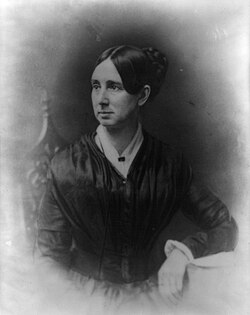
Dorothea Dix was a Sunday school teacher in Cambridge, Massachusetts who visited a jail in 1841 to teach a class and found mentally ill inmates confined in unheated cells, chained to walls, subjected to physical abuse, and mixed indiscriminately with criminals. She spent the next two years visiting jails, almshouses, and houses of correction across Massachusetts, documenting what she found with methodical precision. Her Memorial to the Legislature of Massachusetts in 1843 was not a sentimental plea but an evidentiary brief: here is what exists, here is where it is, here is what it costs human beings. The legislature funded improvements. She moved on to the next state.
Over the following decade, Dix lobbied state legislatures across the country, personally responsible for the founding or enlarging of more than 30 state mental hospitals. She documented conditions with the same rigor in each state and made the same argument: that the mentally ill were not moral failures or criminals but people suffering from illness, entitled to humane treatment and professional care. The idea that the state bore any responsibility for its mentally ill citizens was not settled doctrine when she began; by the time she was done, it was the foundation of American public mental health policy.
During the Civil War, she served as Superintendent of Army Nurses — the first woman to hold an executive position in the federal government — managing a corps of over 3,000 nurses under often impossible conditions. She was famously difficult: stern, demanding, and resistant to interference from military officers who resented a civilian woman in authority. The nurses she trained and the standards she insisted on saved lives. She returned to advocacy after the war and continued working into her seventies, dying in 1887 in the New Jersey State Hospital that she had helped establish.




| Born | April 4, 1802 — Hampden, Maine |
| Died | July 17, 1887 — Trenton, New Jersey |
| Known For | Mental health reform; Civil War nursing superintendent |
| Hospitals | 30+ state mental institutions founded or enlarged |
| Civil War Role | Superintendent of Army Nurses, 1861–1866 |
| Key Document | Memorial to the Legislature of Massachusetts (1843) |
| Years | 1802–1887 |
| Location | Trenton, New Jersey |