Roosevelt's Court-Packing Plan
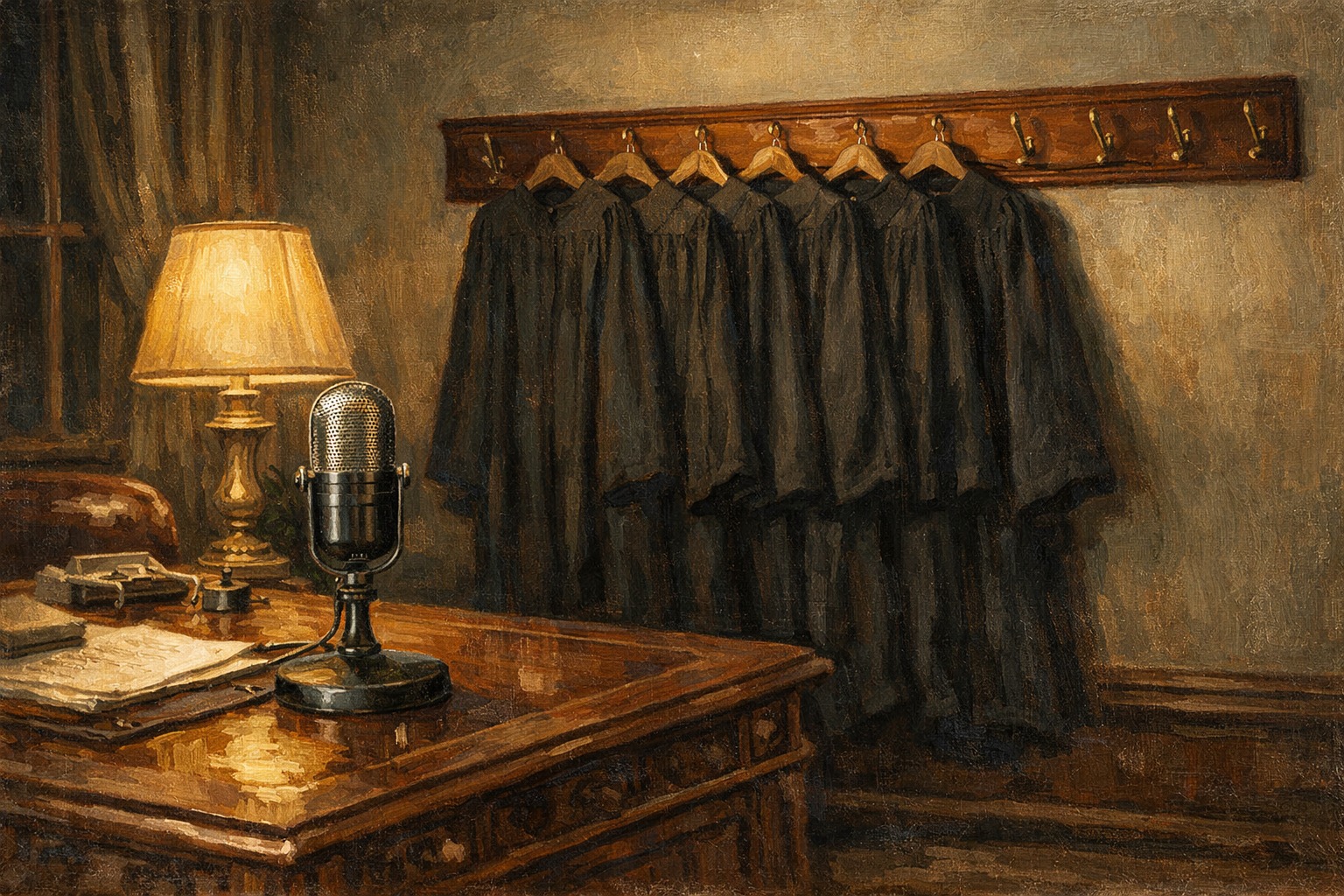
Between 1935 and 1936 the Supreme Court struck down the centerpieces of Franklin Roosevelt's first term. It voided the National Industrial Recovery Act, the Agricultural Adjustment Act, a farm debt relief law, a railroad pension plan, and New York's minimum wage for women. Most of the majorities were built around four conservative justices, and six of the nine were over seventy. Roosevelt, reelected in November 1936 by one of the largest margins in history, decided to act.
On February 5, 1937, he sent Congress a bill that would let him appoint an additional justice for every sitting justice over seventy who did not retire, up to six, for a maximum of fifteen. He presented it as a matter of efficiency, claiming the aged justices could not keep up with their work. Almost no one believed him. Chief Justice Charles Evans Hughes dismantled the efficiency argument in a letter to the Senate, and even Democrats who supported the New Deal balked at what looked like an attack on judicial independence.
Then the Court moved. On March 29, in West Coast Hotel v. Parrish, Justice Owen Roberts joined a five to four majority upholding a Washington State minimum wage law, and in April the Court upheld the Wagner Act. Newspapers called it the switch in time that saved nine, although Roberts had cast his vote in conference before the plan was announced. In May Justice Willis Van Devanter retired, giving Roosevelt his first appointment.
The bill died in July after Senate Majority Leader Joseph Robinson, its chief manager, collapsed and died. The Senate sent it back to committee by seventy to twenty. Roosevelt lost the battle and won the war, appointing eight justices over the next six years and ending the Court's resistance to economic regulation. But the defeat cost him dearly with Congress, and the episode made nine seats something close to a constitutional norm. Every later proposal to expand the Court has been measured against it.

| Proposed | February 5, 1937 |
| Plan | One new justice for each justice over 70, up to 15 total |
| Turning point | West Coast Hotel v. Parrish, March 29, 1937 |
| Defeat | Recommitted by the Senate, 70 to 20, July 22, 1937 |
| Nickname | The switch in time that saved nine |
| Legacy | Nine seats became a near-constitutional norm |
| Date | February to July 1937 |
| Location | Washington, D.C. |