The Purchase of Manhattan
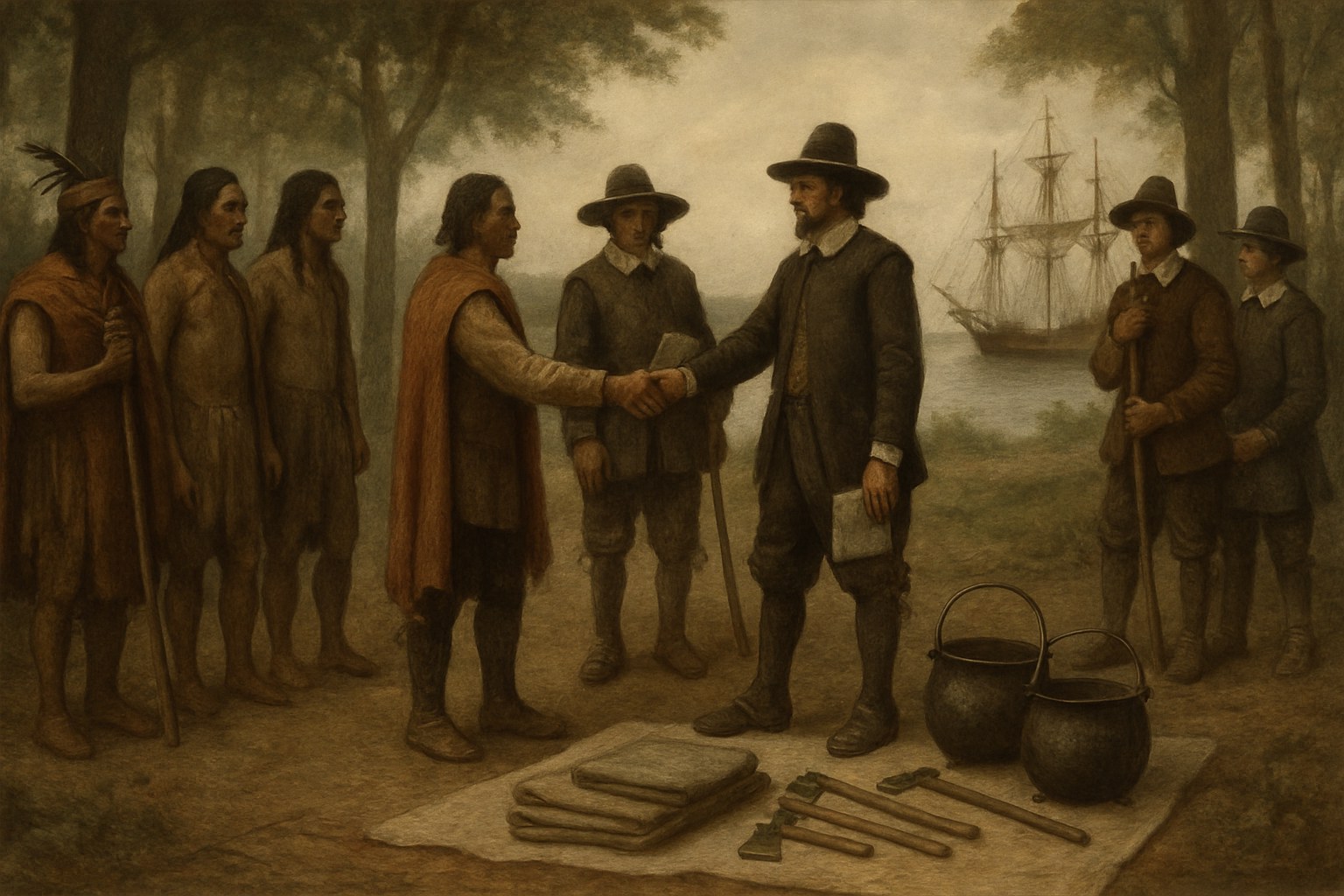
Everything known about the most famous real estate transaction in American history comes from a single sentence in a routine letter. On November 5, 1626, a Dutch official named Pieter Schaghen wrote to the directors of the West India Company to report the arrival of a ship from New Netherland loaded with pelts, and added, almost in passing, that the colonists had bought the island of the Manhattes from the Indians for a value of sixty guilders. There is no deed, no list of goods, no names, and no account by anyone who was present.
The Dutch director on the scene was Peter Minuit, who had arrived that spring, and the exchange is generally dated to the summer of 1626. Trade goods of the kind the company shipped in bulk were the medium — duffel cloth, iron kettles, axes, hoes, adzes, and awls, tools that were genuinely valuable to people who had no iron. The familiar image of twenty-four dollars in glass beads is nineteenth-century invention twice over. The dollar figure comes from a conversion made by the historian John Romeyn Brodhead in the 1840s, and the beads are not in the document at all.
Nor is it clear who sold. The band living on Manhattan appears to have been the Wecquaesgeek, part of the Lenape-speaking world, but some evidence points to Canarsee people from what is now Brooklyn, who may have been trading away rights to ground they used seasonally rather than land they occupied. The deeper problem is conceptual. Dutch law understood a purchase as the permanent alienation of a parcel to an owner who could then exclude everyone else. Lenape practice understood such an exchange as admitting newcomers to shared use, under an ongoing relationship of gifts and obligations that could be renewed or ended.
Both sides may have thought they had made a reasonable bargain and meant different things by it. Later purchases in the region were made repeatedly for the same ground, which suggests the misunderstanding was persistent rather than a one-time error. What the Schaghen letter establishes is narrow but real — that the Dutch believed a transaction had occurred, that they recorded a value for it, and that they thought written purchase from Native occupants was the proper way to acquire land. The pattern set on Manhattan in 1626 was repeated across the continent for the next two and a half centuries.


| Date | 1626, reported in a letter of November 5 |
| Dutch agent | Peter Minuit, director of New Netherland |
| Sole source | The Schaghen letter to the West India Company |
| Recorded value | 60 guilders in trade goods |
| Not in the record | Beads, a deed, the sellers' names, a dollar figure |
| The $24 | A conversion made by a historian in the 1840s |
| Date | 1626 |
| Location | Manhattan Island, New Netherland |