Abstract Expressionism
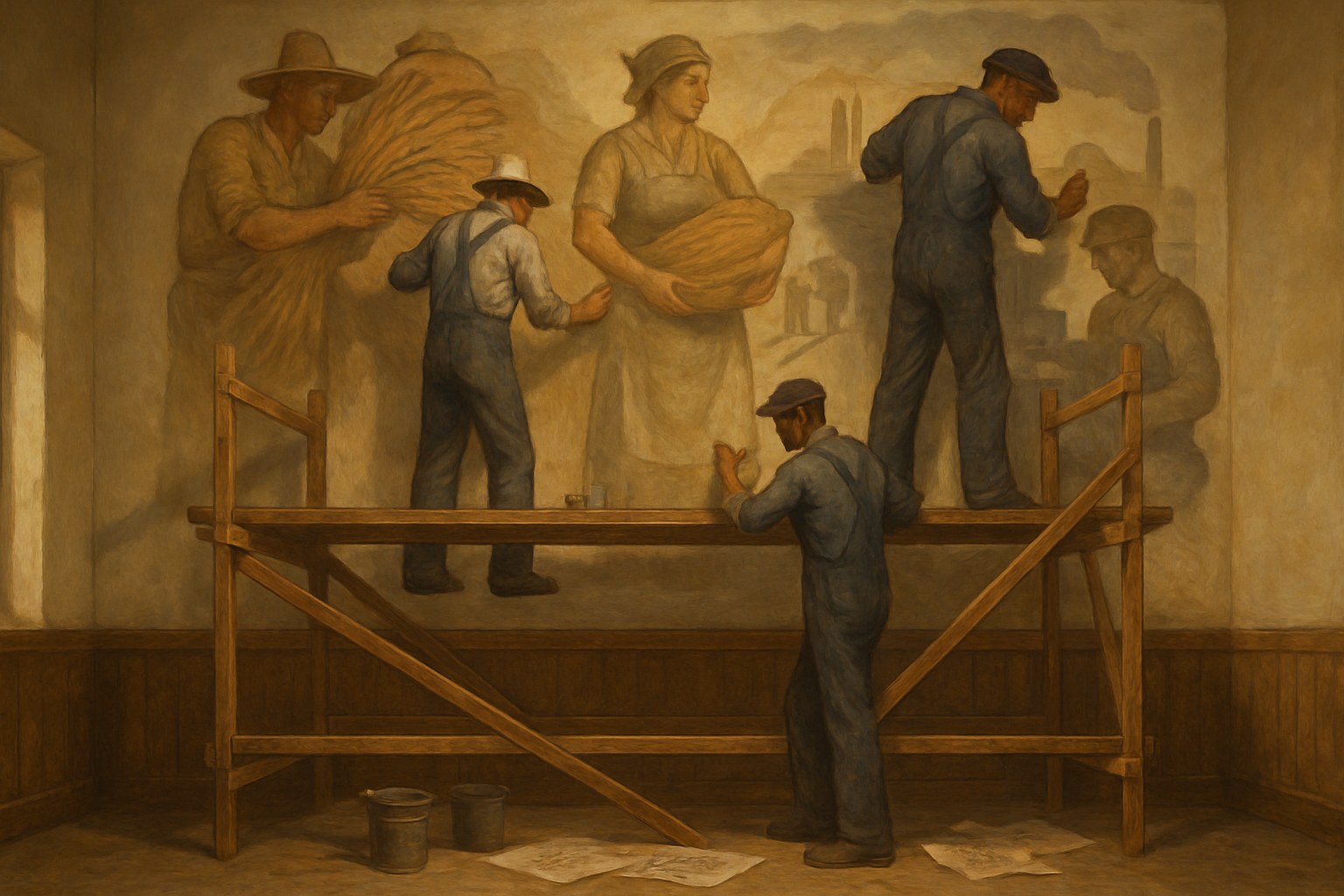
The war brought the avant-garde to New York in person. Between 1939 and 1941 Piet Mondrian, Max Ernst, Andre Masson, Fernand Leger, Marcel Duchamp, and the surrealist theorist Andre Breton all arrived as refugees from occupied Europe, and a group of American painters who had spent the Depression on federal relief payrolls suddenly had them as neighbors. What the Americans took from the surrealists was not the dream imagery but the method: automatism, the practice of letting the hand start before the mind decides. What they took from the Depression was the habit of working large and getting paid by the hour.
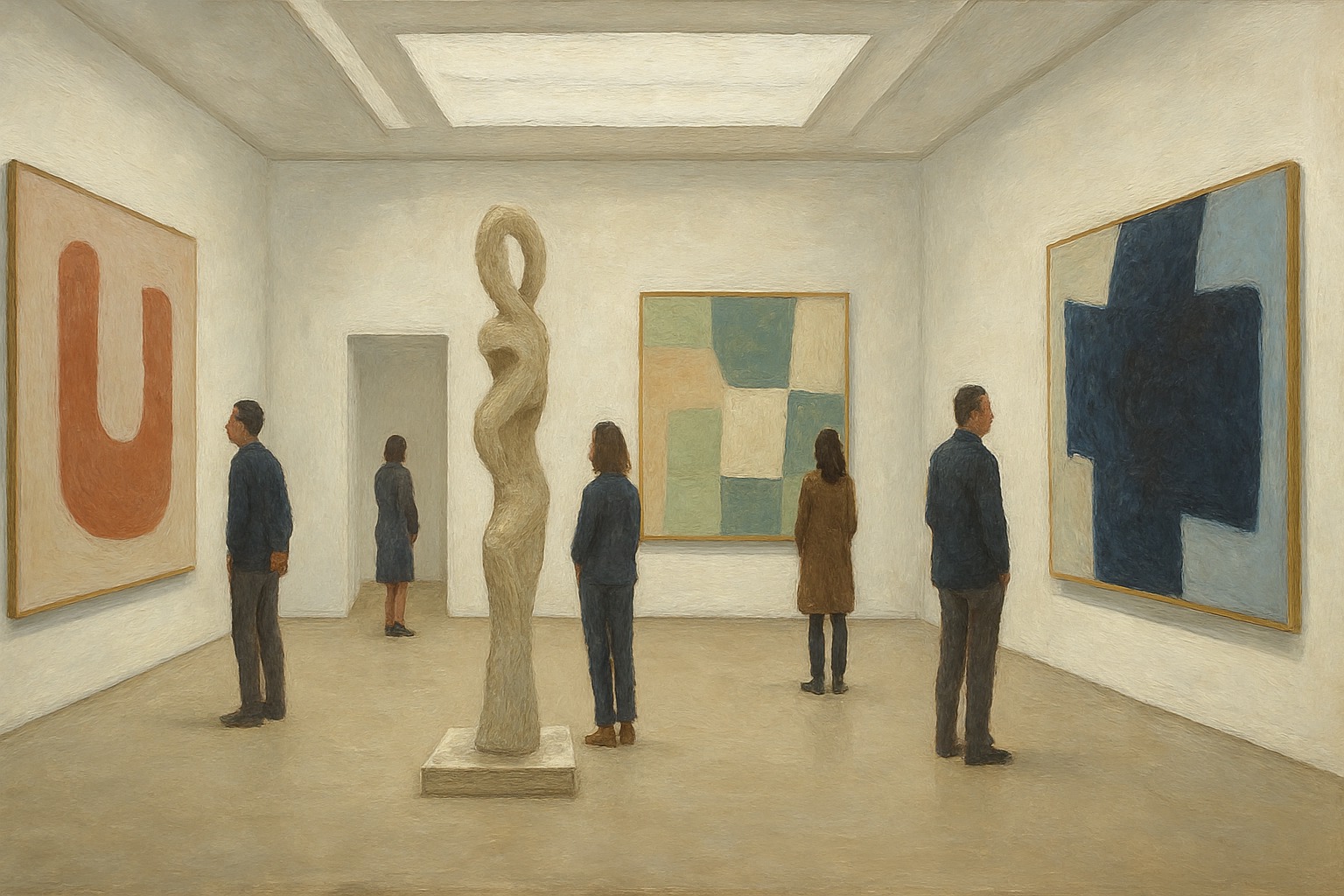
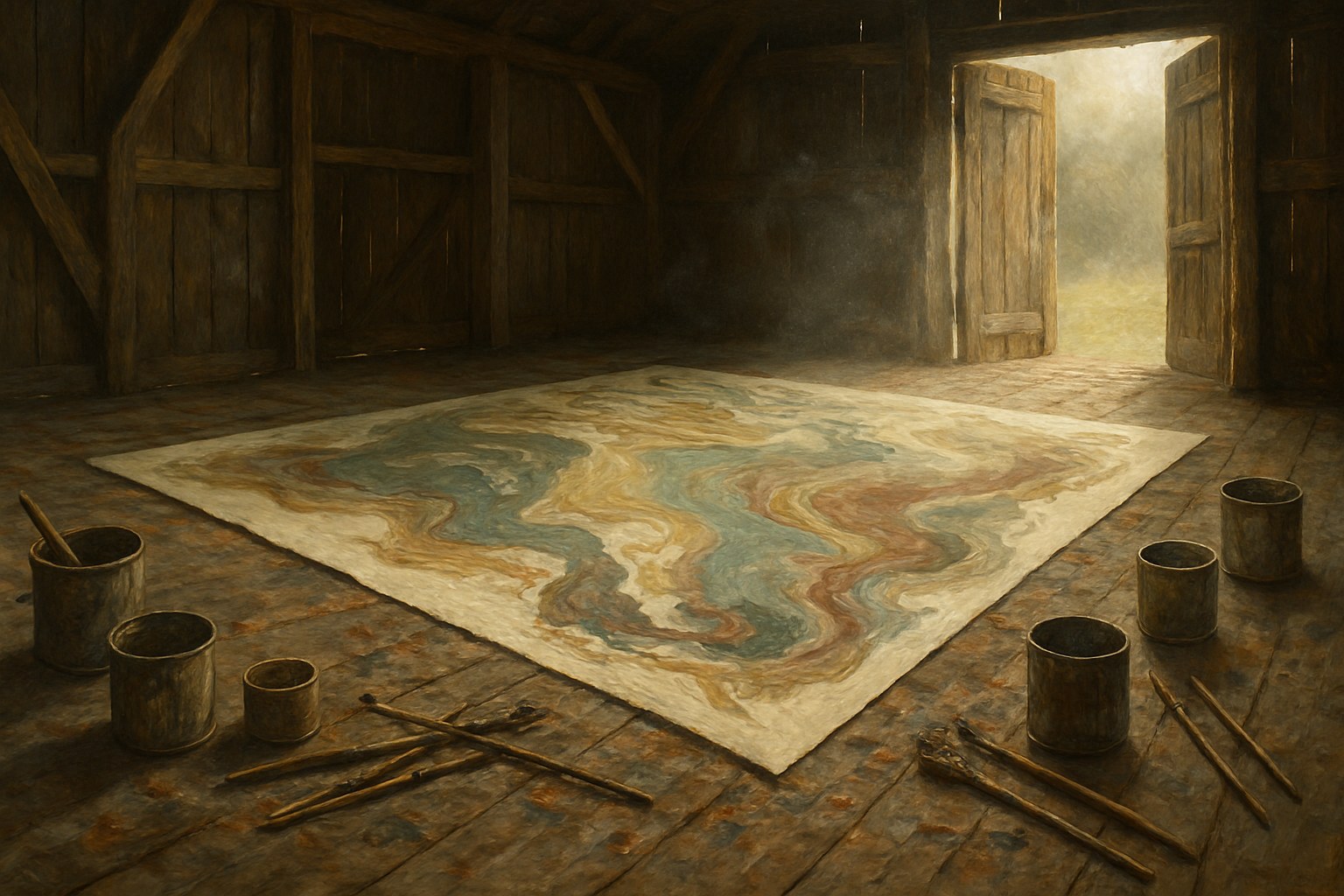
By the late 1940s two tendencies had separated out. One was gestural, built on the visible record of the artist's movement — Jackson Pollock's poured canvases, Willem de Kooning's slashing figures, Franz Kline's black beams, Lee Krasner's dense allover fields. The other was quieter and worked in large zones of saturated color: Mark Rothko's stacked rectangles, Barnett Newman's vertical zips, Clyfford Still's ragged edges. Both refused the picture as a window. The canvas became a surface where something had happened, and the scale was meant to surround the viewer rather than sit politely on a wall.
The movement needed explainers and found two who disagreed. Clement Greenberg argued that the work's importance was formal — flatness, the honest acknowledgment of paint on a two-dimensional surface, the logical next step in modernism. Harold Rosenberg, in a 1952 essay, called it action painting and said the canvas was an arena for an act rather than a space for a picture. Peggy Guggenheim's Art of This Century gallery gave several of them their first shows, the dealers Betty Parsons and Sidney Janis sold the work, and Life magazine asked in 1949 whether Pollock was the greatest living painter in the United States.
Then the paintings went abroad. The Museum of Modern Art sent large touring exhibitions through Europe in the 1950s, most notably The New American Painting in 1958 and 1959, and the work was received as evidence that a free society produced free art. Some of that circulation was underwritten covertly: the Central Intelligence Agency funded the Congress for Cultural Freedom, which sponsored exhibitions, magazines, and conferences, and a former agency officer described the policy publicly in 1967. How much this affected the art's reputation is genuinely disputed among historians, since the paintings also sold and impressed on their own. Either way, by 1960 New York, not Paris, was where the argument happened.
| Also called | The New York School |
| Catalyst | European surrealists in exile, 1939-1941 |
| Two wings | Gestural action painting and color field |
| Critics | Clement Greenberg and Harold Rosenberg |
| Abroad | MoMA's The New American Painting, 1958-1959 |
| Contested | Covert CIA funding of cultural programs |
| Date | c. 1943-1965 |
| Location | New York City |