The Black Hills
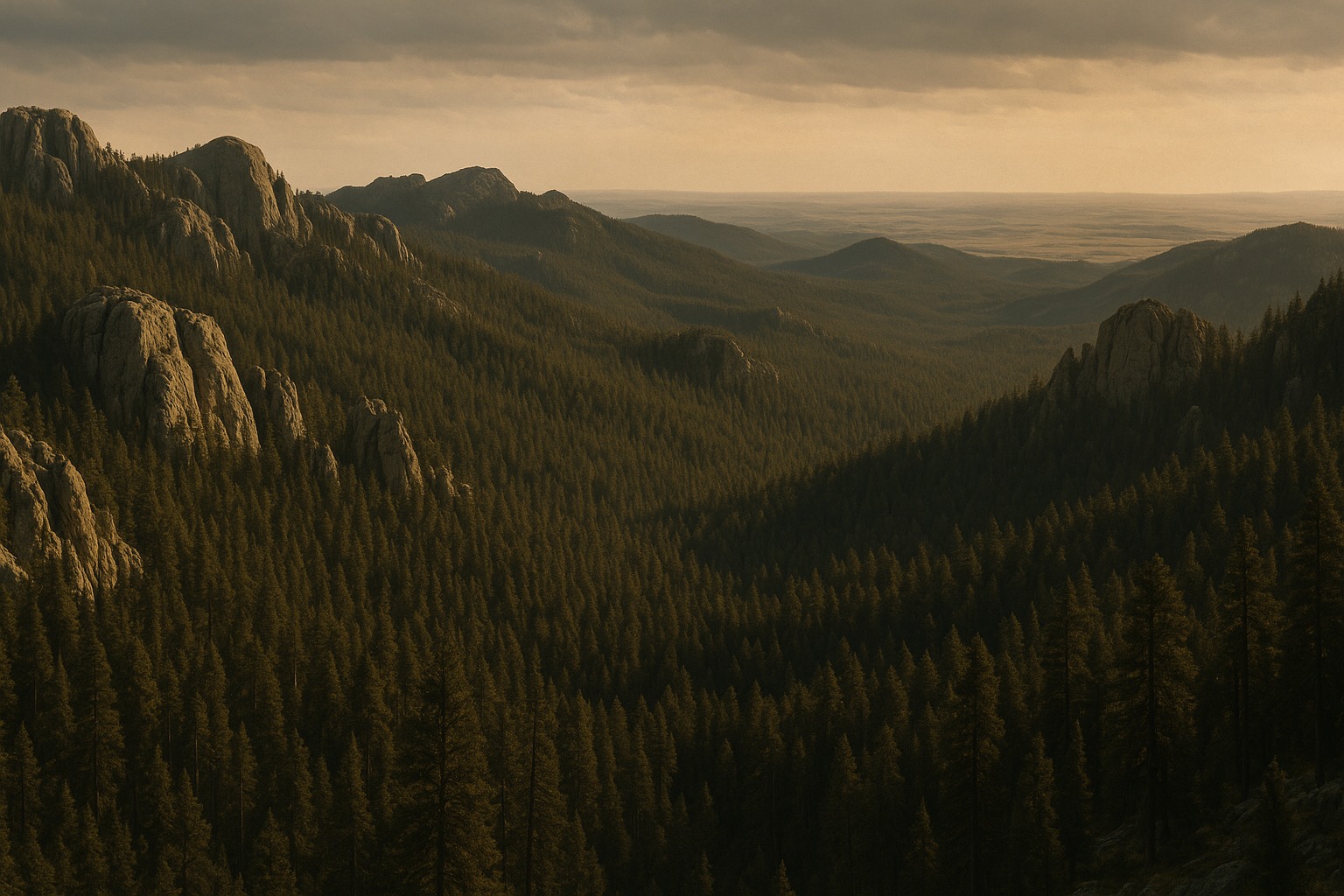
The Black Hills are an isolated mountain range rising about 7,200 feet above the surrounding prairie of western South Dakota and eastern Wyoming, dense with ponderosa pine that gave the range the dark color visible from a hundred miles off. The Lakota know them as Pahá Sápa, the sacred center of their world — the place from which the Lakota people emerged and the site of the most important ceremonies of the year. The 1868 Treaty of Fort Laramie recognized the entire range as exclusive Lakota territory and excluded white settlers and gold prospectors from entering it.
In the summer of 1874, Lieutenant Colonel George Armstrong Custer led an Army expedition into the Hills in direct violation of the treaty and reported the discovery of gold in French Creek. Within months prospectors were pouring in. The federal government attempted to buy the Hills, was refused, and then by act of Congress in 1877 simply took them — alongside roughly 7 million additional acres — without compensation. The taking precipitated the Great Sioux War of 1876–1877, the campaign that included Custer's annihilation at the Little Bighorn and ended with the Lakota confined to shrunken reservations.
In United States v. Sioux Nation of Indians (1980), the Supreme Court ruled that the federal seizure had violated the Fifth Amendment's Just Compensation Clause and awarded the Sioux $106 million in damages and interest. The Sioux refused the money. They have refused it ever since. The fund now sits in a federal trust account and, with continued interest, has grown to more than $2 billion. The Lakota position is that the Hills are not for sale at any price — and that accepting payment would extinguish their claim to land they still want back. The money waits.


| Location | Western South Dakota & eastern Wyoming |
| Lakota name | Pahá Sápa ("the hills that are black") |
| Treaty protection | Treaty of Fort Laramie, 1868 |
| Gold discovered | Custer expedition, summer 1874 |
| Federal seizure | 1877 (Act of February 28, 1877) |
| Supreme Court ruling | United States v. Sioux Nation, 1980 — $106 million awarded |
| Settlement balance | $2+ billion uncollected — Lakota refuse to accept payment |
| Highest point | Black Elk Peak — 7,242 ft |
| Date | Lakota homeland; treaty-protected 1868; seized 1877 |
| Location | Black Hills, South Dakota / Wyoming |