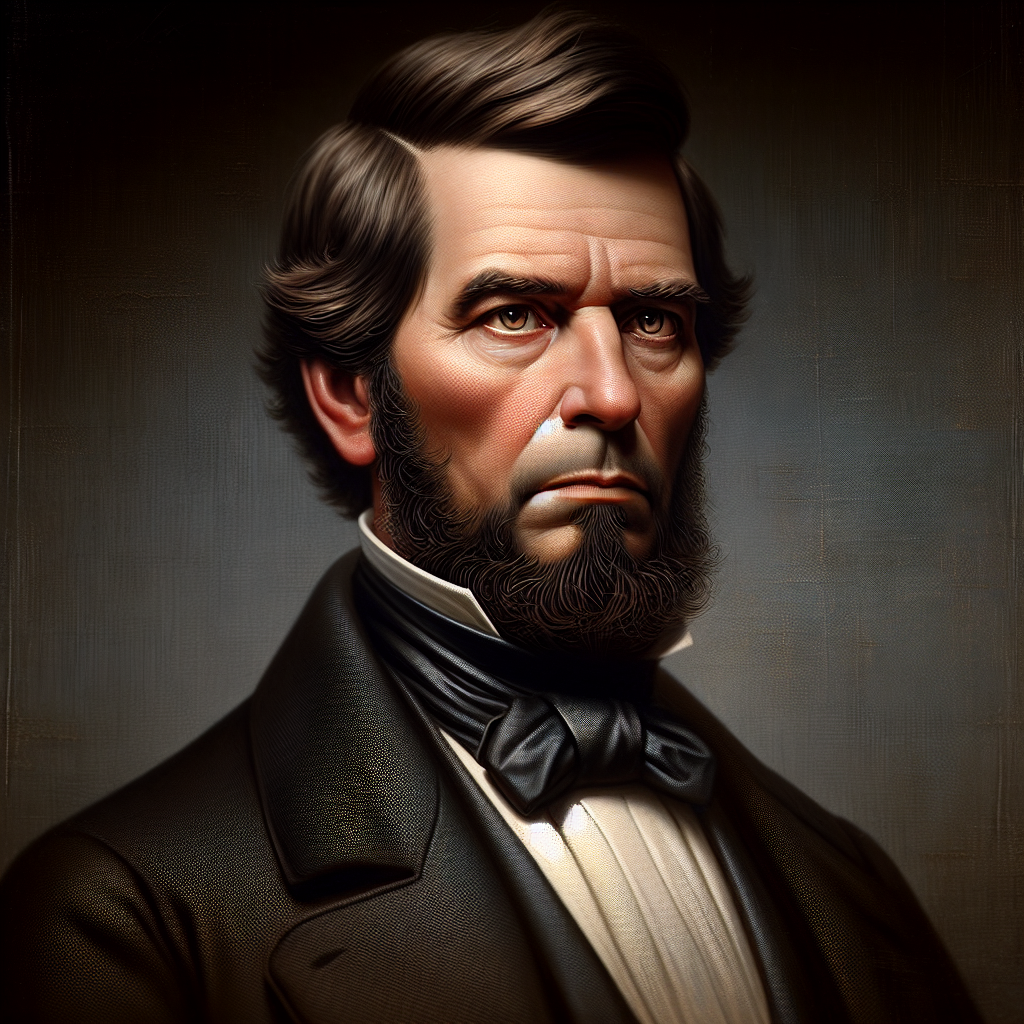
Daniel Webster

In the era before microphones, radio, or amplification, Daniel Webster's voice filled the chambers of the U.S. Senate and the galleries above with something that made listeners go quiet and still. His 1830 debate with Robert Hayne of South Carolina — a thundering, two-day rebuttal of states' rights and nullification — was reprinted and memorized by schoolchildren for generations. More than any legal argument, it defined what the Union meant and why it was worth preserving.
Webster represented New Hampshire and then Massachusetts across four decades in Congress, serving twice as Secretary of State and running for president three times without success. He was the preeminent constitutional lawyer of his age — the man you hired when the case reached the Supreme Court and everything was on the line. His arguments in McCulloch v. Maryland and Dartmouth College v. Woodward shaped American law for generations.
His reputation collapsed, for many, with the Compromise of 1850 and his support for the Fugitive Slave Act. Abolitionists who had admired him turned on him with fury; John Greenleaf Whittier wrote the poem "Ichabod" as an elegy for Webster's moral standing. He died two years later, still convinced he had saved the Union from civil war. He had bought it perhaps a decade.


| Born | January 18, 1782 — Salisbury, New Hampshire |
| Died | October 24, 1852 — Marshfield, Massachusetts |
| Offices | U.S. Senator (NH, MA); Secretary of State (1841–43, 1850–52) |
| Party | Federalist; later Whig |
| Known For | Webster-Hayne Debate (1830), Compromise of 1850 |
| Date | January 18, 1782 – October 24, 1852 |
| Location | Washington, D.C. |