Zora Neale Hurston
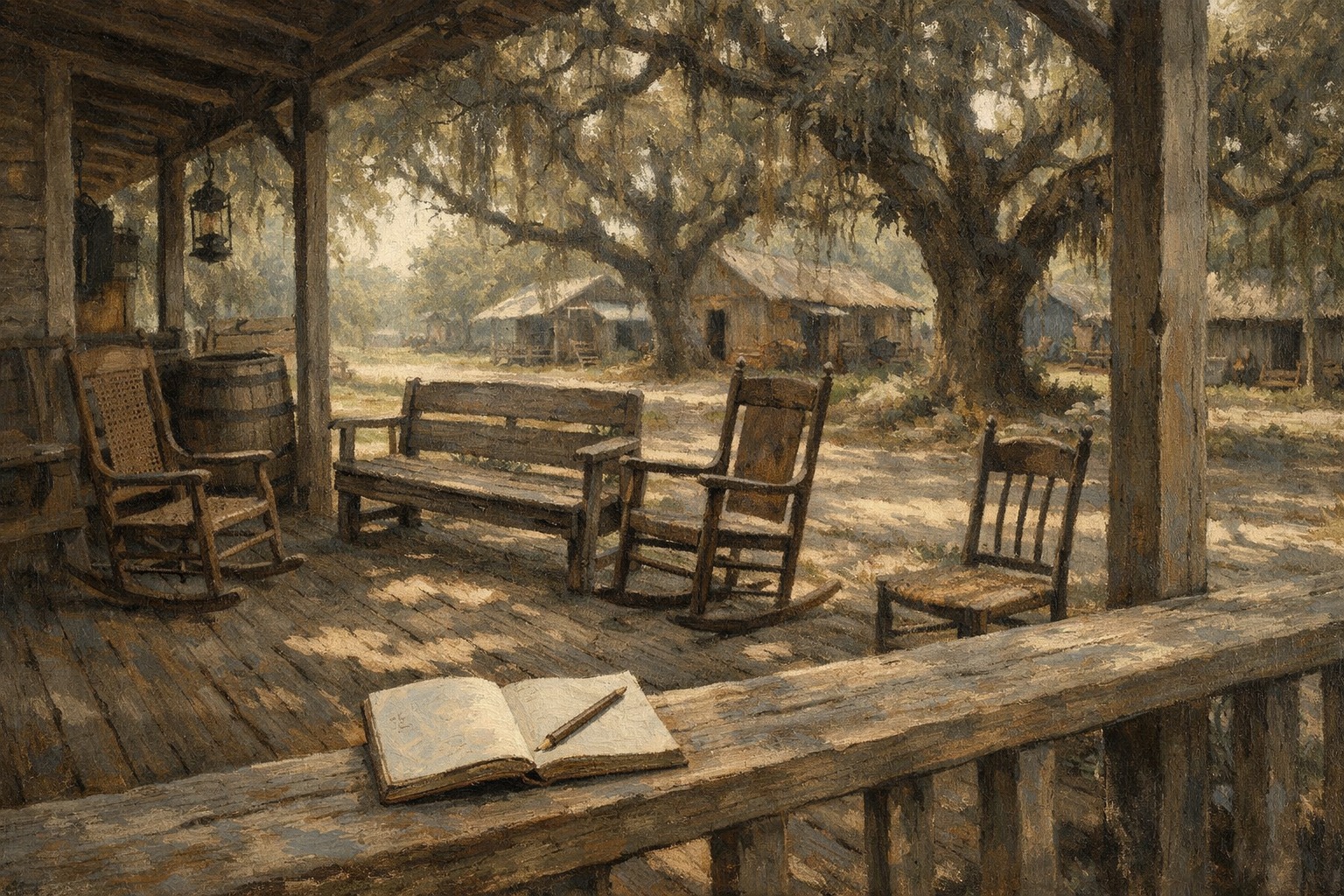
Zora Neale Hurston grew up in Eatonville, Florida, one of the first incorporated all-Black towns in the United States, where her father was mayor and the porch of Joe Clarke's store was a theater of storytelling. She said later that she did not know she was colored until she left. After her mother's death she drifted for years, working as a maid and a wardrobe girl, and was in her late twenties when she finished high school by giving her age as ten years younger.
She studied at Howard University and then at Barnard College, where she was the only Black student, and worked with the anthropologist Franz Boas. In Harlem she became one of the liveliest figures of the Renaissance, a friend and later a rival of Langston Hughes. She traveled the South collecting songs, tales, and hoodoo practices, often at real risk, and published the folklore in Mules and Men in 1935 and Tell My Horse, from research in Jamaica and Haiti, in 1938.
Their Eyes Were Watching God, written in about seven weeks in Haiti and published in 1937, follows Janie Crawford through three marriages toward her own voice, in prose soaked in the speech of Black Florida. Richard Wright attacked it for lacking a political message and for pandering to white readers. Hurston, who rejected what she called the sobbing school of Negrohood, gave as good as she got, and she was often at odds with the political consensus among Black intellectuals.
Her later years were hard. Her books went out of print, and her conservative politics, including her opposition to the reasoning of Brown v. Board of Education, isolated her further. She died in poverty in Fort Pierce in 1960 and was buried in an unmarked grave. In 1973 the novelist Alice Walker found the cemetery, placed a stone reading A Genius of the South, and wrote an essay that set off a revival. Their Eyes Were Watching God is now among the most widely taught American novels.



| Born | Notasulga, Alabama, 1891 |
| Raised | Eatonville, Florida |
| Trained | Anthropology at Barnard under Franz Boas |
| Masterpiece | Their Eyes Were Watching God, 1937 |
| Folklore | Mules and Men, 1935 |
| Rediscovered by | Alice Walker, 1970s |
| Date | 1891–1960 |
| Location | Eatonville, Florida |