Winslow Homer
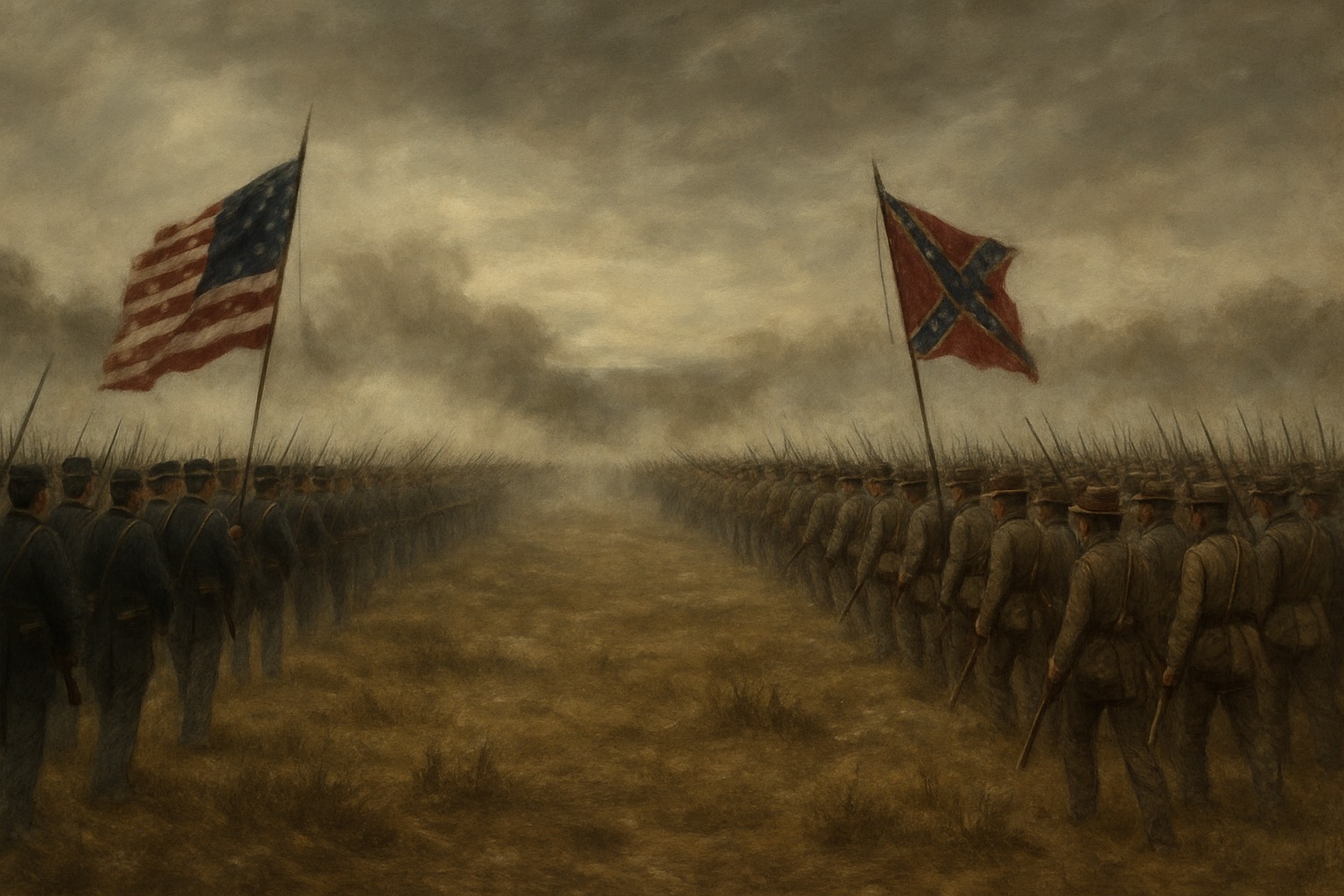
In the autumn of 1861 Harper's Weekly sent a twenty-five-year-old freelance illustrator to the Army of the Potomac. Winslow Homer had learned his trade in a Boston lithography shop and disliked every minute of the apprenticeship, but it had taught him to compose fast and read a scene at a glance. His war drawings mostly avoided battle. He drew soldiers waiting, cooking, writing letters, and being bored, and the wood engravings cut from them reached hundreds of thousands of readers who had no other picture of the front.
The war also made him a painter. Prisoners from the Front, exhibited in 1866, showed a Union officer facing three captured Confederates and refused to tell the viewer what to feel about any of them. Critics recognized it immediately as something new in American painting. Homer spent a year in France, absorbed less from it than his colleagues expected, and came home to paint country schoolhouses, croquet parties, and boys in wheat fields — sunlit American subjects handled with a bluntness that had no European finish laid over it.
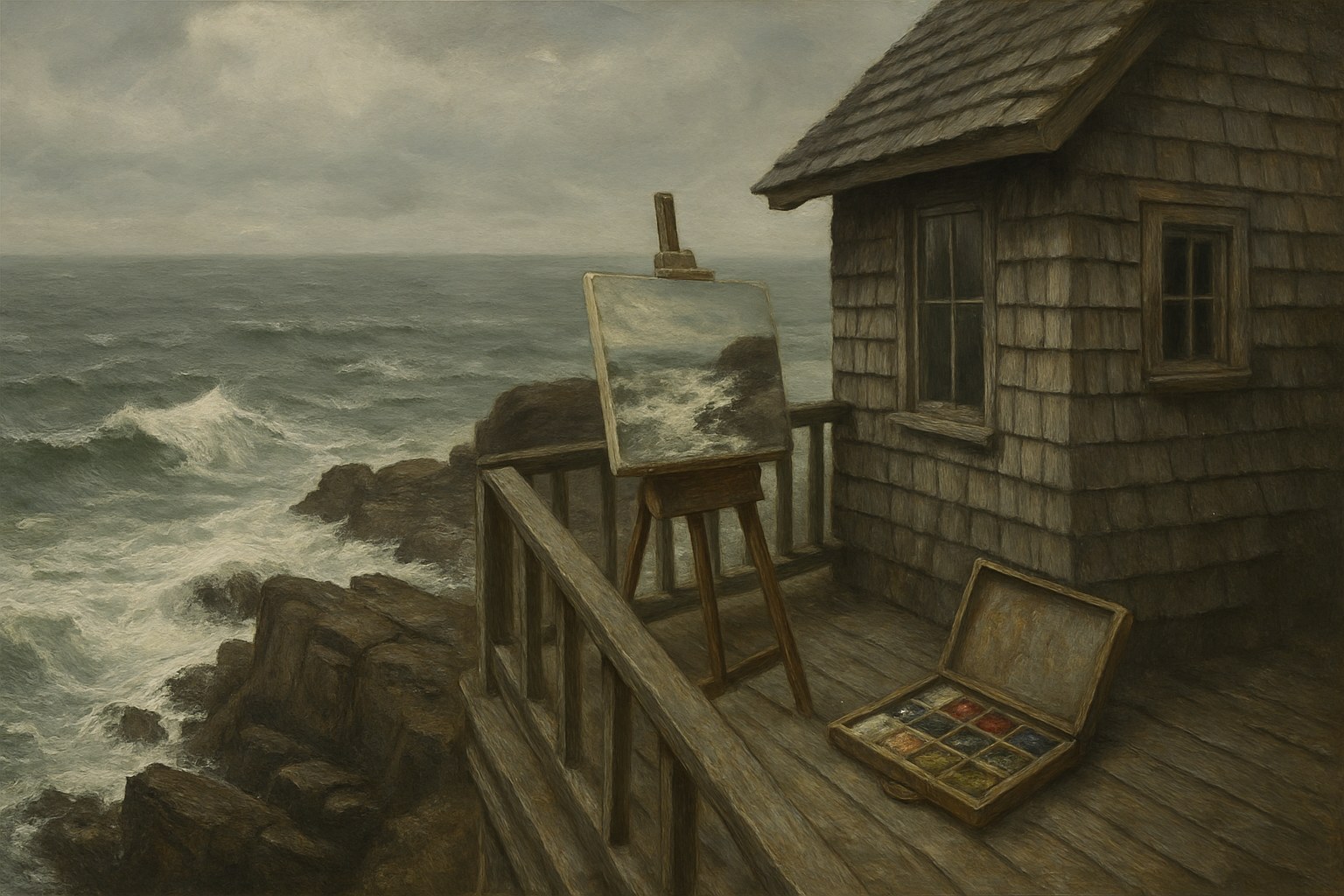
A stay in the fishing village of Cullercoats on the North Sea in 1881 and 1882 changed the work permanently. He came back painting fewer picnics and more weather. In 1883 he moved to Prouts Neck on the Maine coast, built a studio on the cliffs, and largely withdrew from society, painting the surf, the fishermen, and the rescue boats. He also became one of the finest watercolorists any country has produced, working in the Adirondacks, Florida, Bermuda, and the Bahamas in the winters, in a medium then considered a minor amateur pursuit.
Homer had almost no formal training, refused to teach, and gave interviewers next to nothing. He was essentially self-made in a period when American painters measured themselves by Paris and Munich, and his late marines — heavy water against rock, a man alone in a boat — set a standard for American painting that had nothing borrowed in it. The Gulf Stream, painted in 1899 and showing a Black sailor adrift among sharks on a dismasted sloop, was bought by the Metropolitan Museum in 1906 and remains among the most argued-over pictures in American art.
| Born | 1836, Boston, Massachusetts |
| Civil War | Front-line illustrator for Harper's Weekly |
| Breakthrough | Prisoners from the Front, 1866 |
| Home | Prouts Neck, Maine, from 1883 |
| Medium | A master of watercolor as well as oil |
| Died | 1910, Prouts Neck, Maine |
| Date | 1836-1910 |
| Location | Prouts Neck, Maine |