James McNeill Whistler
He was born in Lowell, Massachusetts, spent part of his boyhood in St. Petersburg while his father built a Russian railroad, failed out of West Point after three years, and left for Paris at twenty-one. He never came back. James McNeill Whistler spent his working life in France and England and was contemptuous of the idea that a painter owed anything to his country of birth, which did not stop American critics from claiming him or from being annoyed by him. He was, by universal agreement including his own, difficult.
His argument was that a painting is not a report on the world. He gave his pictures musical titles — nocturnes, symphonies, harmonies, arrangements — to force viewers to look at color relationships and tonal balance rather than at the anecdote. The most famous of them, Arrangement in Grey and Black No. 1, is a portrait of his mother in profile against a wall, a plain grey-and-black composition that the public renamed Whistler's Mother and turned into a sentimental emblem of motherhood, an interpretation he found ridiculous. The French state bought it in 1891.
In 1877 John Ruskin, then the most powerful critic in Britain, saw a hazy nocturne of fireworks over the Thames and wrote that he had never expected to hear a coxcomb ask two hundred guineas for flinging a pot of paint in the public's face. Whistler sued for libel. At the 1878 trial he was asked whether he really charged that much for two days' work and answered that he asked it for the knowledge of a lifetime. The jury awarded him one farthing in damages and no costs. The legal victory was total and it bankrupted him within months.
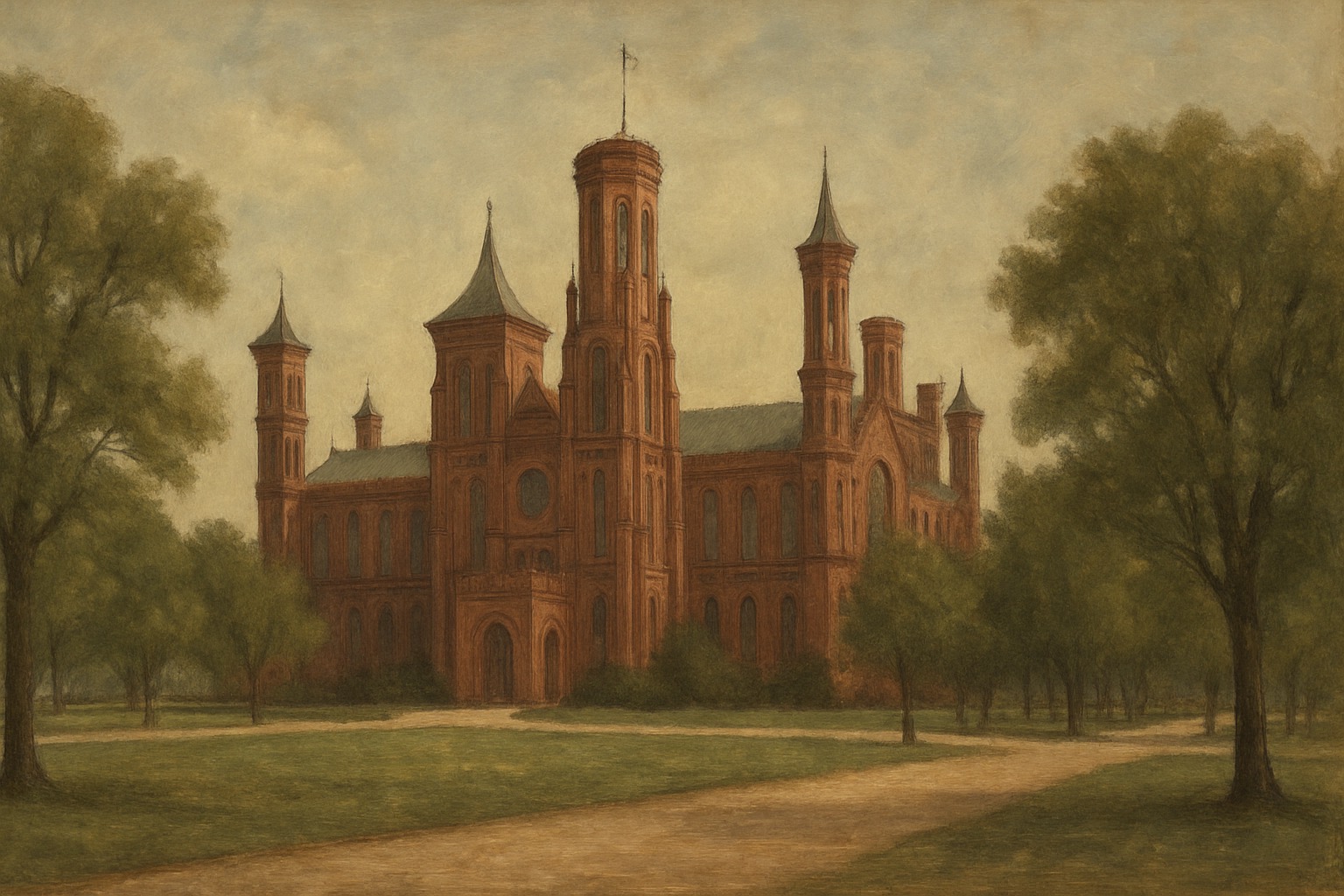
He recovered by way of etching, teaching, and relentless self-promotion, published the collected feuds as The Gentle Art of Making Enemies, and delivered the Ten O'Clock lecture defending art for art's sake against the notion that pictures should instruct. His decorative Peacock Room, made for a London shipping magnate and later bought whole by Charles Lang Freer, now sits in the Smithsonian. For American painting his significance was oblique but real: he demonstrated that an American could set the terms of an argument in Europe rather than arrive to take instruction.
| Born | 1834, Lowell, Massachusetts |
| Left America | 1855, for Paris — never returned |
| Creed | Art for art's sake |
| Best known | Arrangement in Grey and Black No. 1, 1871 |
| Ruskin trial | Won one farthing in 1878 and went bankrupt |
| Peacock Room | Now in the Freer Gallery, Smithsonian |
| Date | 1834-1903 |
| Location | London, England |