Frederick Law Olmsted
By the age of thirty-five he had been a merchant's clerk, a sailor on a voyage to China, a scientific farmer on Staten Island, a publisher, and a traveling correspondent whose dispatches from the slave South for a New York paper were later collected as The Cotton Kingdom, still among the sharpest firsthand accounts of the antebellum plantation economy. Frederick Law Olmsted had no training in design of any kind. In 1857, out of work and out of money, he took a job as superintendent of the ground being cleared for a new park in upper Manhattan.
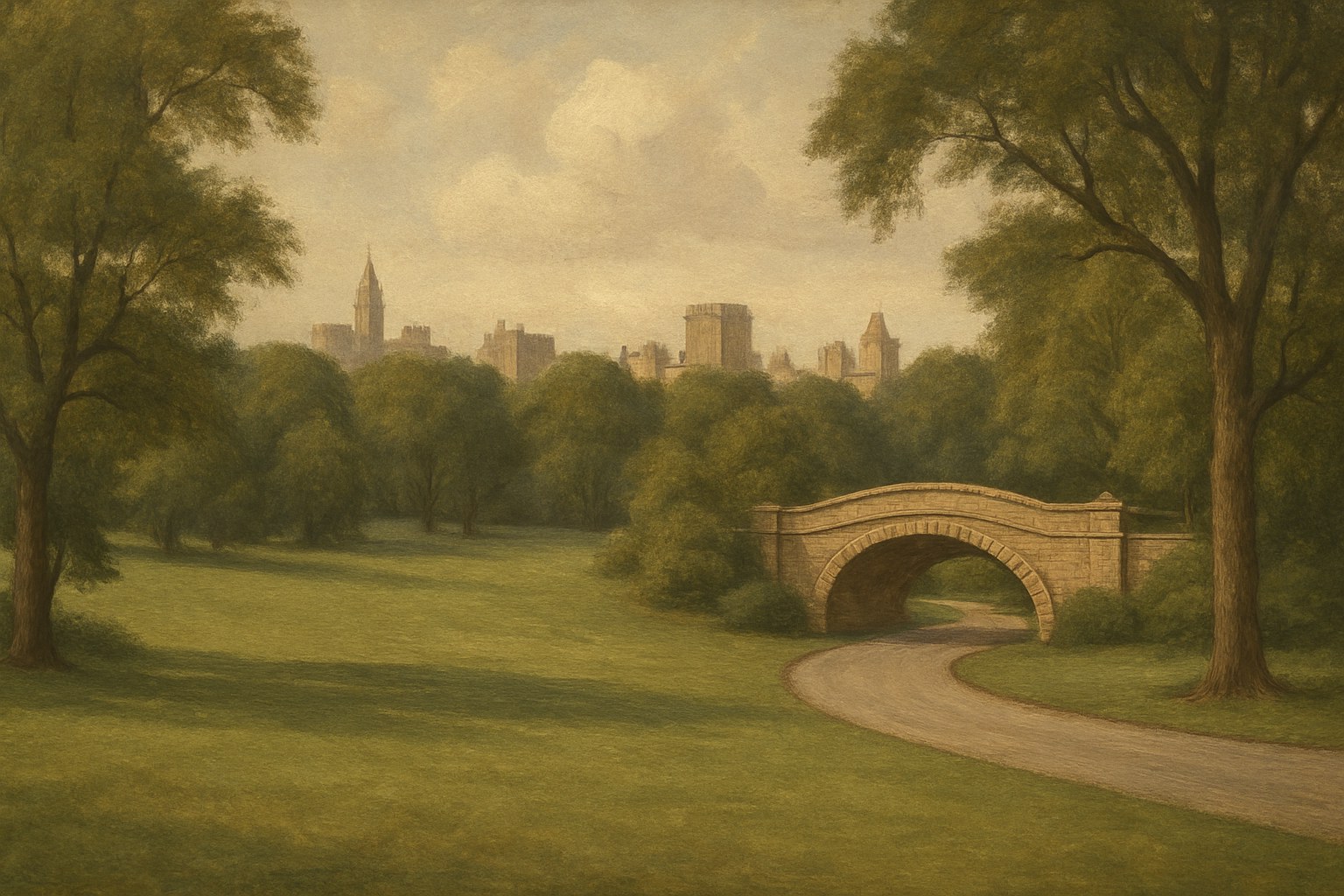
The following spring he and the English-born architect Calvert Vaux won the design competition with a plan they called Greensward. Central Park as they built it is entirely artificial — every hill, lake, meadow, and outcrop placed or edited — and its cleverest feature is invisible: four roads sunk below grade so that crosstown traffic could pass without breaking the illusion of countryside. Building it meant evicting the residents of Seneca Village, a settled Black community with churches and a school, a fact the park's official histories omitted for more than a century.
The practice that followed effectively created a profession. With Vaux he designed Prospect Park in Brooklyn, which he preferred to Central Park, and the planned suburb of Riverside outside Chicago. On his own he laid out the Buffalo park system, the grounds of the United States Capitol, the Stanford campus, and Boston's Emerald Necklace, whose Back Bay Fens was as much a sanitary drainage project as a park. At Biltmore in North Carolina he designed the grounds of George Vanderbilt's estate and pushed for managed forestry on the surrounding land, the first large-scale scientific forestry in the country.
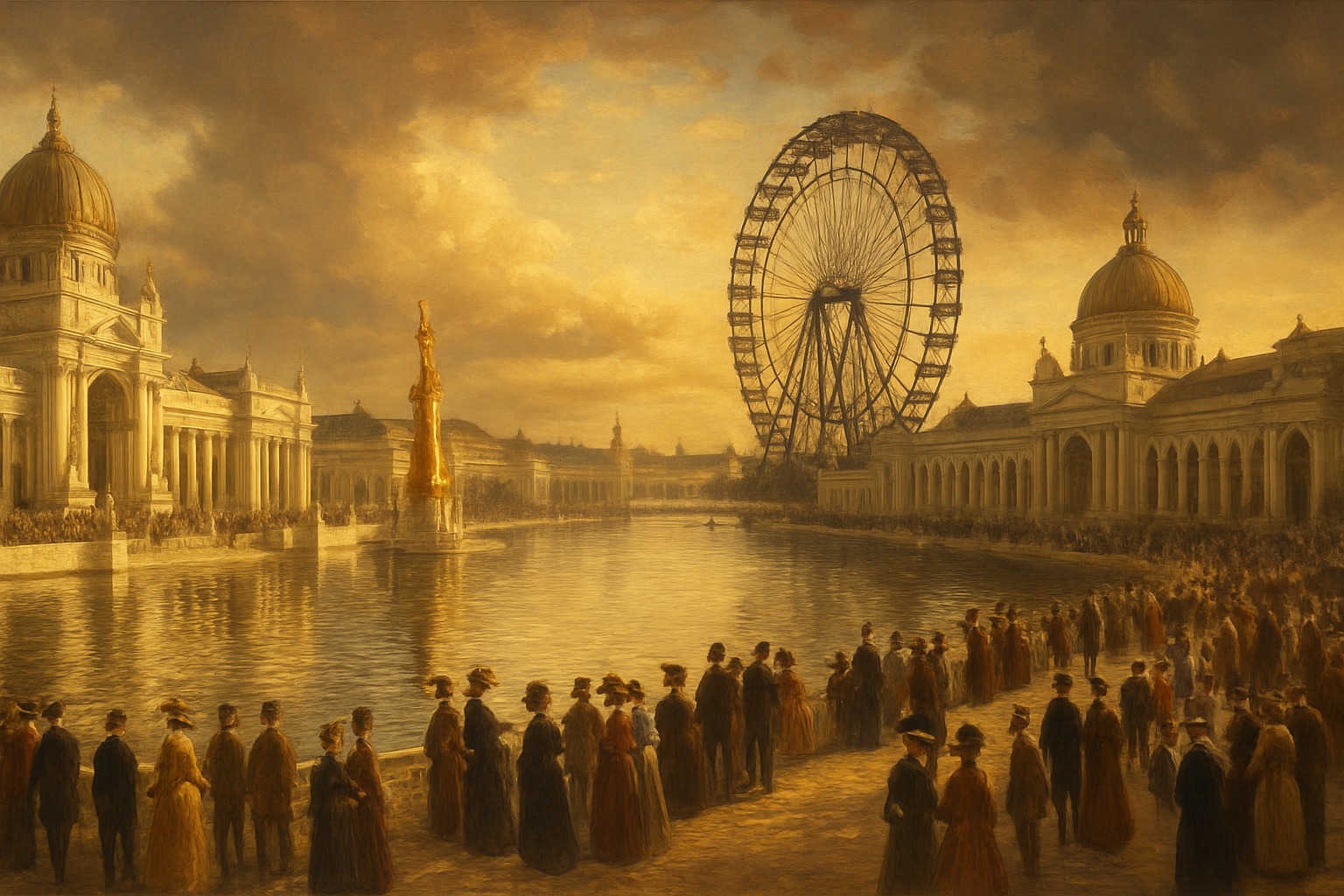
His argument for all of it was political. A park, he wrote, was not a decoration but a democratic institution — a place where clerks and laborers and the wealthy occupied the same ground on the same terms, and where crowded city dwellers could get the relief that only unhurried scenery provides. He also wrote the 1865 report on Yosemite that made the case for preserving great scenery in public hands, an argument the national parks later rested on. He planned the grounds of the 1893 Chicago world's fair, then declined into dementia and died in 1903.

| Born | 1822, Hartford, Connecticut |
| Before parks | Journalist — author of The Cotton Kingdom |
| Central Park | The Greensward plan with Calvert Vaux, 1858 |
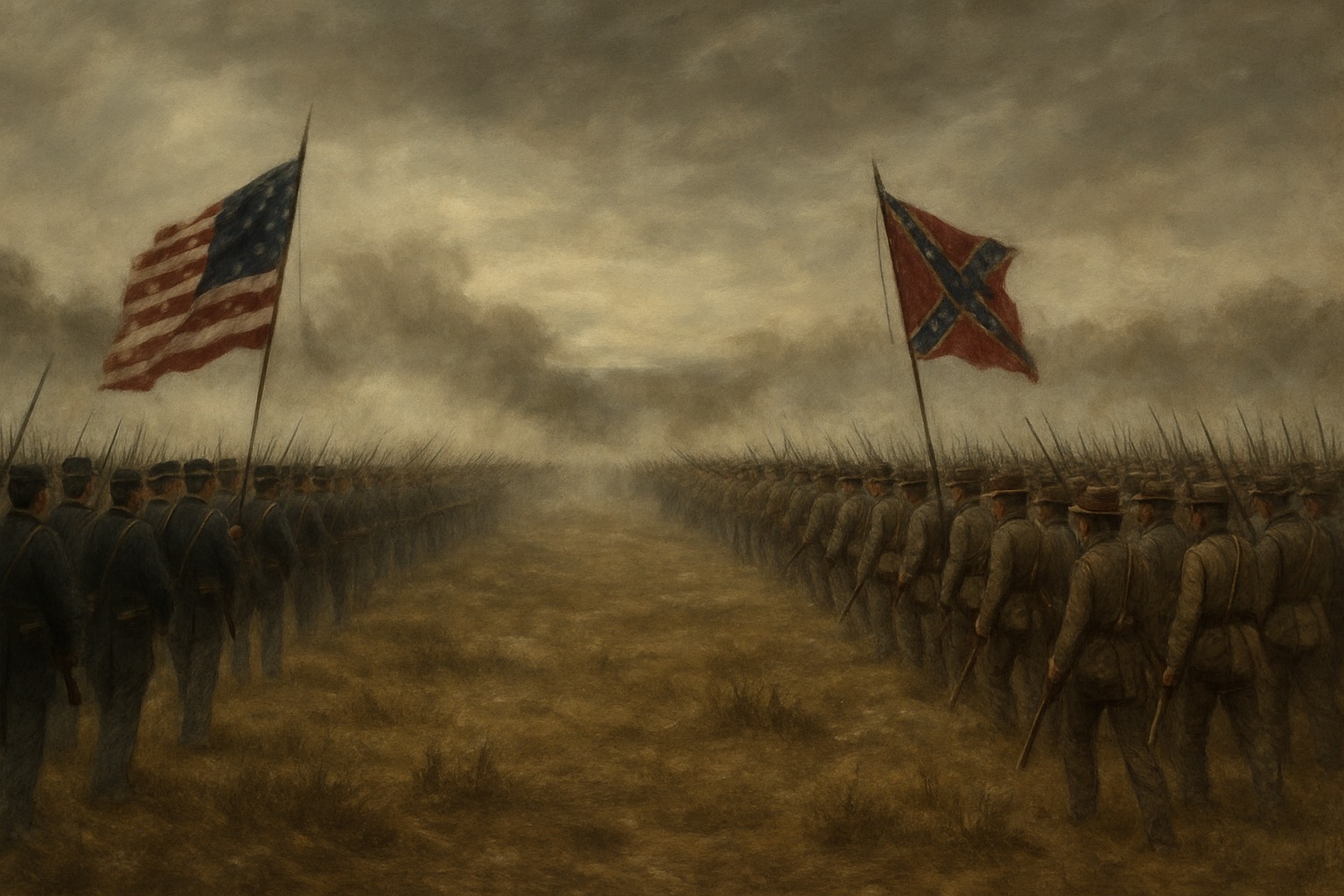
| Civil War | Head of the U.S. Sanitary Commission, 1861-1863 |
| Other works | Prospect Park, the Emerald Necklace, Biltmore |
| Argument | Public parks as democratic institutions |
| Date | 1822-1903 |
| Location | Brookline, Massachusetts |