The TV Dinner
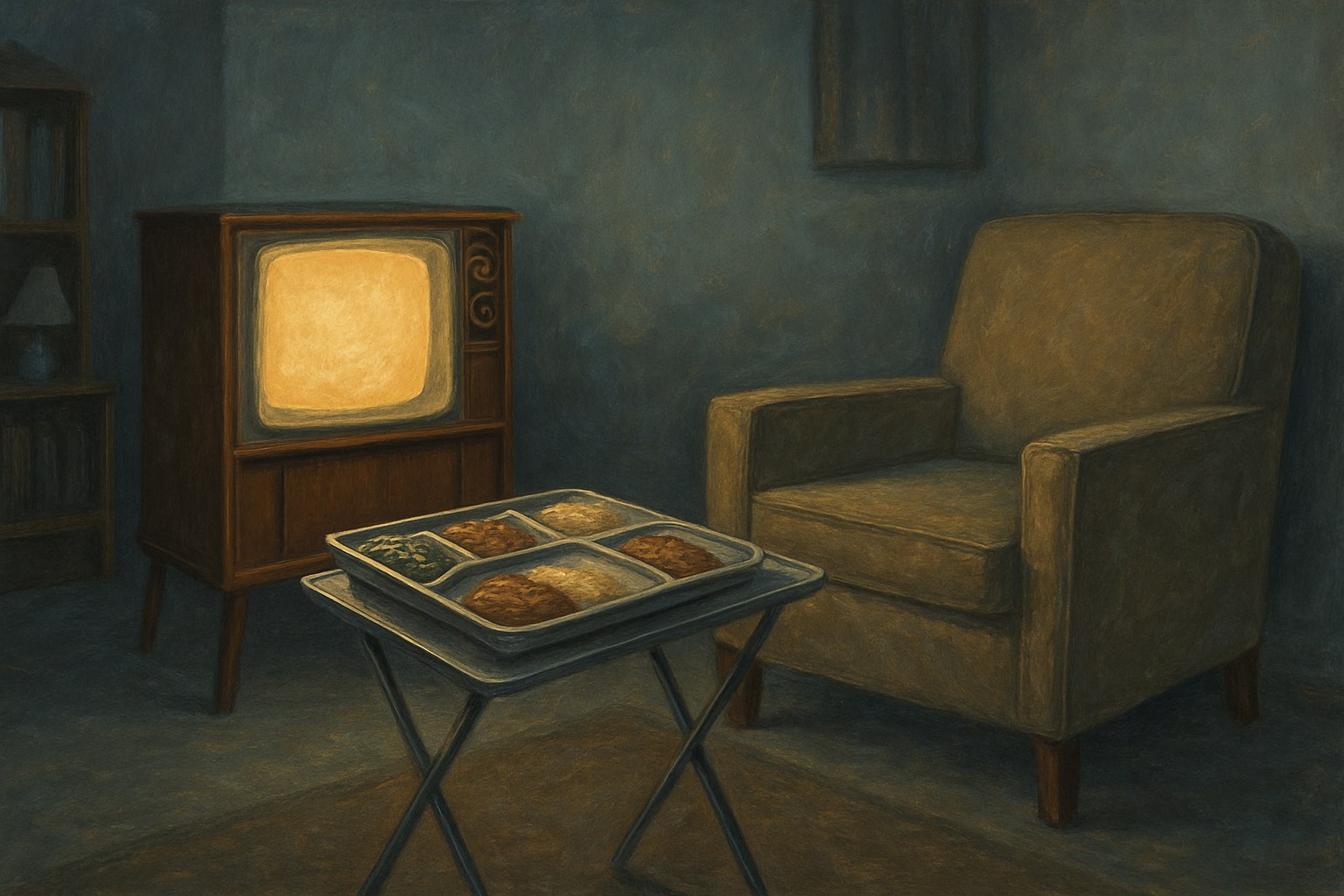
In 1953 the C. A. Swanson company put a compartmented aluminum tray of turkey, cornbread dressing, sweet potatoes, and peas inside a printed paperboard carton designed to look like a television set, and called it the TV Brand Frozen Dinner. It cost ninety-eight cents, went into a hot oven for twenty-five minutes, and came out requiring no pot, no pan, and no plate. Swanson sold roughly ten million of them in the first full year of production and could not keep pace with the orders.
The origin story is repeated everywhere and is doubtful in its particulars. As usually told, a salesman named Gerry Thomas found the company sitting on some two hundred and sixty tons of unsold Thanksgiving turkey riding back and forth in refrigerated railcars, and proposed the tray after watching airline meal service. Members of the Swanson family later disputed his account and credited company executives instead, and the turkey tonnage has never been documented. Compartmented frozen meals for airlines and the military predated Swanson by roughly a decade in any case.
The tray itself was the engineering. Aluminum conducted heat evenly, raised dividers kept the peas out of the dessert, and the compartments required that every item cook through at the same temperature in the same time — which meant reformulating the recipes rather than simply freezing a home-cooked meal. It also depended on two other machines being in the house. The home freezer was still uncommon before the war, and the microwave oven, which arrived later and sold the category enormously, eventually killed the aluminum tray, because metal cannot go inside one.
What the dinner changed was the shape of the evening. It let members of a household eat different things at different hours in front of a screen, and it detached the meal from the person who had always been expected to cook it, at exactly the moment when American women were entering paid work in very large numbers. Critics read it as the end of the family table and defenders as an hour handed back. Both readings rest on the same fact — that after 1953 dinner no longer had to be made.

| Introduced | 1953, by C. A. Swanson and Sons of Omaha |
| Price | Ninety-eight cents |
| First-year sales | About ten million trays |
| Origin story | The turkey-surplus tale is disputed and undocumented |
| Engineering | Aluminum compartments cooking everything at one temperature |
| End of the tray | The microwave oven, which cannot take metal |
| Date | 1953 |
| Location | Omaha, Nebraska |