I Will Fight No More Forever
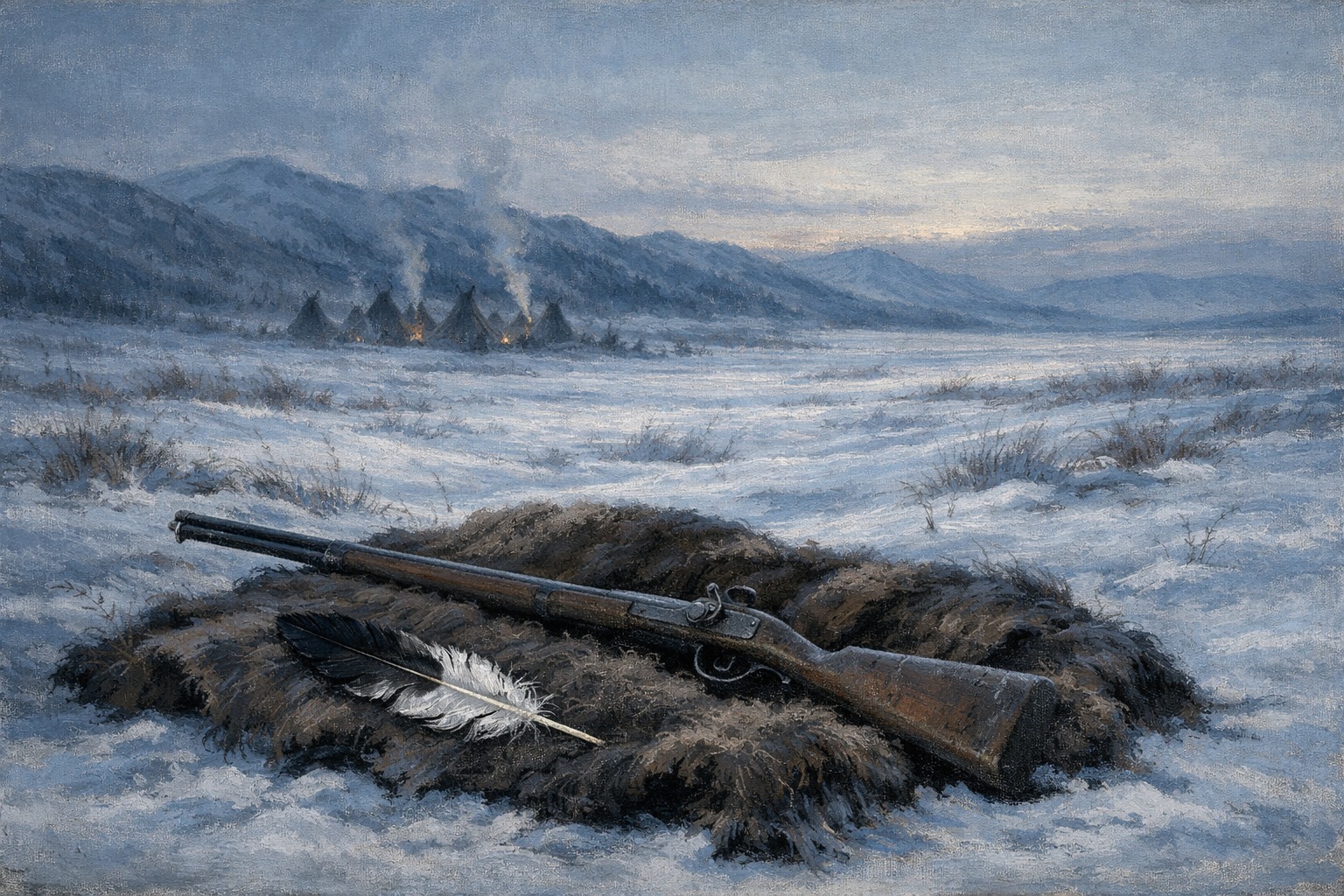
In the summer of 1877 the army ordered the non-treaty bands of the Nez Perce out of their homeland in the Wallowa Valley of Oregon and onto a reservation in Idaho. After a handful of young men killed white settlers in revenge for earlier murders, war came. Some 750 Nez Perce, most of them women, children, and old people, set out on a fighting retreat that carried them across Idaho, through Yellowstone, and north across Montana toward the Canadian border, a journey of well over a thousand miles.
They held off or outran several army columns for nearly four months. At the Bear Paw Mountains, about forty miles short of Canada, troops under Colonel Nelson Miles caught them in camp. After a siege of five days in snow and freezing cold, with several of the war leaders dead, Joseph agreed to surrender on October 5, 1877.
The words attributed to him that day were written down by Lieutenant Charles Erskine Scott Wood and published soon afterward. "Hear me, my chiefs. I am tired. My heart is sick and sad. From where the sun now stands I will fight no more forever." The speech names the chiefs who had died, the cold, the children who had run into the hills with no blankets. Historians have long debated how much of the text is Joseph's and how much is Wood's literary hand, and Joseph himself was one of several leaders rather than the commander the army described.
The army promised that the Nez Perce could go home. Instead they were shipped to Kansas and then to Indian Territory, where many died of disease. Joseph spent the rest of his life petitioning for return, traveling to Washington and speaking to audiences in the East. In 1885 survivors were allowed back to the Northwest, but Joseph was sent to the Colville Reservation in Washington, never to the Wallowa. He died there in 1904. The surrender speech became the most widely known statement of Native loss in American history.

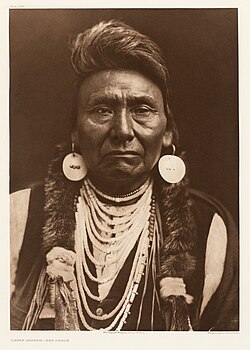
| Speaker | Chief Joseph (Hin-mah-too-yah-lat-kekt) of the Nez Perce |
| Date | October 5, 1877 |
| Place | Bear Paw Mountains, Montana Territory |
| Recorded by | Lt. Charles Erskine Scott Wood |
| Context | End of the Nez Perce War and a retreat of more than 1,000 miles |
| Aftermath | Exile to Indian Territory, later the Colville Reservation |
| Date | October 5, 1877 |
| Location | Bear Paw Mountains, Montana Territory |