The Sugar Act
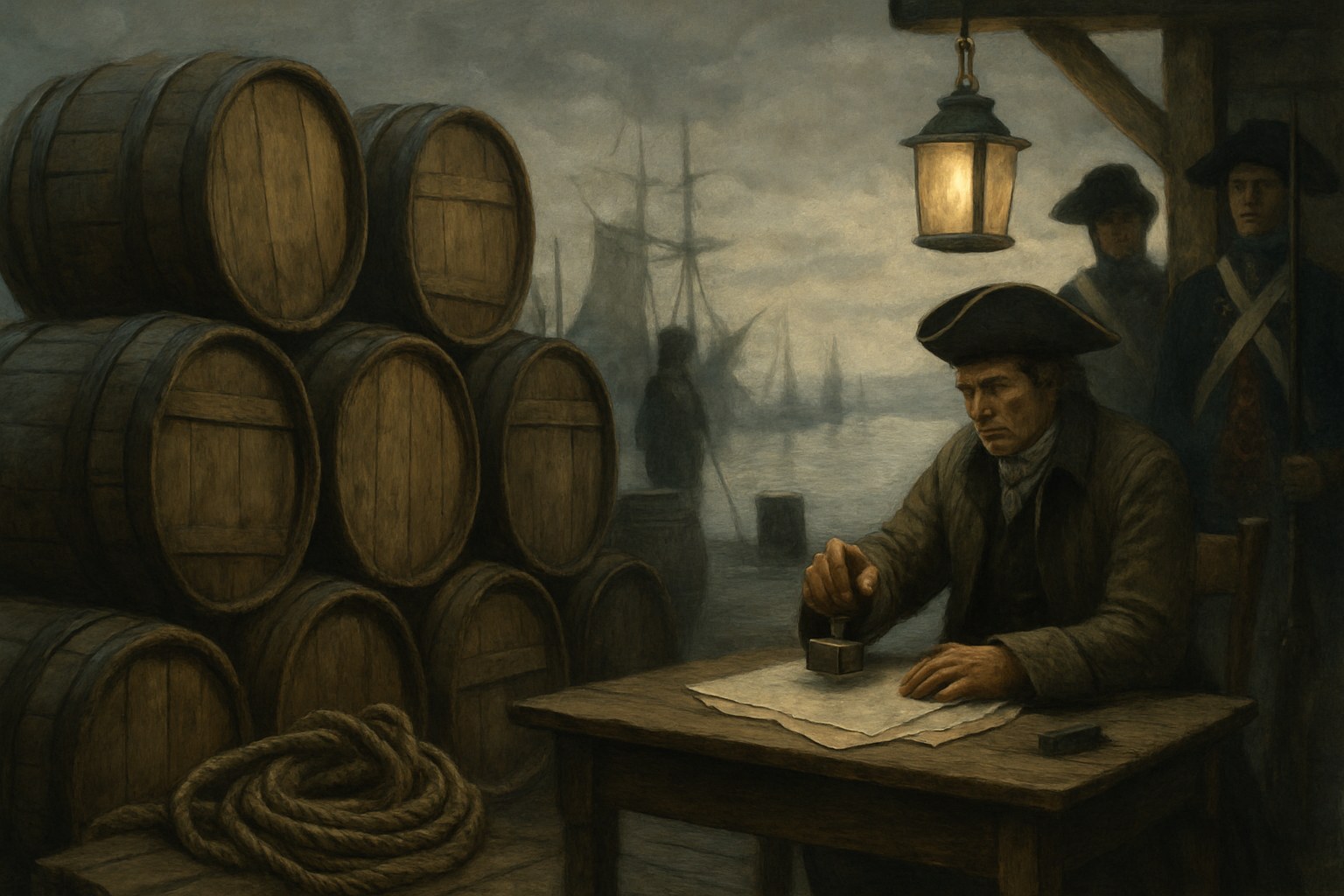
The Molasses Act of 1733 had taxed foreign molasses at sixpence a gallon, and for thirty years New England distillers had simply not paid it, settling with customs officers for a fraction of the rate. In 1764 George Grenville's ministry decided that an empire carrying a war debt of some 130 million pounds could no longer keep a customs service that cost more to operate than it collected. The American Revenue Act, known in the colonies as the Sugar Act, halved the molasses duty to threepence and then set out to enforce it.
Enforcement was the whole point. The act extended duties to foreign sugar, wine, coffee, and finished textiles, required an elaborate paper trail of bonds and certificates for every cargo however small, and turned the Royal Navy loose as a customs patrol. Most provocatively, it steered smuggling cases into vice-admiralty courts, where a crown-appointed judge decided the matter without a jury and the burden of proof fell on the accused merchant rather than the crown. Grenville also announced in advance that a stamp tax would probably follow.
The reaction was economic before it became constitutional. New England's rum trade, its West Indies commerce, and the fragile web of credit binding them all rested on cheap molasses, and merchants in Boston, Newport, and New York warned that the act would strangle the very trade it taxed. But the preamble stated plainly that the duties were laid to raise a revenue rather than to regulate commerce, and colonial writers seized on the distinction. James Otis and the Massachusetts assembly began framing the objection that defined the decade: taxation without representation.
The Sugar Act produced the first coordinated colonial protest against a parliamentary tax, the first merchant agreements to stop importing British goods, and the argument that a British subject could not be taxed by a body in which he had no voice. It produced very little money. The pattern established here repeated for a decade. A measure designed to make the empire pay for itself instead generated resistance that cost more, in trade and in loyalty, than the revenue was ever worth.


| Passed | April 5, 1764 |
| Formal name | The American Revenue Act of 1764 |
| Author | George Grenville, First Lord of the Treasury |
| Molasses duty | Cut from sixpence to threepence a gallon, and collected |
| Courts | Smuggling tried in vice-admiralty courts without juries |
| Response | The first colonial non-importation agreements |
| Date | April 5, 1764 |