Détente
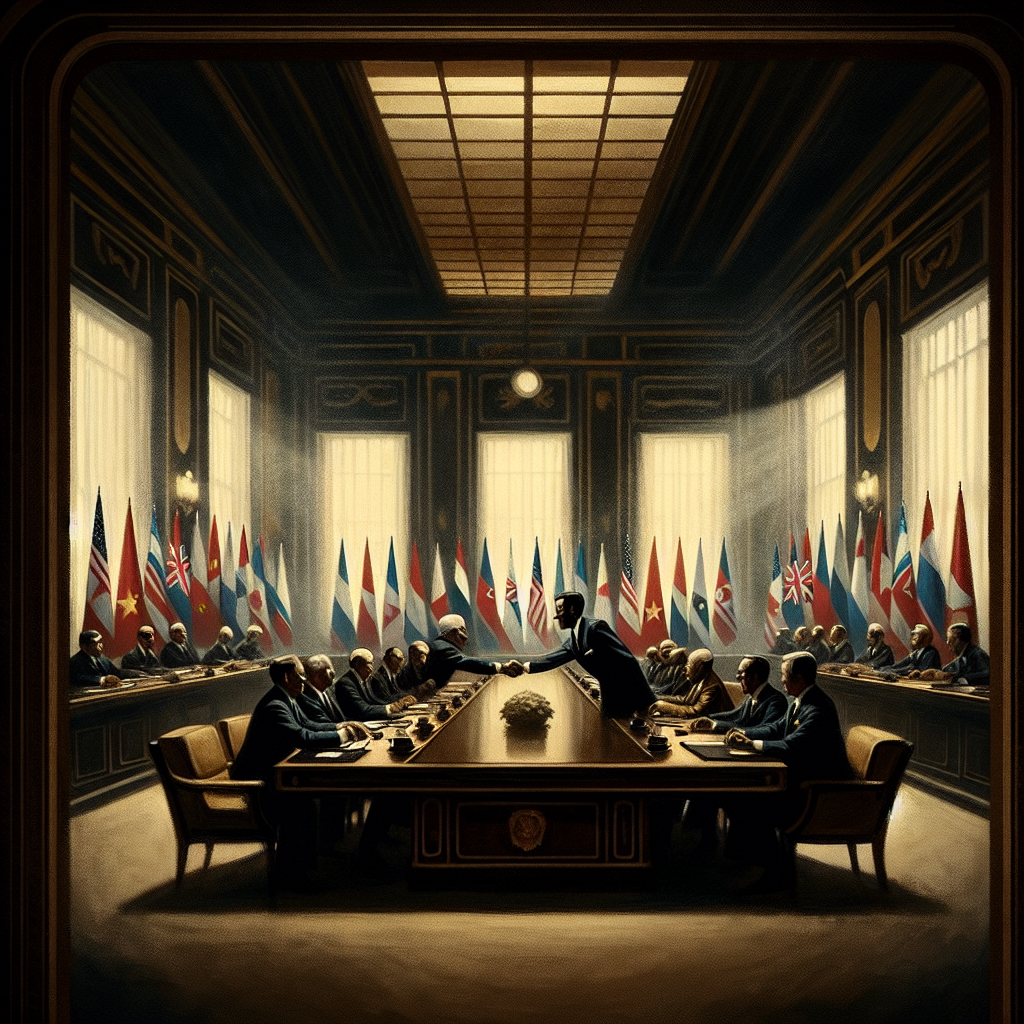
Richard Nixon arrived in Beijing in February 1972 and shook hands with Mao Zedong — a gesture that would have been unthinkable to any of his predecessors, and to Nixon himself a decade earlier. Orchestrated in secret by Henry Kissinger, the visit was the most dramatic symbol of détente: the deliberate relaxation of Cold War tensions through negotiation, trade, and mutual recognition of great-power interests. It signaled that ideology would yield, at least partially, to realpolitik.
Détente produced tangible results. Nixon's visit to the Soviet Union in May 1972 yielded SALT I, the first strategic arms limitation treaty, and the Anti-Ballistic Missile Treaty. Trade expanded between the superpowers. The Helsinki Accords of 1975 formalized the post-war borders of Europe and, in a provision its Soviet signatories largely disregarded, committed all parties to respect human rights. The era produced more diplomatic contacts between Washington and Moscow than the preceding 25 years combined.
Critics came from both directions. Conservatives, led by Senator Henry Jackson and later Ronald Reagan, argued the Soviets were exploiting American restraint to expand their military edge. Liberals attacked Kissinger's willingness to overlook Soviet repression in the name of stability. The Soviet invasion of Afghanistan in December 1979 effectively ended détente and vindicated, in many minds, those who had doubted Soviet intentions from the start.
| Era | 1969–1979 |
| Key figures | Richard Nixon, Henry Kissinger, Leonid Brezhnev |
| China visit | February 21–28, 1972 |
| SALT I signed | May 26, 1972 |
| Helsinki Accords | August 1, 1975 |
| Ended by | Soviet invasion of Afghanistan, December 1979 |