Organ Transplantation
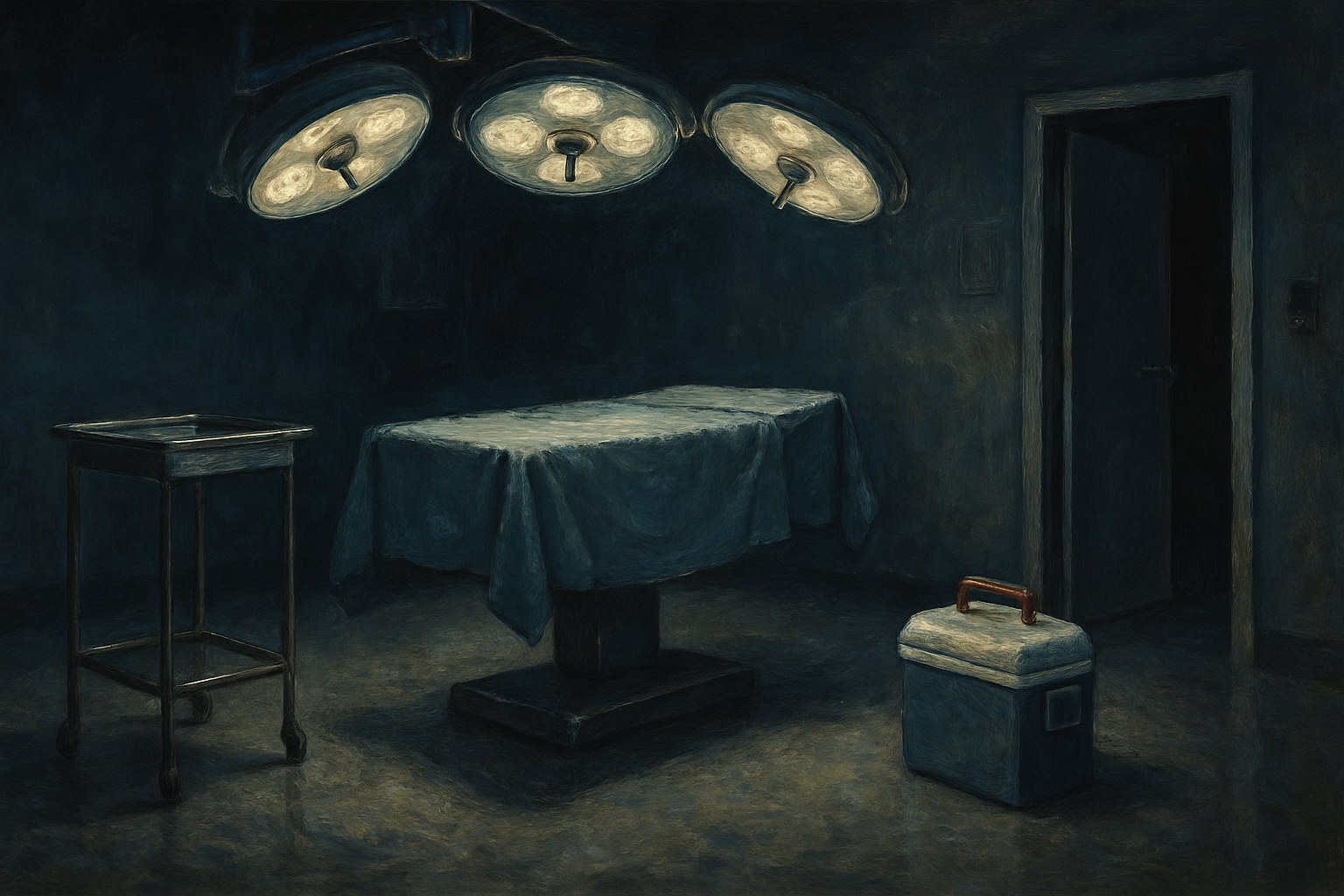
Surgeons had known how to sew blood vessels together since Alexis Carrel worked out the technique early in the century, and they had moved kidneys into animals and a few desperate patients for decades. Every attempt failed the same way. The organ would work for days or weeks, then swell, darken, and stop as the recipient's immune system destroyed it. The problem was not the plumbing. It was that a body can tell its own tissue from someone else's with great precision, and cannot be talked out of acting on the difference.
On December 23, 1954, at the Peter Bent Brigham Hospital in Boston, Joseph Murray removed a kidney from Ronald Herrick and placed it in his identical twin Richard, who was dying of kidney failure. Because the brothers were genetically identical, there was nothing for the immune system to object to. Richard Herrick lived eight more years and married the nurse who cared for him. The operation proved that a transplanted kidney could function indefinitely in a human being. It also confirmed that everybody without an identical twin was going to need something more.
That something arrived in stages — whole-body irradiation first, then the drug azathioprine paired with steroids, which by the early 1960s permitted transplants between people who were merely related. Emboldened surgeons moved to other organs. Christiaan Barnard, working in Cape Town, transplanted a human heart on December 3, 1967, and his patient lived eighteen days under enormous worldwide attention. The decisive drug was cyclosporine, isolated from a soil fungus and approved in the United States in 1983. Survival rates roughly doubled, and liver, heart, lung, and pancreas transplantation all became routine within a decade.
Success created a shortage that has never been solved. Transplantable organs come from dead people, disproportionately the young and suddenly killed, and there have never been enough of them. The National Organ Transplant Act of 1984 banned the sale of organs and established the national network that became UNOS, which allocates by formulas weighing medical urgency, tissue match, time waited, and geography. Those formulas are revised constantly and argued over constantly, because every revision moves real people up and down a list of more than one hundred thousand. Thousands die on it each year.

| First success | December 23, 1954, Boston — identical twins |
| Surgeon | Joseph Murray, Nobel Prize 1990 |
| The obstacle | Immune rejection |
| First heart transplant | Christiaan Barnard, Cape Town, December 3, 1967 |
| Cyclosporine | Approved in the United States, 1983 |
| Allocation | National Organ Transplant Act 1984, then UNOS |
| Date | 1954-1983 |
| Location | Boston, Massachusetts |