Oregon Territory
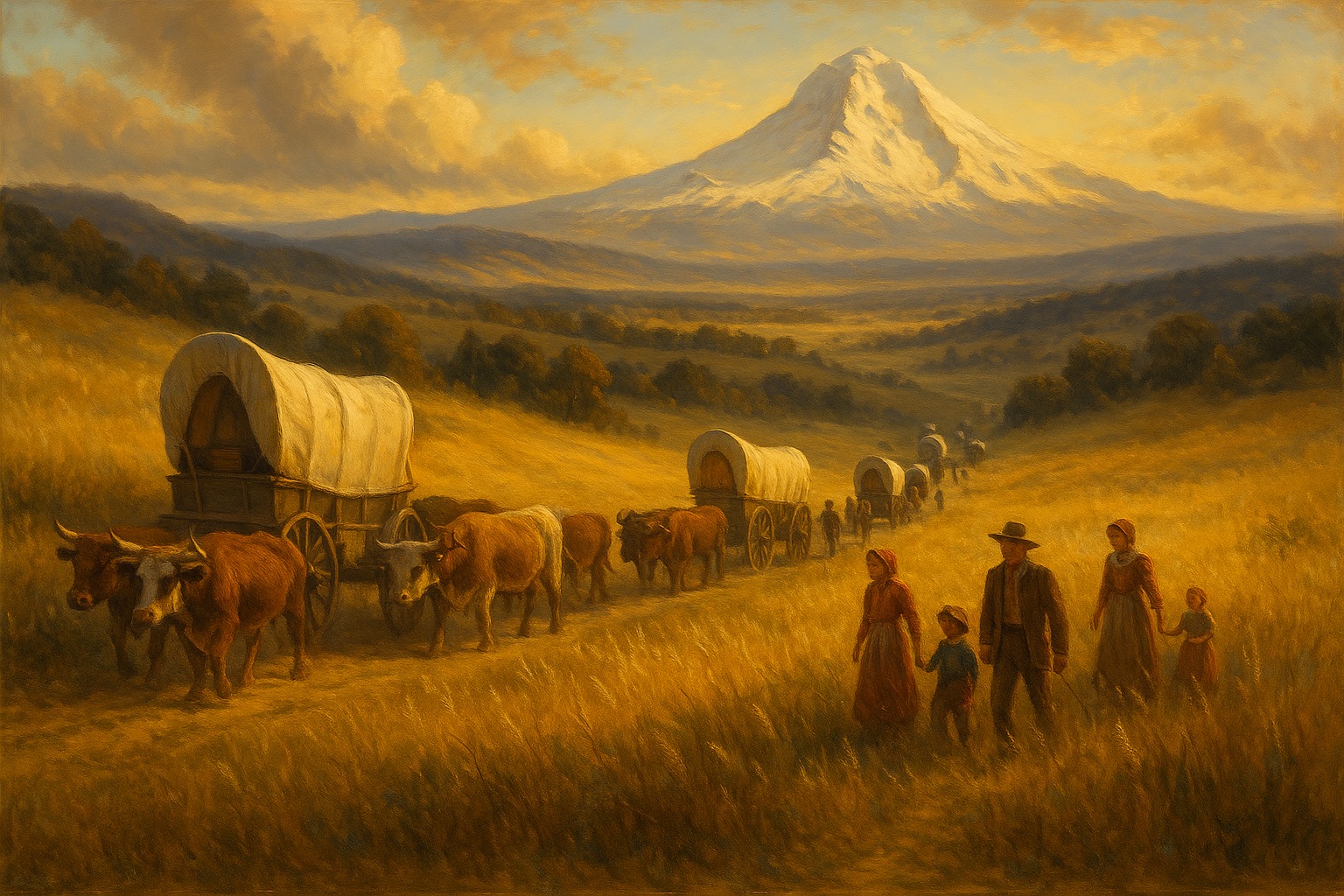
Oregon Country, as both Britain and the United States called it through the first half of the nineteenth century, covered the Pacific slope from the 42nd parallel north to the 54-40 line — roughly today's Oregon, Washington, Idaho, and parts of Montana, Wyoming, and western Canada. Under the Anglo-American Convention of 1818, the two powers had agreed to joint occupation while leaving sovereignty undetermined. The Hudson's Bay Company built fur-trade posts; American missionaries built schools; both encouraged settlement, and by the early 1840s the Oregon Trail was carrying several thousand American migrants a year into the Willamette Valley.
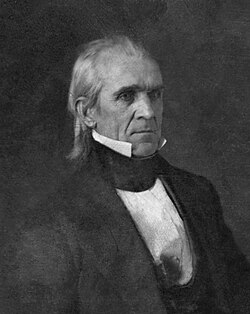
The 1844 presidential election turned in part on James K. Polk's slogan "Fifty-four forty or fight," demanding the entire territory up to the Russian Alaska border. Polk won, then quietly negotiated the Oregon Treaty of June 15, 1846, which set the boundary at the 49th parallel — the same line that already divided British and American territory east of the Rockies. Britain kept what is now British Columbia; the United States got everything south. The treaty avoided war in part because Polk had already provoked one with Mexico over Texas and could not afford another, but his administration sold it to expansionists as a triumph.
Congress organized Oregon Territory in August 1848, after a delay caused by a Senate fight over whether the new territory would prohibit slavery (it did). The Cayuse War of 1847–1855 — touched off by the killing of Marcus and Narcissa Whitman by Cayuse who blamed the missionaries for a measles epidemic — gave Congress the political momentum to finally pass the organic act. The territory was carved up further as settlement spread: Washington Territory split off in 1853, parts of Idaho and Montana followed, and Oregon itself became a state in 1859. The pattern of treaty acquisition, territorial organization, Indigenous war, and rapid statehood became the template for the rest of the West.
| Oregon Treaty signed | June 15, 1846 (with Britain) |
| Organized | August 14, 1848 |
| Dissolved | February 14, 1859 (Oregon statehood) |
| First capital | Oregon City |
| Coverage | Modern Oregon, Washington, Idaho, parts of Montana and Wyoming |
| Slavery | Prohibited by territorial organic law |
| Cayuse War | 1847–1855 (sparked by the Whitman killings) |
| Date | Oregon Treaty: June 15, 1846 · Territory organized: August 14, 1848 |
| Location | Oregon City, Oregon Territory (first capital) |