The Flatiron Building
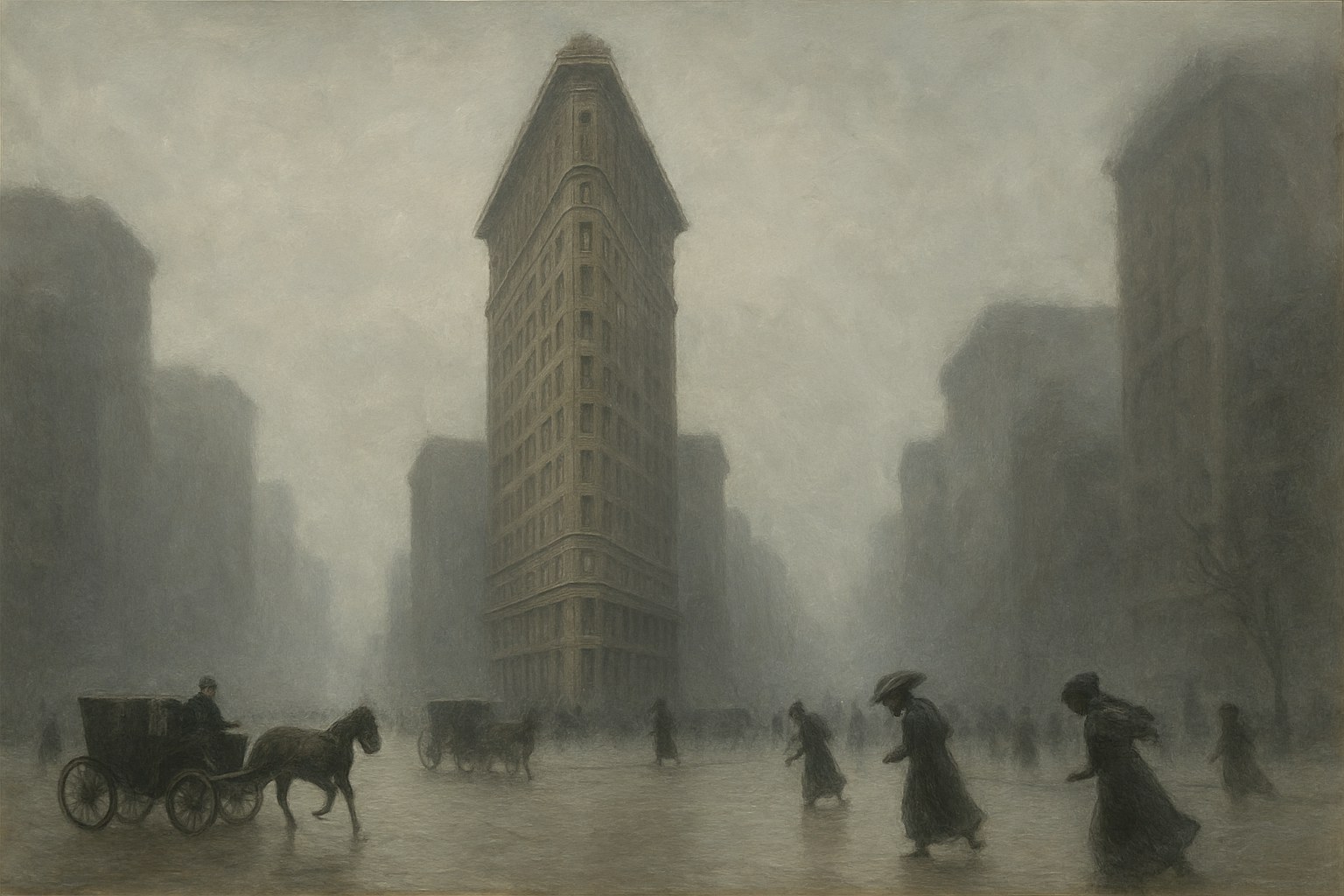
The lot was a problem before it was a landmark. Where Broadway cuts diagonally across Fifth Avenue at Twenty-third Street it leaves a thin triangle, too narrow at its northern point to hold anything conventional. In 1902 the Chicago firm of Daniel Burnham finished a twenty-two-story tower that filled the triangle exactly, tapering to a prow barely six feet wide. Officially it was the Fuller Building, after the contractor who put it up, but New Yorkers called it the Flatiron for the shape of the block and the nickname won.
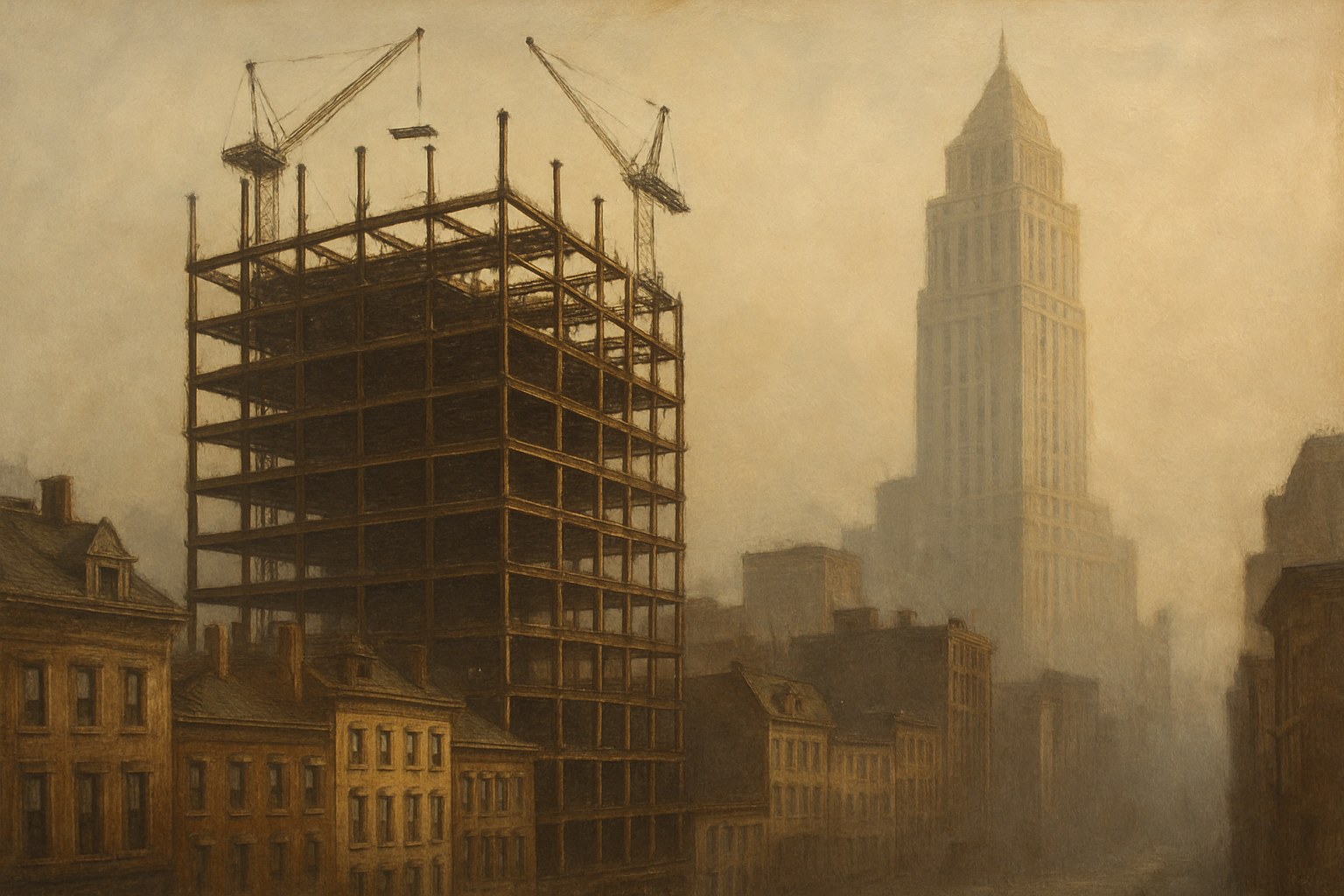
Under the ornament it was a Chicago building. A riveted steel frame carried the entire load, braced against wind heavily enough that the engineers had to argue in public that the tower would not blow over, and the exterior was a skin of limestone and glazed terra cotta modeled in Renaissance detail — rusticated at the base, richly worked under the cornice. The steel went up fast, roughly a floor a week, and the frame was topped out well before most of the cladding had been hung on it.
The wedge and the open ground of Madison Square funneled wind down Fifth Avenue and around the point, producing gusts strong enough to knock pedestrians over and, in the folklore of the period, to lift the long skirts of women crossing Twenty-third Street. Men gathered to watch and police were said to move them along, which is the usual explanation offered for the phrase twenty-three skidoo — a story too neat to trust. Photographers found the tower irresistible, and Alfred Stieglitz's misted study of it helped make the building an emblem of the new century.
The Flatiron was never the tallest building in New York, not even in 1902, and was never meant to be. What it did was make the skyscraper photogenic. Its silhouette became shorthand for Manhattan within months of opening and has been reproduced ever since, and it showed that a steel frame could be bent to whatever shape a difficult lot demanded. It was designated a New York City landmark in 1966 and a National Historic Landmark in 1989, and it sat empty for years after 2019 awaiting conversion.


| Completed | 1902 |
| Architect | Daniel H. Burnham and Company |
| Official name | The Fuller Building |
| Height | Twenty-two stories, about 285 feet |
| Structure | Steel frame clad in limestone and terra cotta |
| Landmark | NYC landmark 1966, National Historic Landmark 1989 |
| Date | Completed 1902 |
| Location | New York City |