Alexander Graham Bell
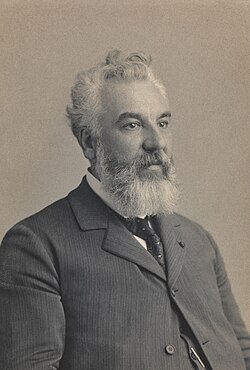
On March 10, 1876, Alexander Graham Bell spoke the first intelligible words ever transmitted by telephone to his assistant in the next room: "Mr. Watson, come here — I want to see you." Bell was 29 years old. The device he had just demonstrated would, within a generation, restructure commerce, medicine, journalism, and social life more thoroughly than any single invention since the printing press.
Bell was not primarily an inventor — he was a teacher of the deaf, consumed by the mechanics of the human voice. His mother and wife were both deaf, and his real ambition was to transmit visual speech. The telephone emerged as a byproduct of experiments on a "harmonic telegraph" designed to send multiple telegraph signals simultaneously. He filed his patent application on February 14, 1876 — the same morning as a rival application from Elisha Gray — and the question of who invented the telephone became one of the most litigated disputes in patent history.
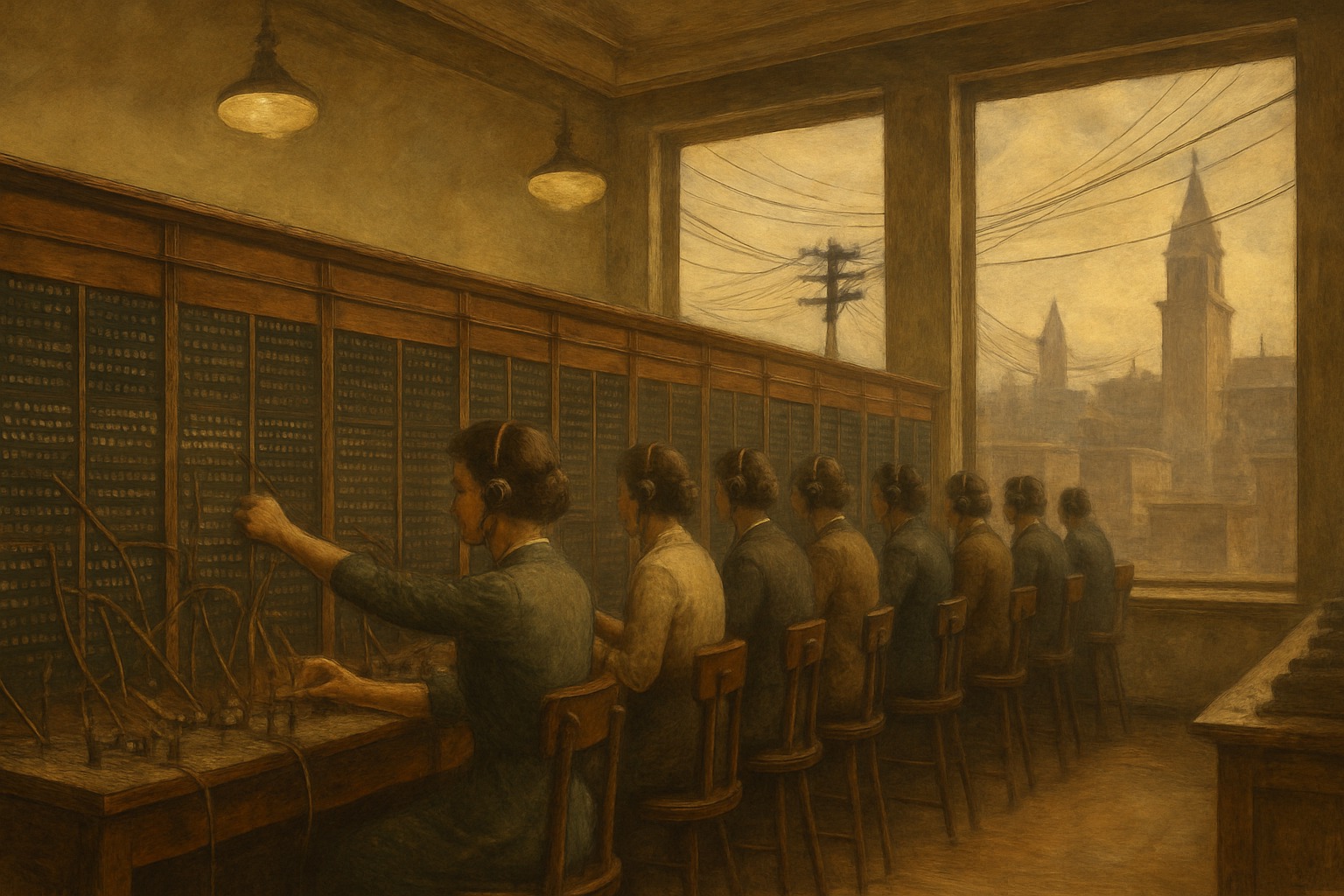
The Bell Telephone Company, founded in 1877, became one of the most successful corporations in American history. Bell himself moved on, funding work in aviation, hydrofoils, and intercity telephony. He spent his later years at his estate in Nova Scotia, conducting experiments until his death in 1922. At his funeral, every telephone in North America went silent for one minute.


| Born | March 3, 1847 — Edinburgh, Scotland |
| Died | August 2, 1922 — Beinn Bhreagh, Nova Scotia |
| Nationality | Scottish-American |
| Patent | U.S. Patent No. 174,465 (telephone), granted March 7, 1876 |
| Founded | Bell Telephone Company, 1877 |
| Other work | Aeronautics, optical telecommunications, hydrofoils |
| Date | March 10, 1876 — first telephone call |
| Location | Boston, Massachusetts |