Abigail Adams
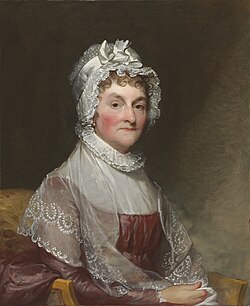
Abigail Adams spent much of her marriage to John Adams separated from him by the demands of the Revolution and the early republic, managing a farm, raising four children, handling the family finances, and writing him letters of such political intelligence and literary power that historians have spent two centuries mining them. She had no formal education — women of her era were not admitted to schools — and was almost entirely self-taught, a condition she was acutely aware of and that sharpened her arguments for women's education into something close to fury. She was John Adams's most trusted political advisor, his intellectual equal by any measure, and constitutionally invisible in the government he helped build.
The famous letter she wrote to John in March 1776, as he prepared to help draft the legal foundation of a new nation, asked him to "remember the ladies" in whatever code of laws was written — and warned that women would "foment a rebellion" if not given legal representation. The letter is the most cited document in the history of American feminism, and its implications are still being worked through. John's response — that he could not help laughing, that men were subjects in name only — was affectionate and dismissive in equal measure. Abigail knew exactly what he was doing and said so in a follow-up letter with a precision that made the exchange one of the sharpest records of the founding era's contradictions.
She became the first Second Lady and first First Lady of the United States to reside in the White House, moving into the still-unfinished mansion in November 1800 and hanging laundry to dry in the East Room. She outlived John by nearly eight years, dying in October 1818. Her son John Quincy Adams became the sixth president; she did not live to see it. Her letters — approximately 1,100 survive — were published in edited form beginning in 1840, and their full impact on American intellectual and political history has grown with every subsequent generation of readers who have found in them a mind that the founding era systematically wasted. She knew this herself, which did not stop her from using it anyway.
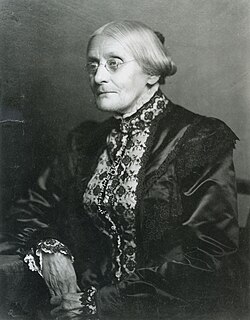
| Born | November 22, 1744 — Weymouth, Massachusetts |
| Died | October 28, 1818 — Quincy, Massachusetts |
| Married | John Adams (1764) |
| Role | Second Lady (1789–97); First Lady (1797–1801) |
| "Remember the Ladies" | March 31, 1776 |
| Son | John Quincy Adams (6th President) |
| Surviving letters | ~1,100 |
| Years | 1744–1818 |
| Location | Quincy, Massachusetts |